In a world facing increasing water scarcity and urbanisation, innovative solutions are essential to protect our precious resources. Decentralised water reuse systems and treatment technologies using natural processes are at the forefront of this transformation – combining environmental responsibility with aesthetic appeal.
Such nature-based solutions have been demonstrated in pioneering projects by alchemia-nova in two cutting-edge green wall technologies featured in the Horizon 2020 project HOUSEFUL. Water supply remains a central focus across Mediterranean and other European regions showcasing the transformative potential of nature-based solutions in household wastewater and greywater treatment. Greywater makes up around 70% of the domestic wastewater and requires minimal technology to treat it – making greywater a major underused resource for non-potable uses such as toilet flushing, irrigation or street cleaning and highlighting the potential of turning buildings into water-smart ecosystems for a greener, more resilient tomorrow.
vertECO©: Closing Loops in an Eco-Community and a Hotel
In the Cambium eco-village in Fehring, Austria, alchemia-nova implemented the vertECO© system, a modular vertical green wall that treats mechanically pre-treated household wastewater containing mixed grey- and blackwater. Rooted in nature-based purification processes, functioning similarly to ground-based treatment wetlands, the system relies on biofilms in the substrate’s pore spaces working in synergy with plant rhizomes and other mechanisms to purify the water. After additional ozonation, the water is reused to irrigate community gardens in compliance with the EU Water Reuse Regulation (2020/741).
This example illustrates how wastewater recycling can work directly at the source, making it highly relevant for retrofitting in areas with existing infrastructures. Since 2022, the demo continues to operate and provide reused water, supporting the community’s food and water self-sufficiency as well as the community’s circular ambitions.
In recent months, the new EU project GEORGIA has begun, where wastewater treatment technology is utilised to achieve water independence in agricultural settings. The focus of the project lies in strengthening sustainable agricultural practices and aiding soil health with the help of AI-enhanced irrigation tools aiming to optimise water systems across multiple Eastern European regions. Again, the aforementioned vertECO® in the Cambium eco-community serves as part of a demo-site and provides treated water for fertigation and deepens investigations regarding water reuse in an agricultural context.
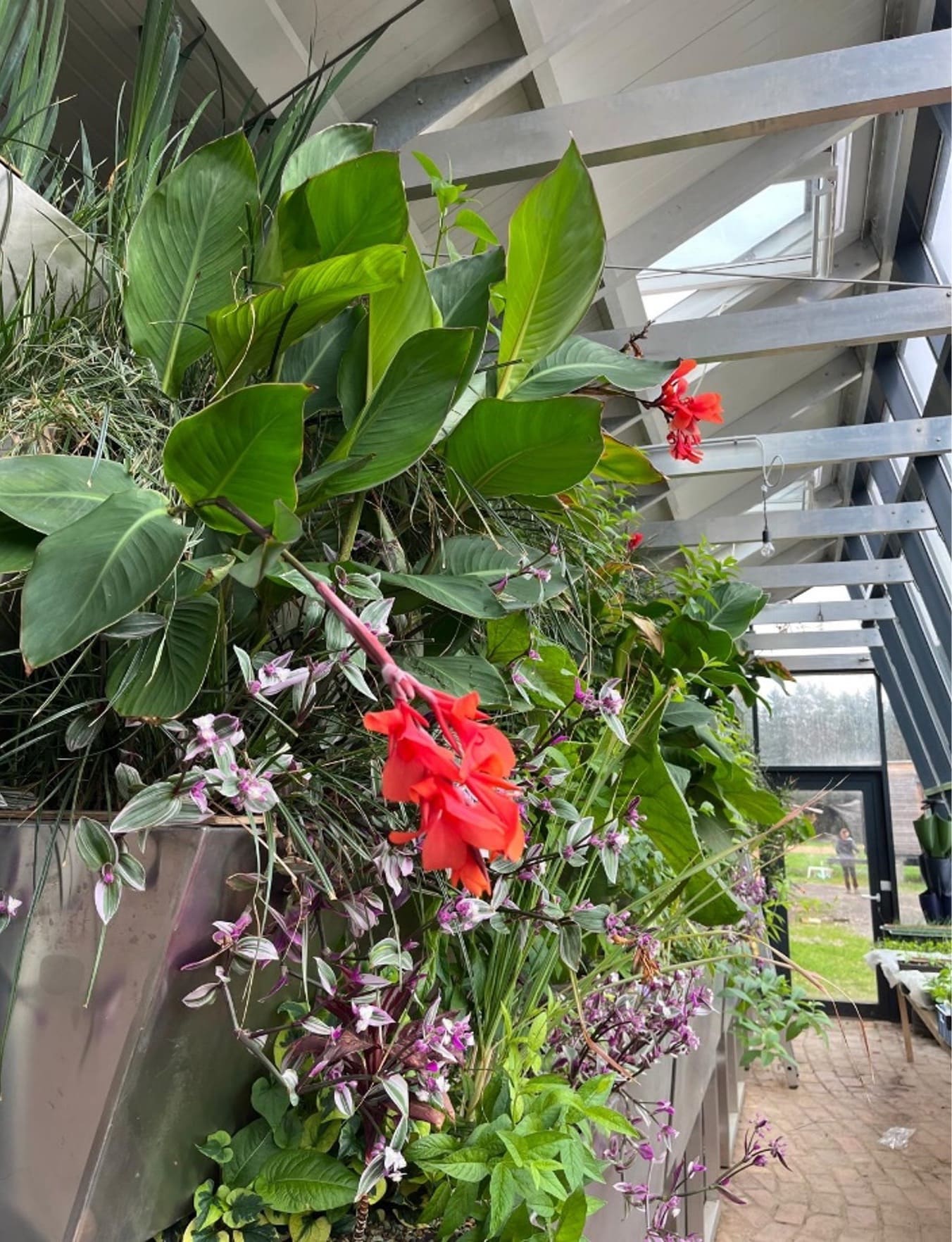
The HOUSEFUL vertECO© system in Austria
In a hotel in the Mediterranean town of Lloret del Mar Hotel, Spain, alchemia-nova’s vertECO© system was also installed in a highly visible commercial setting that has been operating since 2015. Located next to the pool-bar, the green wall treats greywater from the hotel’s washbasins and restrooms, the purified water then being reused for toilet flushing of the hotel.
The vertECO© offers a visual upgrade to the area while also serving as an aesthetic barrier and a noise dampener to the adjacent public road, demonstrating the potential for nature-based water management approaches in the hospitality industry. This installation, part of the Horizon 2020 demEAUmed project (https://demeaumed.semide.net/), serves as a prime example of how green walls can raise public awareness while providing a functional solution for water conservation in commercial buildings.
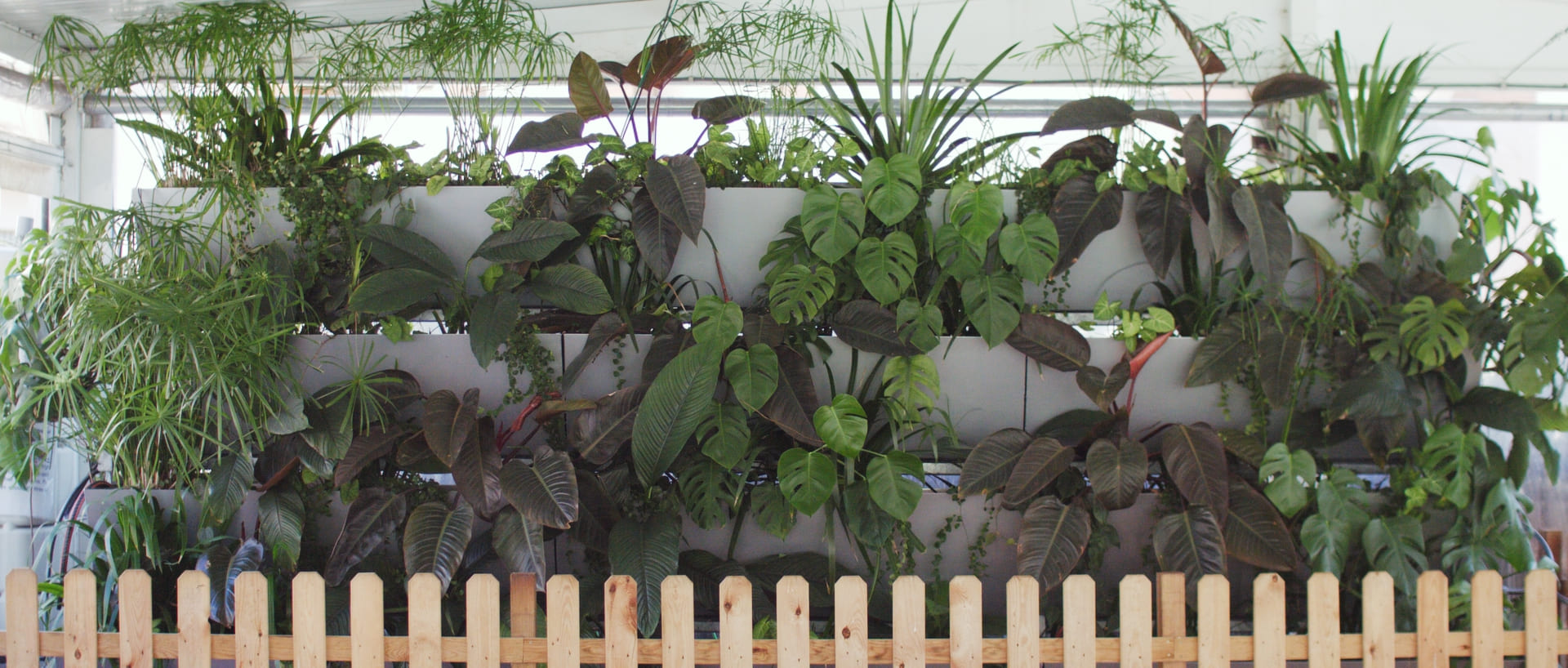
The demEAUmed vertECO© system next to the pool bar in Lloret del Mar, Spain
Generally, a standard 2m long 4 stage vertECO© system can treat
- up to 700 L of lightly polluted greywater (e.g., from showers, washbasins),
- up to 400 L of more heavily polluted greywater (including kitchen wastewater),
- up to 125 L of pre-treated household wastewater (including toilets).
GRETA™-Green Wall: Smart Refurbishment for Social Housing
In a contrasting urban setting in St. Quirze del Vallès, near Barcelona, the GRETA™ system was installed on the facade of a social housing building as part of an ambitious refurbishment. Separated greywater and rainwater are treated in the GRETA™ wall system that comprises of plant pots filled with a biofilm-friendly, light and porous substrate. The purified water is subsequently disinfected via ozonation. The clean water is then reused for toilet flushing, contributing significantly to drinking water savings.
This GRETA™ system, built in early 2023, conforms with rigorous Spanish water reuse regulations and demonstrates the viability of source-separated greywater reuse in multi-family residential buildings. In parallel, inhabitants of the building have developed a high acceptance of the green wall as it is a pleasing visual focus area on an otherwise underutilised building component that additionally offers microclimatic benefits (urban heat island mitigation and cooling effects).
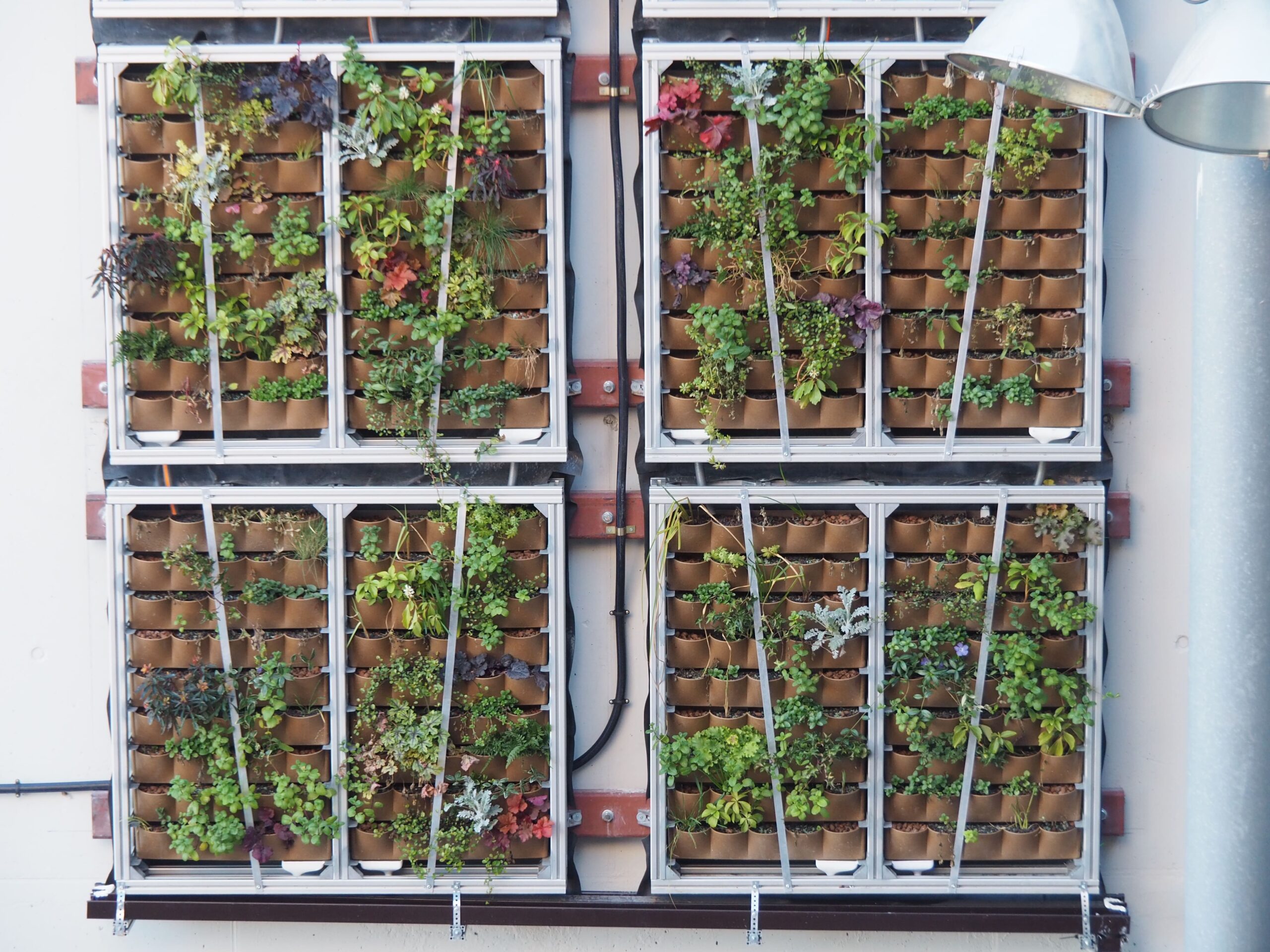
The HOUSEFUL GRETA(TM) system at the facade of a social housing in St. Quirze del Vallès, Spain
Last year, the EU project ATRIUM was launched, where alchemia-nova is focusing on co-developing more sustainable bio-based materials for the GRETA™ system and its planter pots, with demonstration sites planned in Vienna, Zaragoza and Israel.
Scaling Decentralised Water Reuse Across the Mediterranean
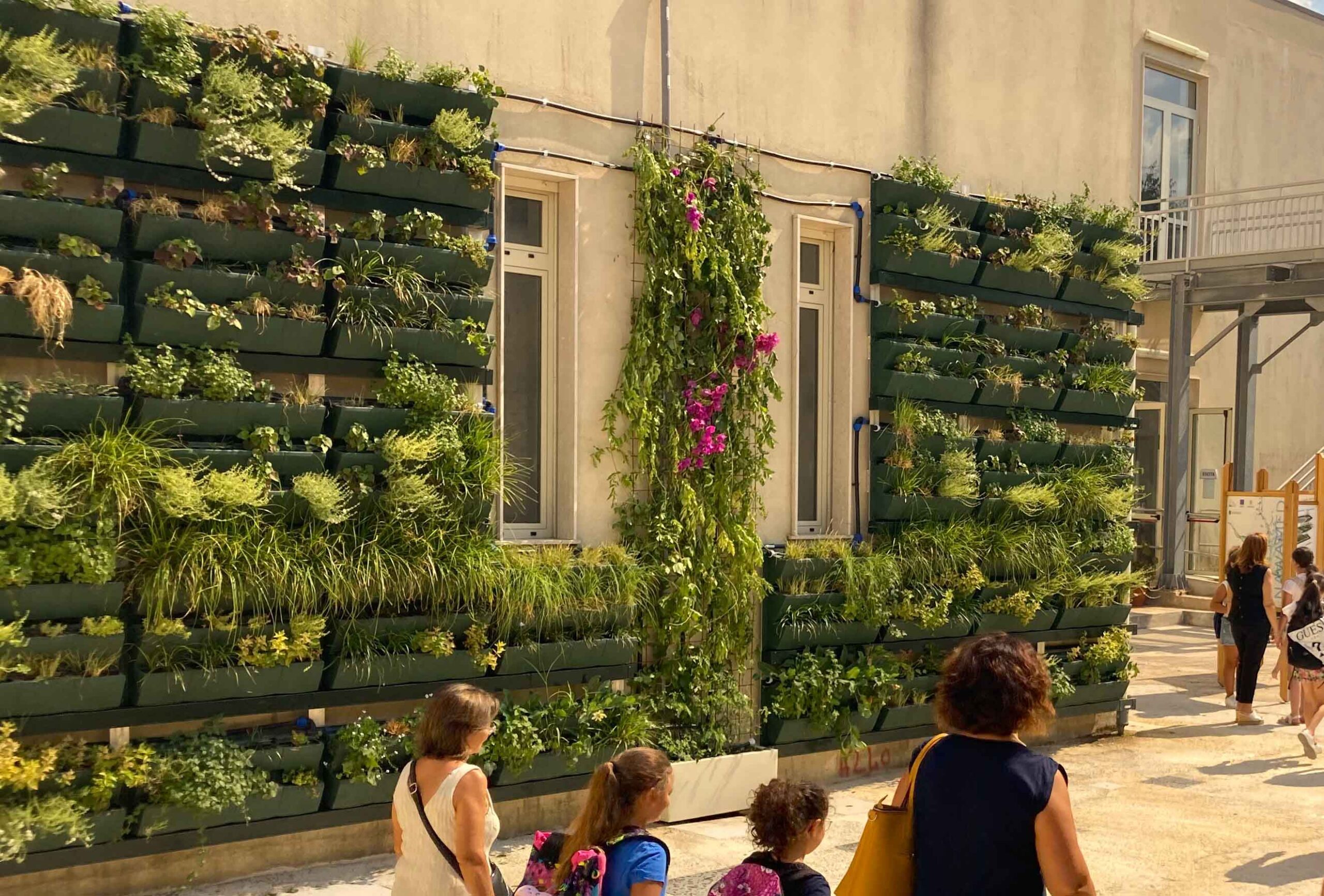
A similar innovative green wall by IRIDRA s.r.l. is also showcased in the CARDIMED project’s demo site in Ferla, treating the water collected from a school’s washbasins. The treated water is reused for toilet flushing (here you can see the example).
Together these initiatives underline that decentralised wastewater and especially greywater reuse is not only technically feasible but environmentally imperative, especially in the face of instability around water as a resource, further driven by climate change and increasing urbanisation.
One of the main challenges when scaling these technologies is moving from prototype prices to competitive prices. As demand increases, the cost-effectiveness of green wall systems will improve, making them more accessible for widespread implementation.
Systems like the vertECO© and GRETA™ – in combination with systems from other innovators – demonstrate that circular water systems can be both beautiful and practical. Turning buildings into water-smart actors in their local ecosystems has benefits for the local biodiversity and micro-climate and improves living standards while preserving resources.