How can Nature-based Solutions help Mediterranean cities tackle two increasingly pressing challenges: urban flooding and water scarcity?
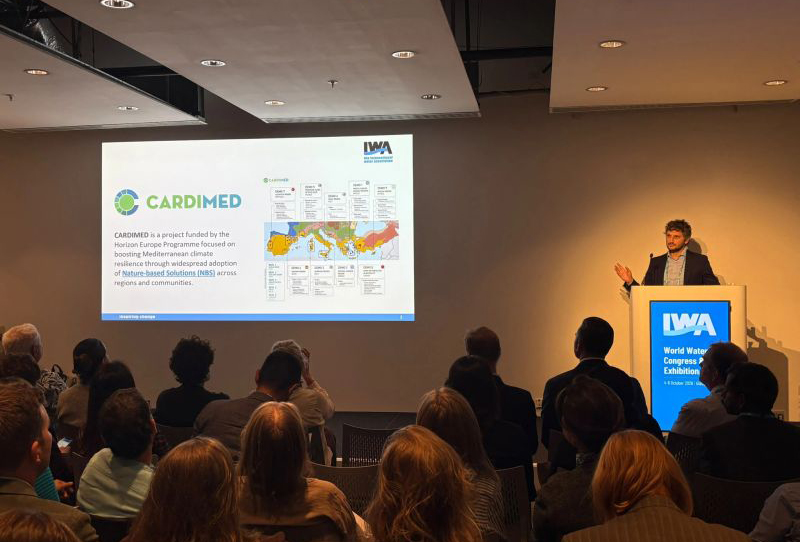
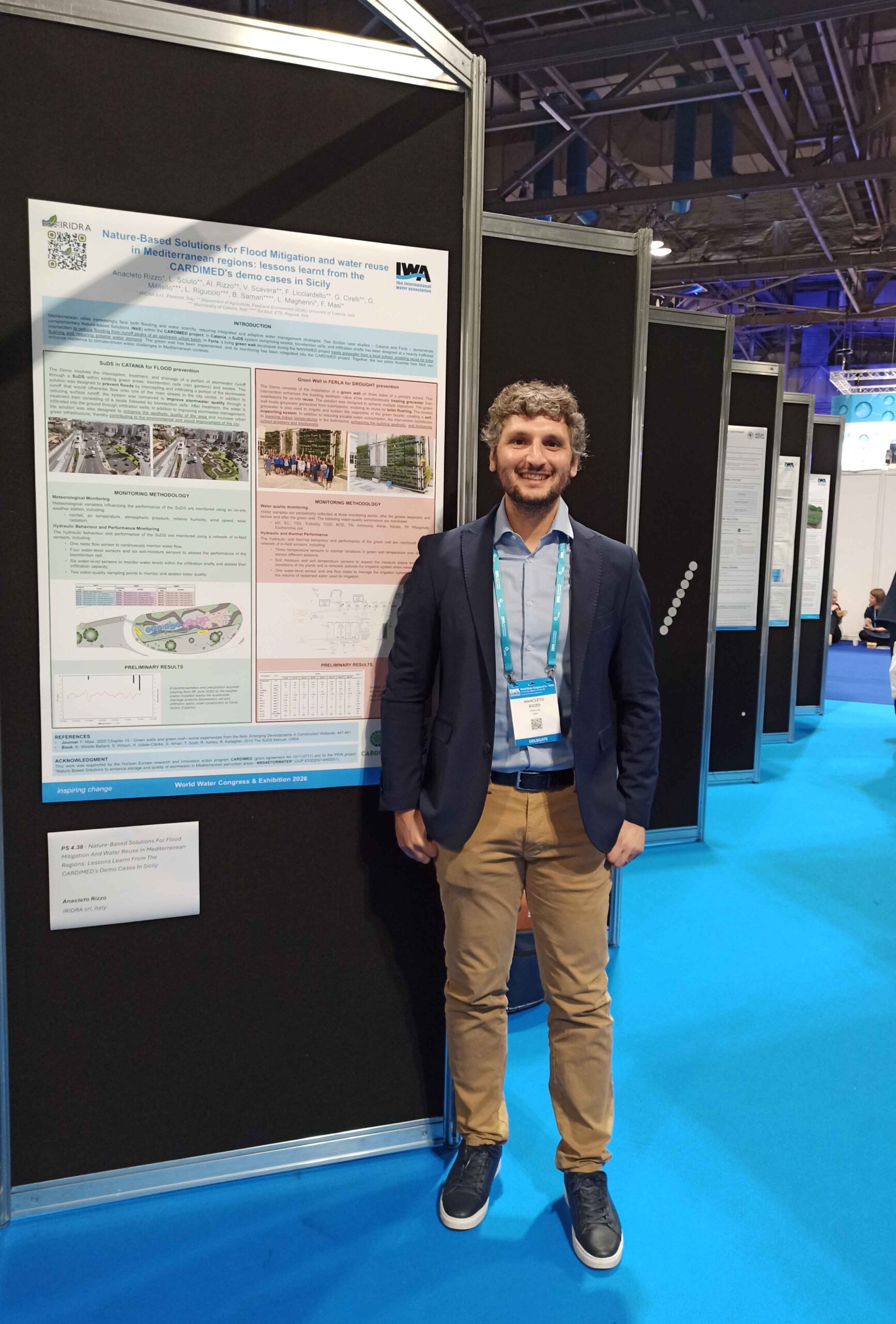
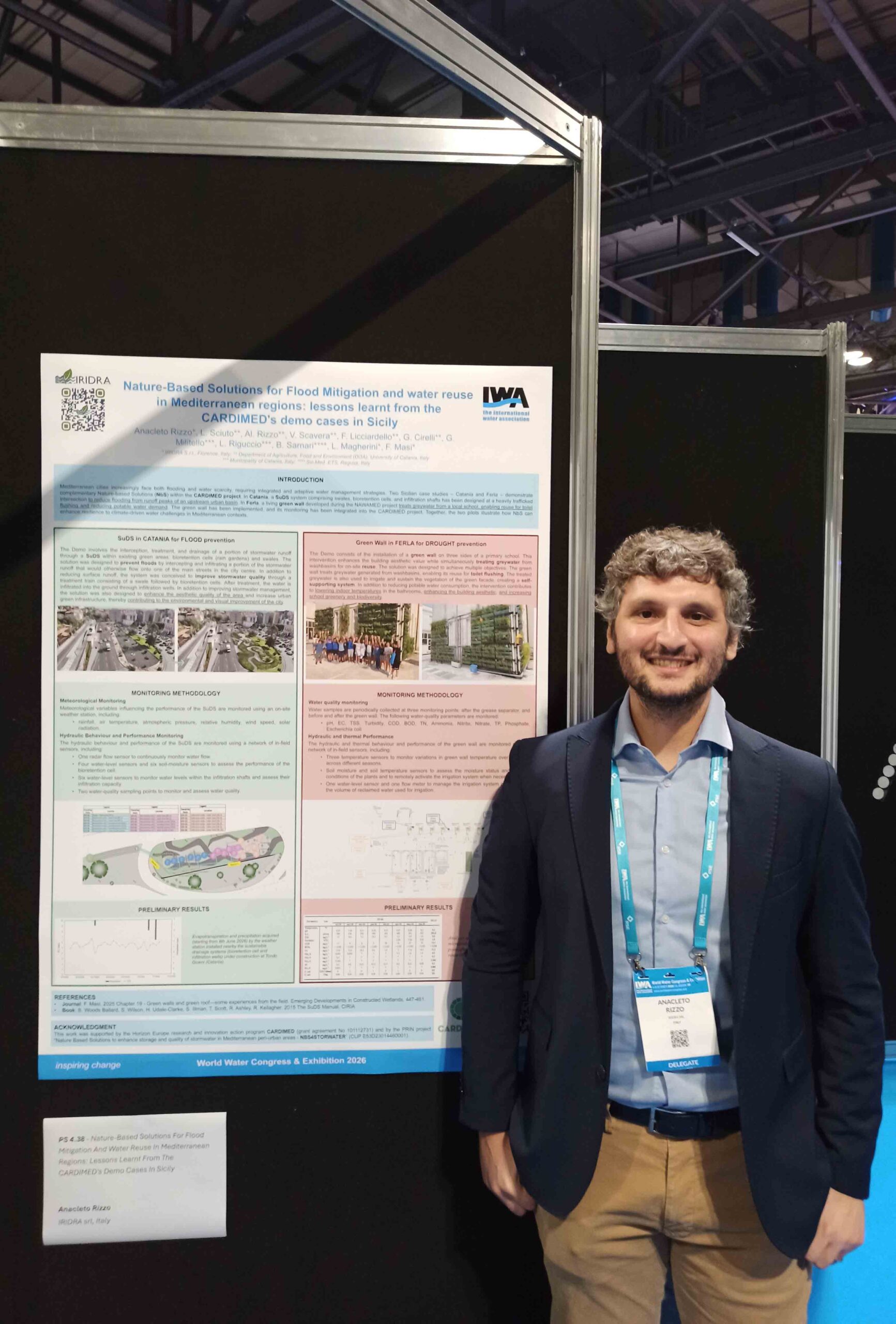
At the IWA World Water Congress & Exhibition 2026, held in Glasgow from the 4th to the 8th October 2026, Anacleto Rizzo from IRIDRA presented insights from CARDIMED’s Sicilian demonstration sites, showcasing how innovative green infrastructure can contribute to more resilient and sustainable urban water management.
The contribution, entitled “Nature-Based Solutions for Flood Mitigation and Water Reuse in Mediterranean Regions: Lessons Learnt from the CARDIMED’s Demo Cases in Sicily”, focused on two complementary interventions within CARDIMED DEMO4, located in Catania and Ferla.
Catania: Greening urban drainage to mitigate flooding
In Catania, CARDIMED is developing a Sustainable Drainage System (SuDS) at Tondo Gioeni, a heavily trafficked urban intersection affected by stormwater runoff from an upstream catchment.
The intervention combines vegetated swales, bioretention cells (rain gardens), and infiltration shafts to intercept, treat, and infiltrate stormwater, with the aim of reducing and delaying runoff peaks reaching the downstream urban drainage network.
Beyond flood mitigation, the system is designed to improve stormwater quality and enhance urban green infrastructure, transforming existing green spaces into multifunctional elements of climate adaptation.
A dedicated monitoring network, including meteorological, hydraulic, soil-moisture, and water-quality sensors, will support the assessment of its performance under real operating conditions.
Ferla: Turning school greywater into a valuable resource
In Ferla, CARDIMED builds on a green wall originally implemented through the NAWAMED project at a local primary school.
The system treats greywater collected from washbasins, enabling its reuse for toilet flushing while also supporting irrigation of the vegetated façade.
This circular approach aims to reduce drinking water consumption while delivering additional benefits, including building greening, improved aesthetics, and potential thermal comfort improvements.
Within CARDIMED, the green wall is undergoing monitoring to assess its water treatment performance, hydraulic behaviour, and thermal characteristics.
Preliminary water-quality monitoring results, collected between October 2025 and June 2026, were presented at the Congress, providing initial evidence to support the ongoing assessment of the system.
From local demonstrations to Mediterranean climate resilience
Although addressing different water challenges, the Catania and Ferla demonstrations share a common objective: integrating Nature-based Solutions into existing urban infrastructure to make water management more sustainable, adaptive, and resource-efficient.
Their combined experience highlights the potential of multifunctional green infrastructure to address both excess water and water scarcity, while generating wider environmental and social benefits.
By monitoring these solutions under real Mediterranean conditions, CARDIMED aims to generate practical knowledge to support their replication and wider adoption across climate-vulnerable regions.
The presentation at IWA WWCE 2026 provided an opportunity to share these experiences with the international water community and contribute to the discussion on scaling up Nature-based Solutions for climate resilience.