CARDIMED participated in the European Climate Change Adaptation Conference (ECCA) 2025 that took place in Rimini, Italy, from 16 to 18 June 2025. The ECCA is one of the largest conferences on climate change adaptation that is held every two years in Europe since 2013. Represented by NTUA and SEMIDE, CARDIMED participated in two sessions, namely:
- Scaling Innovative Adaptation Finance Solutions: Transference of Financial Structures
- Instrument and Nature-based Solutions in action: scaling resilience pathways to face climate extremes.
Key insights from the engaging world café session “Scaling Innovative Adaptation Finance Solutions: Transference of Financial Structures and Instrument”
The session was chaired by Mission Implementation Platform for Adaptation to Climate Change (MIP4Adapt) and gathered speakers from the, CLIMATEFIT, SOTERIA, REGILIENCE, Natalie and ARCADIA.
The session adopted a structured World Café format which is a flexible approach facilitating meaningful conversations in a collaborative setting. It involves small rotating group discussions where participants engage in open dialogue on the following key topics:
- Environmental Impact Bonds, by CLIMATEFIT,
- Innovative insurance solutions, by SOTERIA,
- Innovative Public-Private Partnerships, by REGILIENCE,
- Payments for Ecosystem Services (PES) as financial incentives to mainstream NBS across Europe – by CARDIMED, and ARCADIA.
- Tax incentives for corporate investment in NBS – by NATALIE,
The aim of this session was to shed light on international adaptation finance cases, explore their barriers & success factors, and map out areas of research and innovation for the transference of adaptation finance solutions.
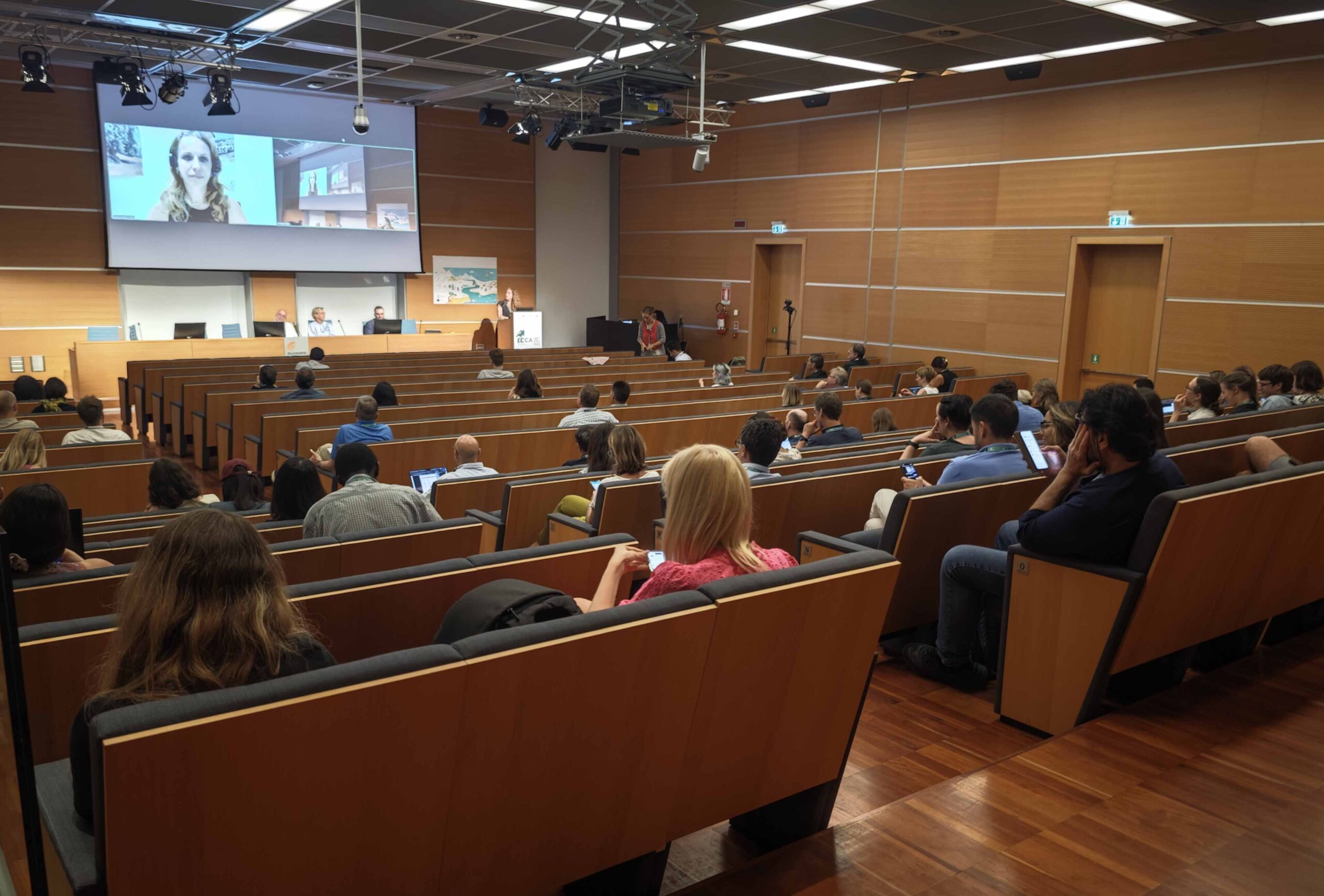
The World Café combined pitches, group discussions, and digital engagement tools to ensure an engaging and productive experience for all participants. Participants composed of businesses, public institutions, NGOs, academia, researchers, and regional authorities interested in climate change adaptation topics were introduced to international cases of adaptation finance and gained a deeper understanding of the success factors and challenges faced in the adoption of innovative adaptation finance solutions.
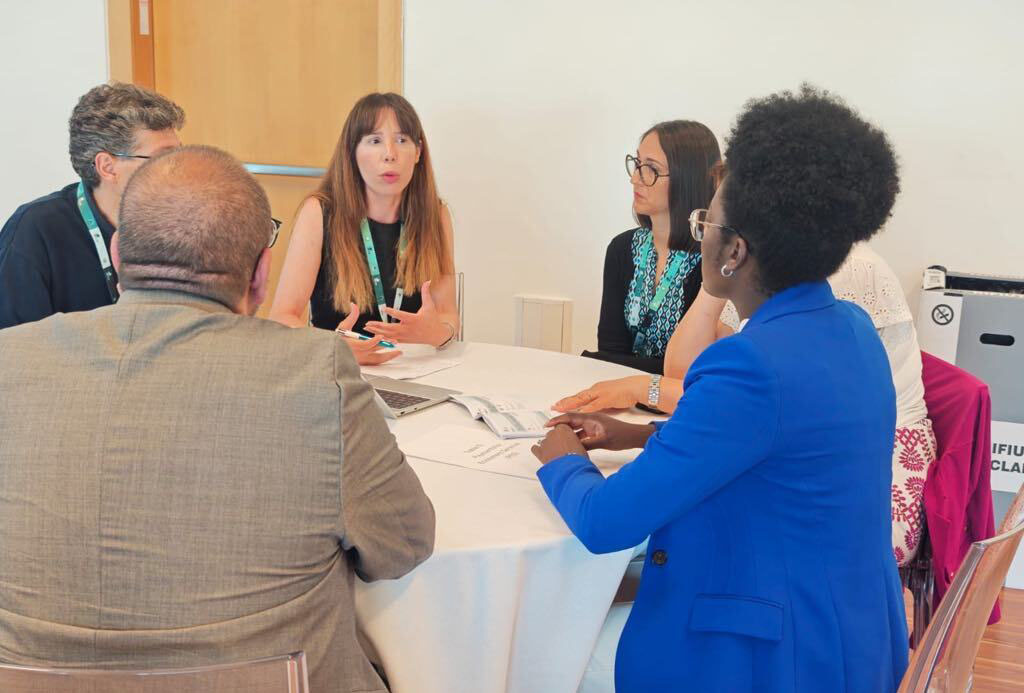
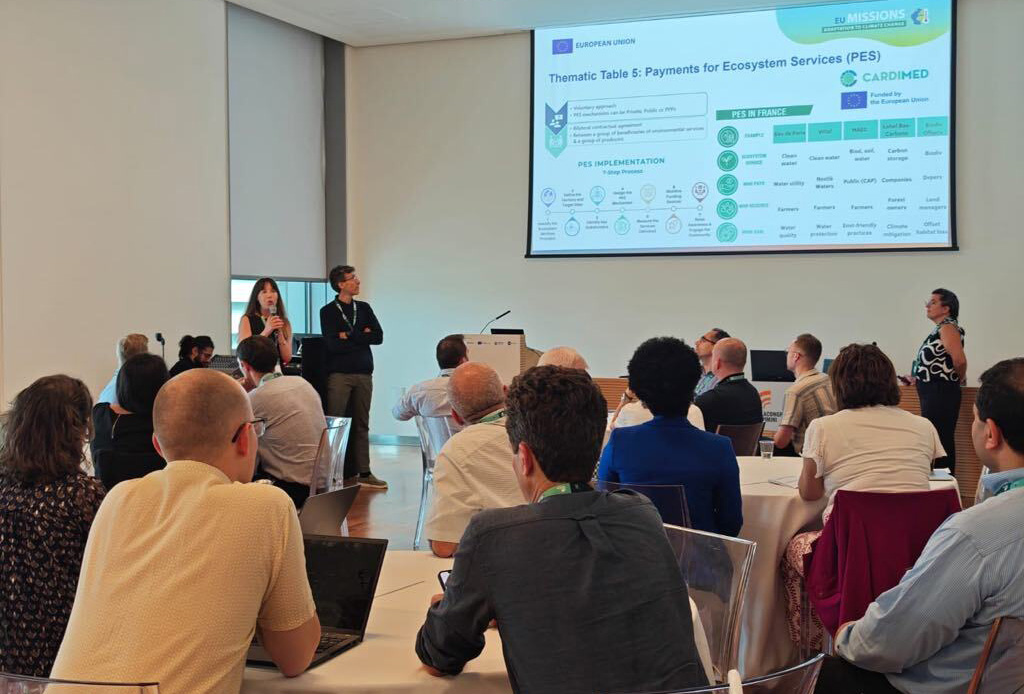
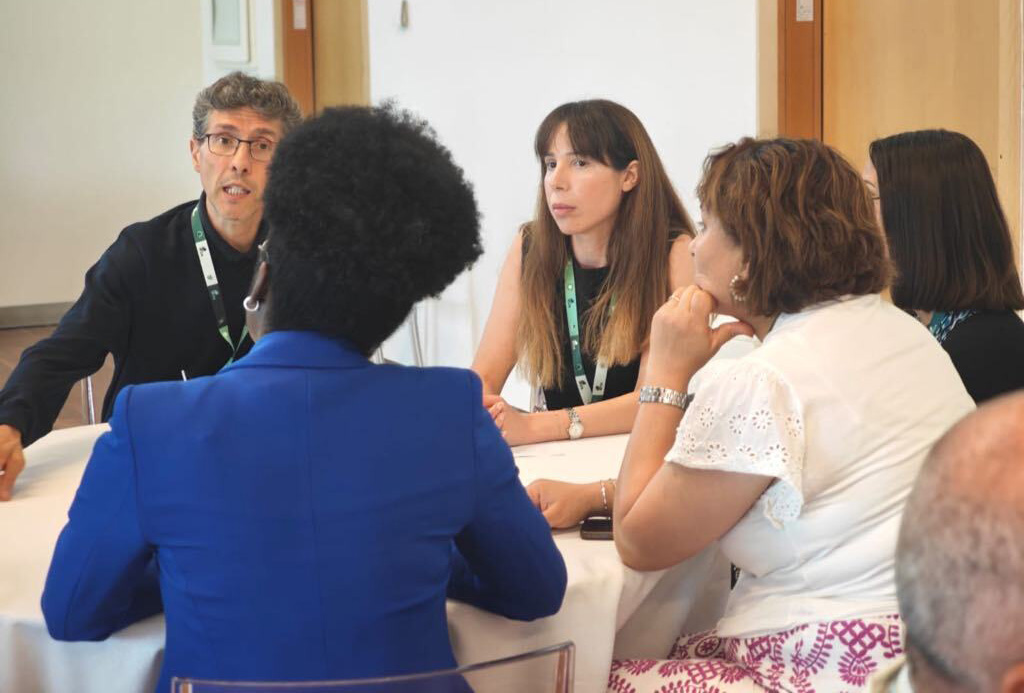
Zoom on the world café table of CARDIMED (Day 2)
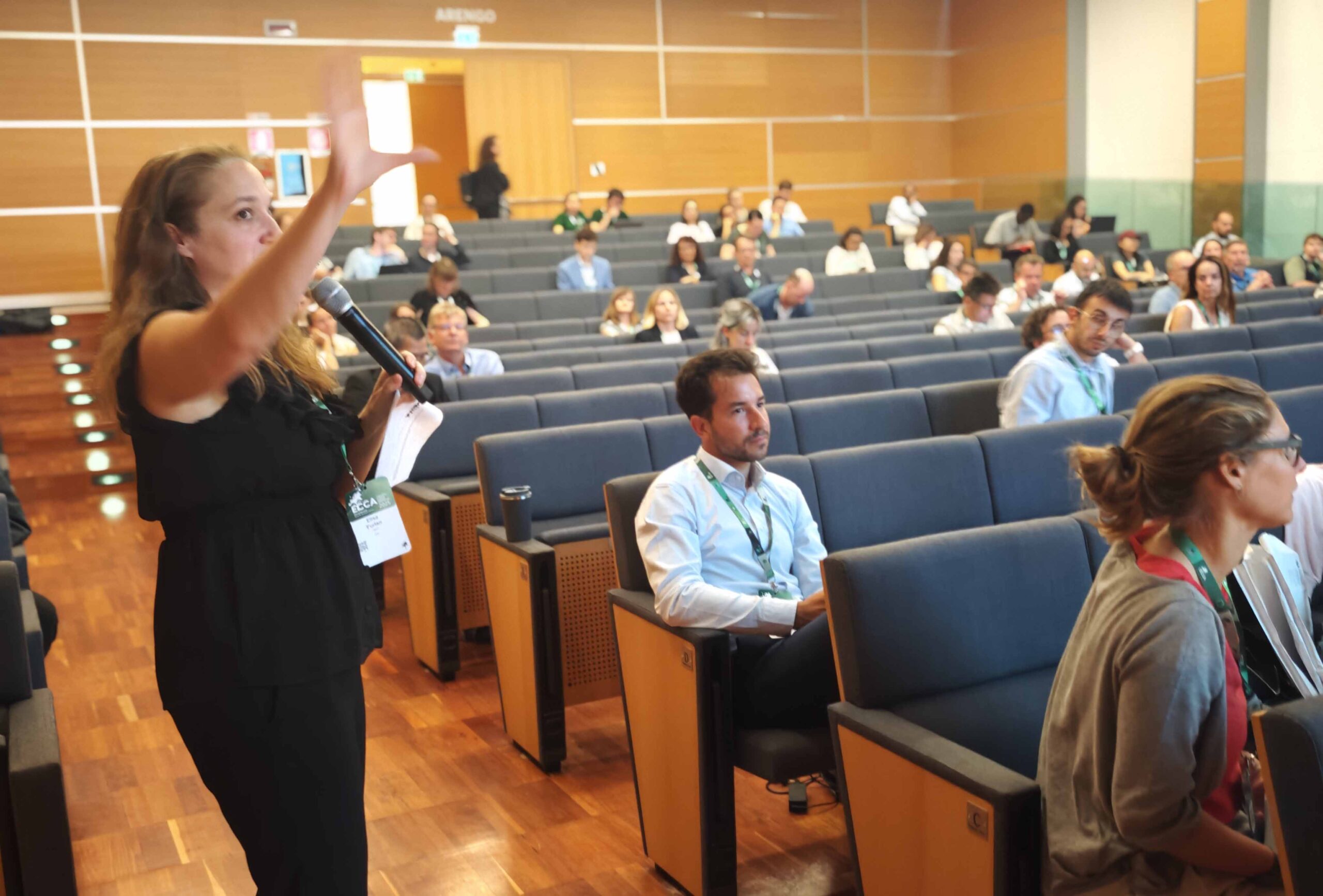
The aim of this interactive session was to familiarize the participants with the concept of PES as an innovative, market based financing mechanism for cliamate adaptation and resilience actions. The world café table was modetrated by SEMIDE and ART-ER
Participants were interested about PES case studies that were presented during the session. A focus was dedicated to the Emilia-Romagna experience, which showcases a public mechanism aimed to safeguard groundwater recharge areas in mountain areas and how it generates benefits and co-benefits on water stock, groundwater quality, carbon absorption, biodiversity protection and restoration, etc.
The diverse backgrounds of participants (bank and insurance sector, practitioners, researchers, NGOs) helped sketching out potential enablers and barriers against mainstreaming PES across Europe, namely:
- The designed PES are based on a win-win situation that would ensure a sustainable involvement of all stakeholders.
- The contract associated with PES can be private, public or can take the form a partnership between both bodies.
- The PES schemes are adapted to many fields, including eco-tourism, agriculture, biodiversity and natural ecosystems protection and restoration,
- PES represent an opportunity to de-risk investment in climate adaptation actions and projects
Throughout the session, the engaging discussions with both sub-groups revealed insightful challenges that may jeopardize the implementation of PES, such as:
- Lack of knowledge regarding this instrument among key stakeholders, such as local authorities and the private sector. Launching the discussion around this mechanism and sharing success stories are essential for replication.
- PES are usually confused with other instruments like offset measures which may hinder their mainstreaming.
- Over-supply ecosystem services without matching demand may impact negatively their value, and thus, the sustainability of the PES schemes
- Guaranteeing the transparency along the value chain can be challenging in some PES cases, such as the organic farming labelling system.
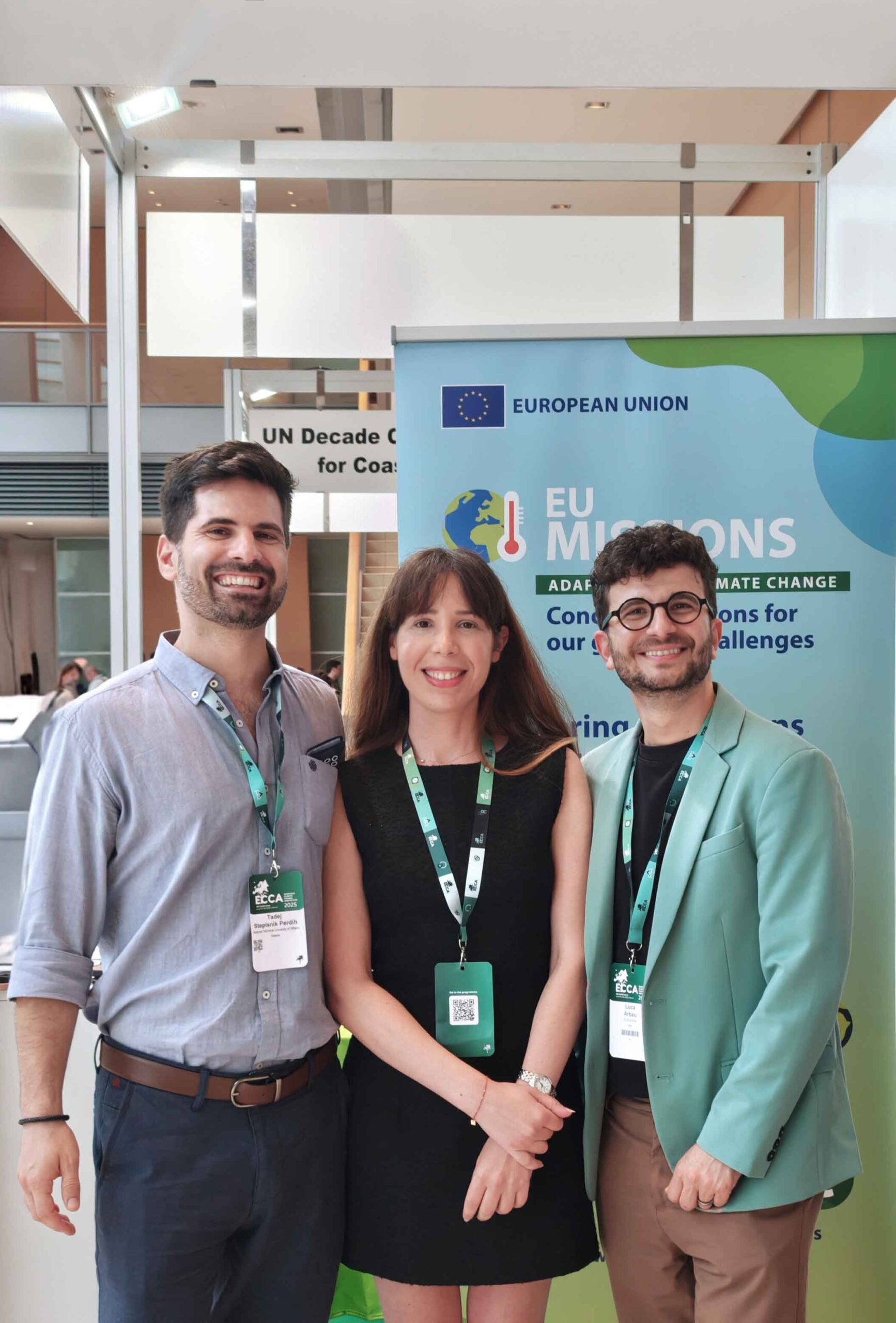
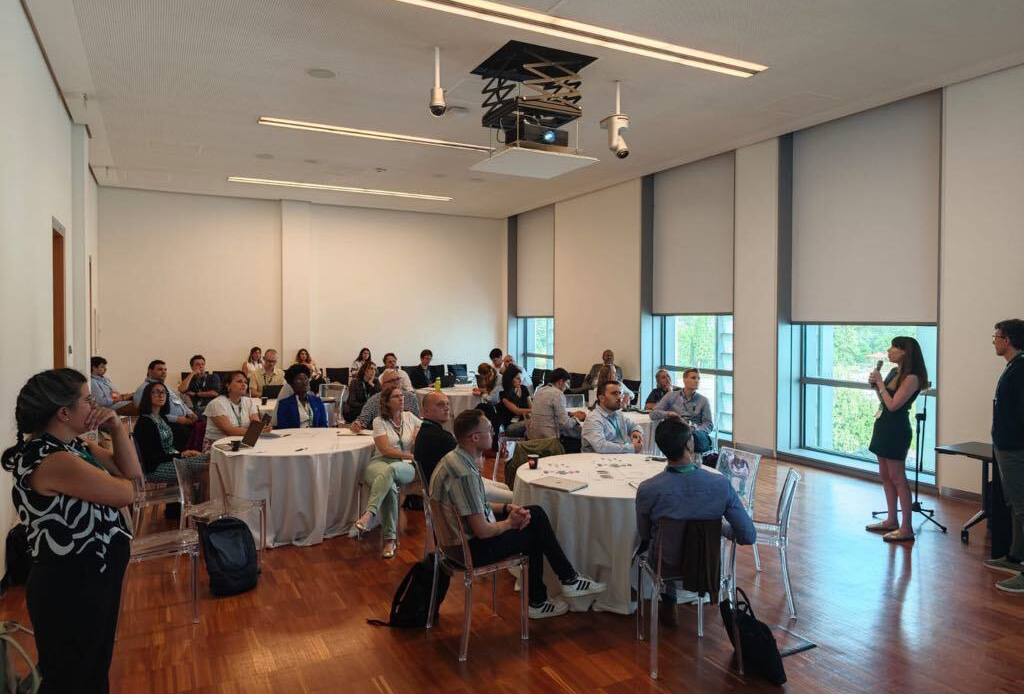
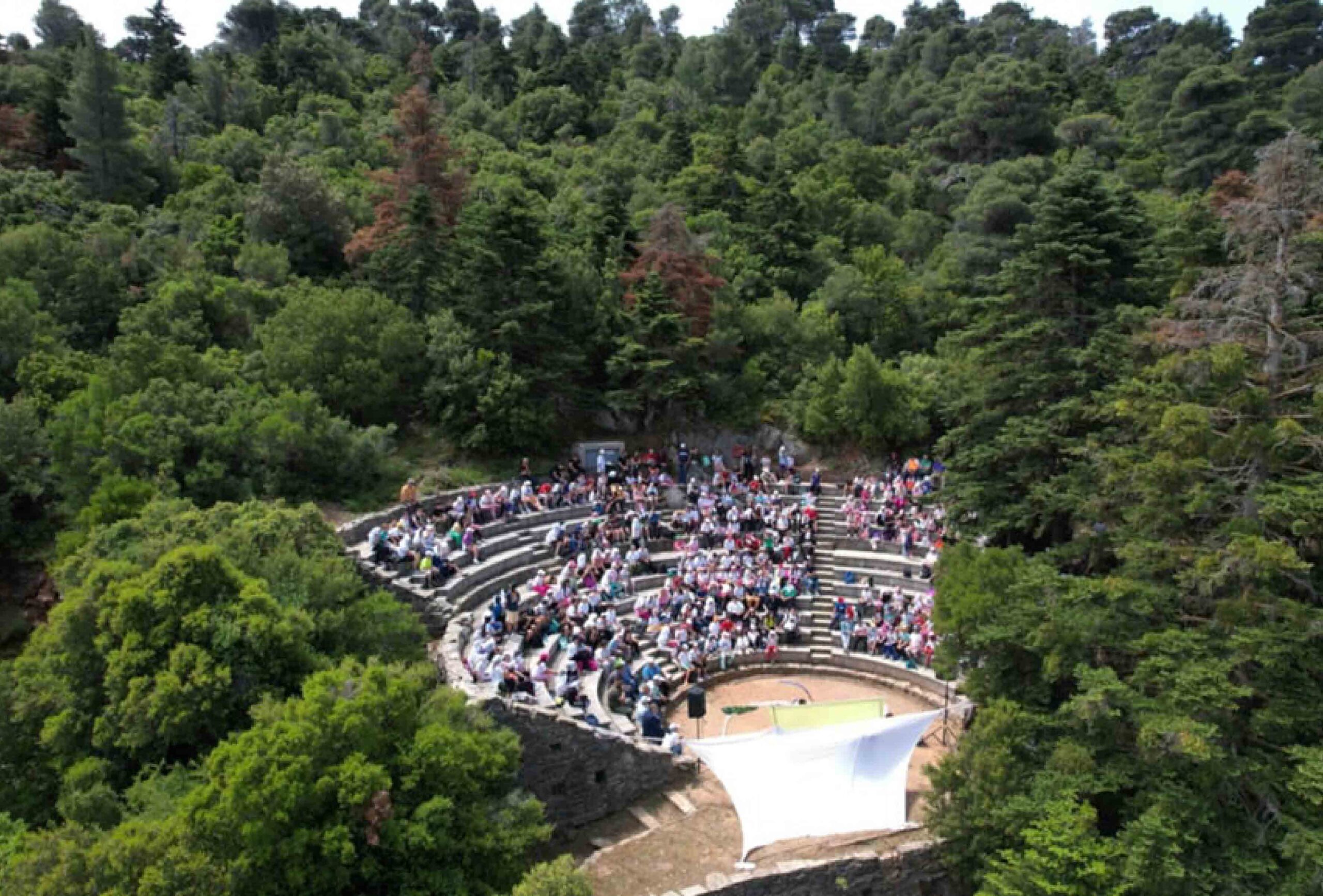
Diving into the NBS4EU cluster session under the theme “Nature-based Solutions in action: scaling resilience pathways to face climate extremes” (Day 3)
The sessions was organized by the NBS4EU cluster composed of ARCADIA, CARDIMED, DesirMED, LAND4CLIMATE, MountResilience, NATALIE and NBRACER. It gathered speakers from Sardinia Region, Universitat Politècnica de Catalunya, Po Delta Regional Park, Finnish Lapland Tourist Board and the Midtjylland Region to explore how NBS enhance resilience across five EU biogeographical regions.
Speakers highlighted the importance of integrated, bottom-up strategies that incorporate local needs, diverse perspectives, and community involvement in climate adaptation.
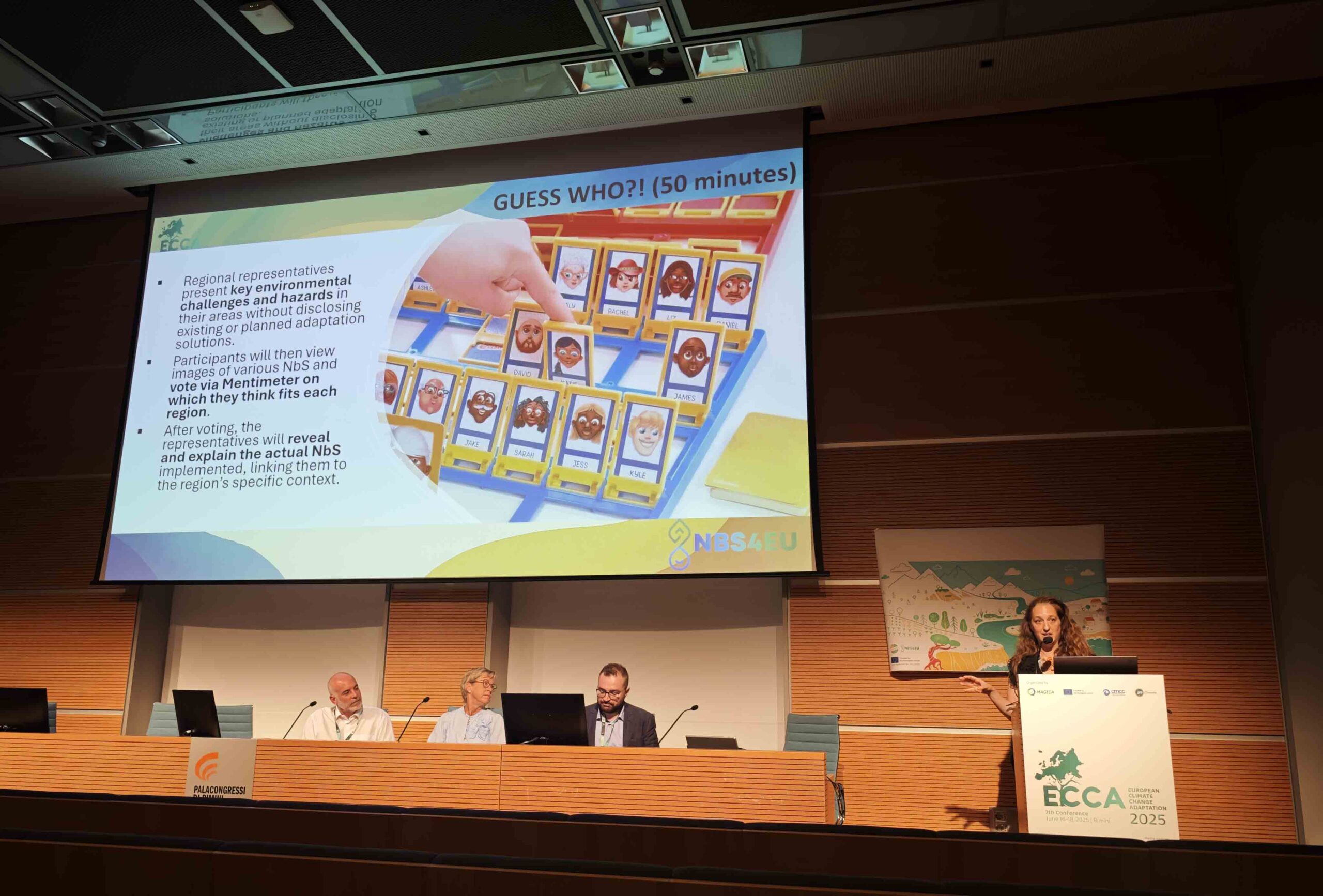
Through an interactive “Guess Who?!” exercise, regional representatives presented climate challenges, engaging the audience in identifying implemented NBS via live polling. A “Landscape of Whispers” discussion managed to foster knowledge exchange on enablers, barriers, and replicability. The session was concluded with “Ticket to Thrive”, synthesizing insights for scaling up best practices.
The aim of this sessions was to exchange of best practices and lessons learned on NBS for climate adaptation across different EU biogeographical regions, to foster collaboration and contributes to the EU’s adaptation agenda, and to equip participants with strategies to mainstream NBS by combining case studies, governance frameworks, and participatory tools.