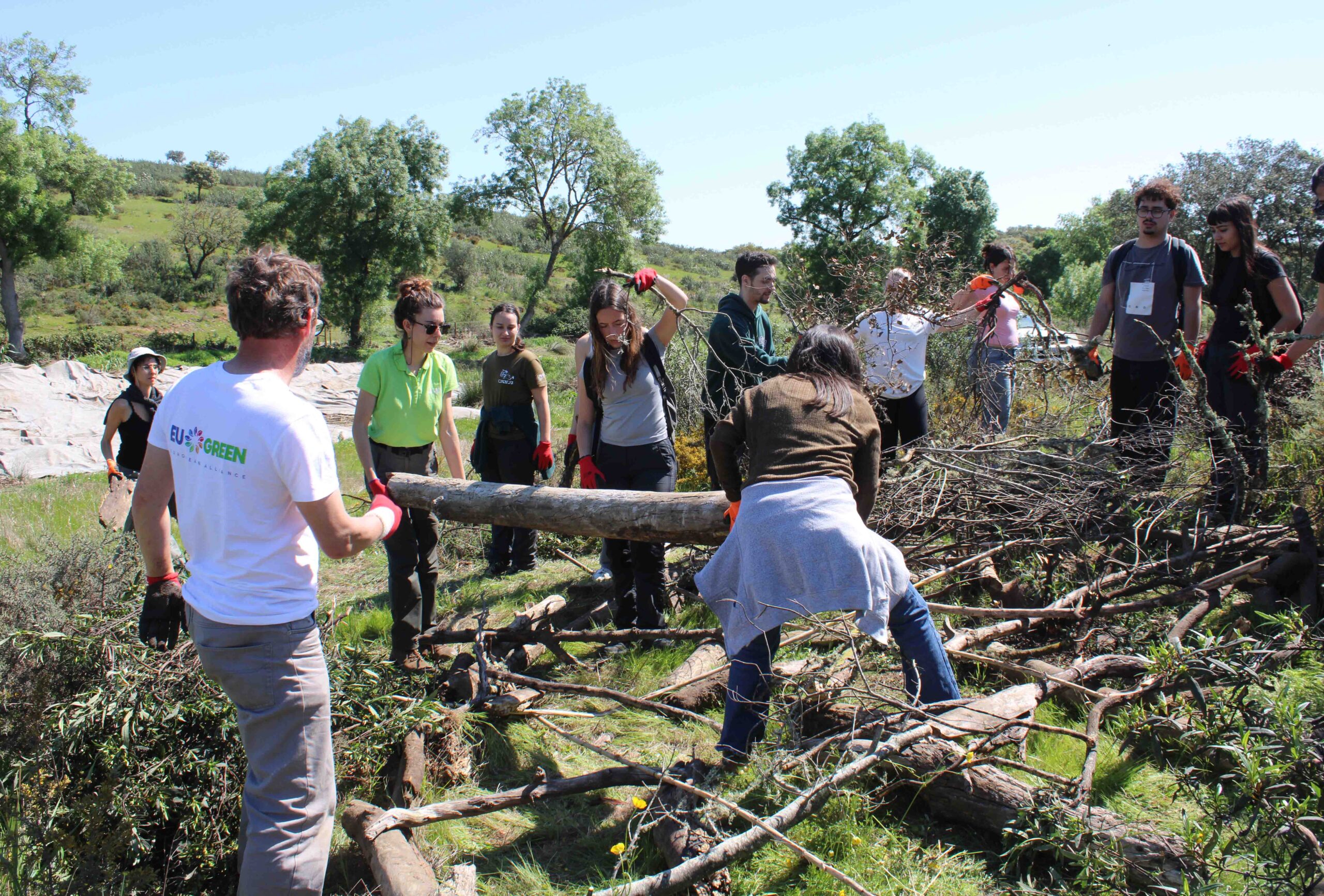
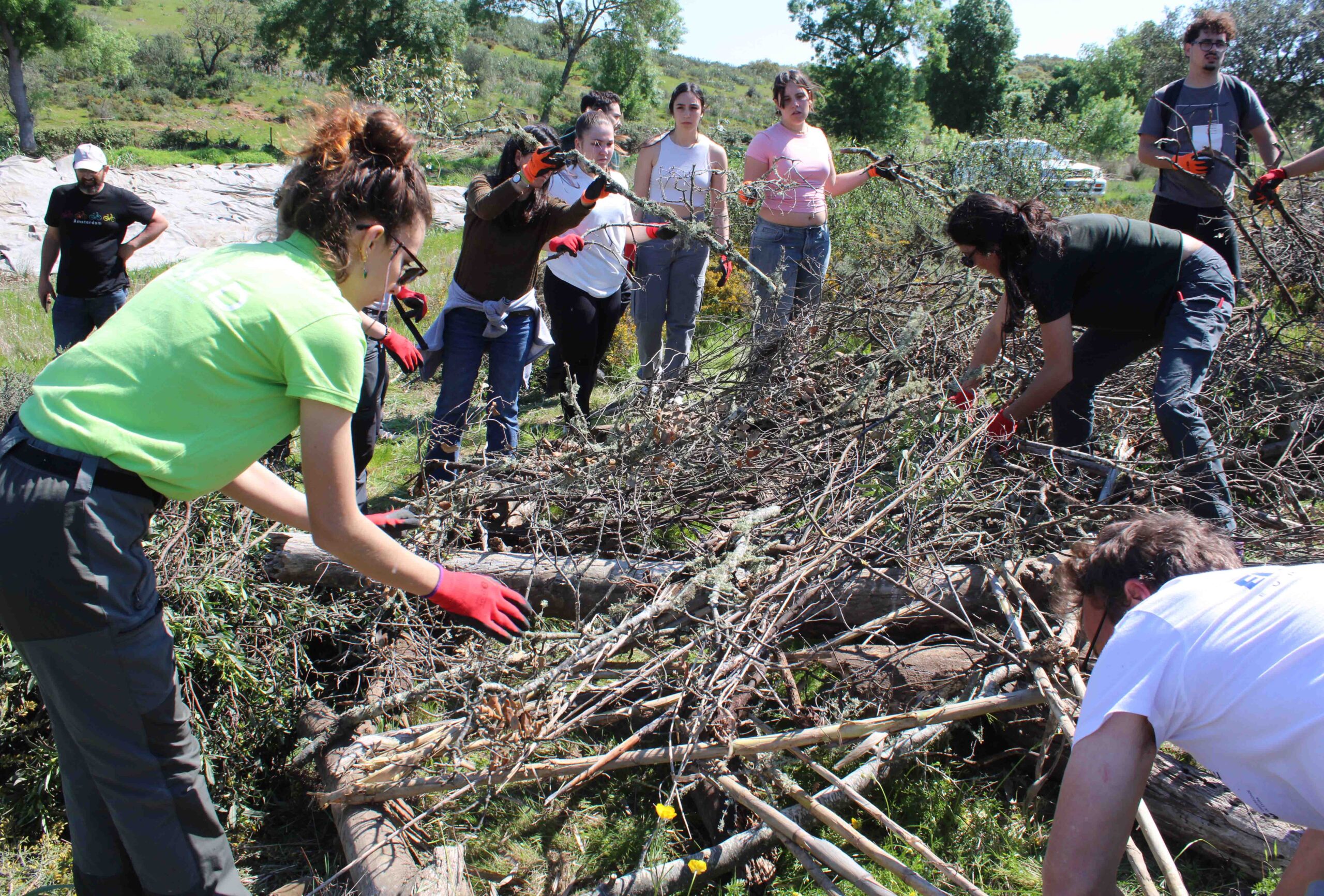
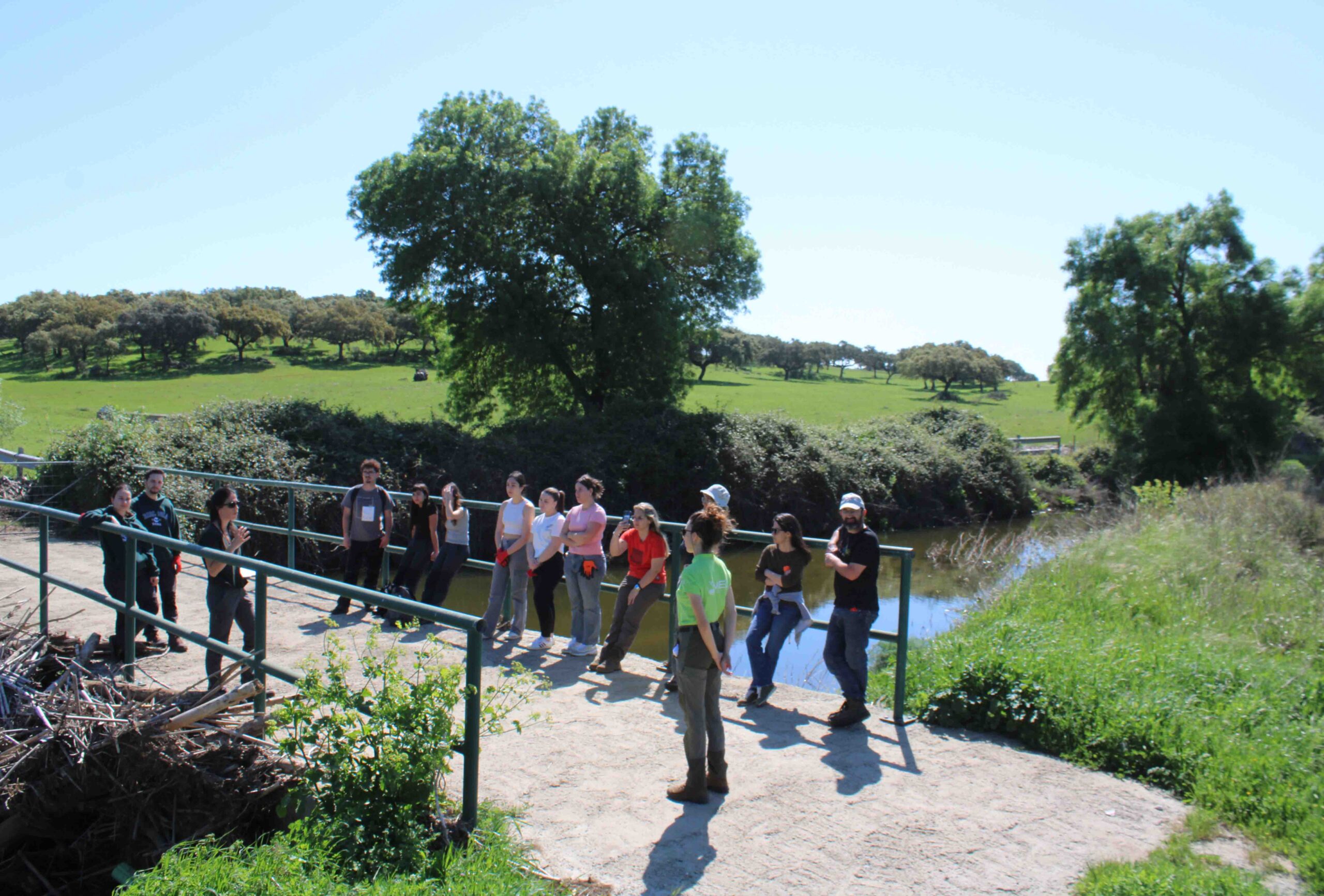
On March 26, the University of Évora (UÉvora) within the CARDIMED Project framework, promoted a volunteer activity under the UÉ Volunteering Program, bringing together 12 participants in a hands-on initiative focused on biodiversity conservation and wildlife support in Mediterranean ecosystems, through the construction of shelters for wildlife fauna in Caridade river, Reguengos de Monsaraz.
The activity brought together a diverse group of participants, including forestry management technicians, researchers and students from the Biology undergraduate program and the Master’s program in Conservation Biology, integrating a scientific approach with a hands-on field application.
During the initiative, participants were involved in the construction of natural wildlife fauna refuges using locally sourced materials such as logs and branches resulting from heliophilous vegetation management activities carried out as part of the active restoration on a pilot property of montado. These structures were designed to support the European rabbit, an endangered endemic specie to the Iberian Peninsula. A keystone specie that plays a fundamental ecological role as primary prey specie for more than 40 predator species, including the Iberian lynx (Lynx pardinus) and the Imperial Eagle (Aquila adalberti), both classified as Vulnerable on the Red List of Threatened Species.
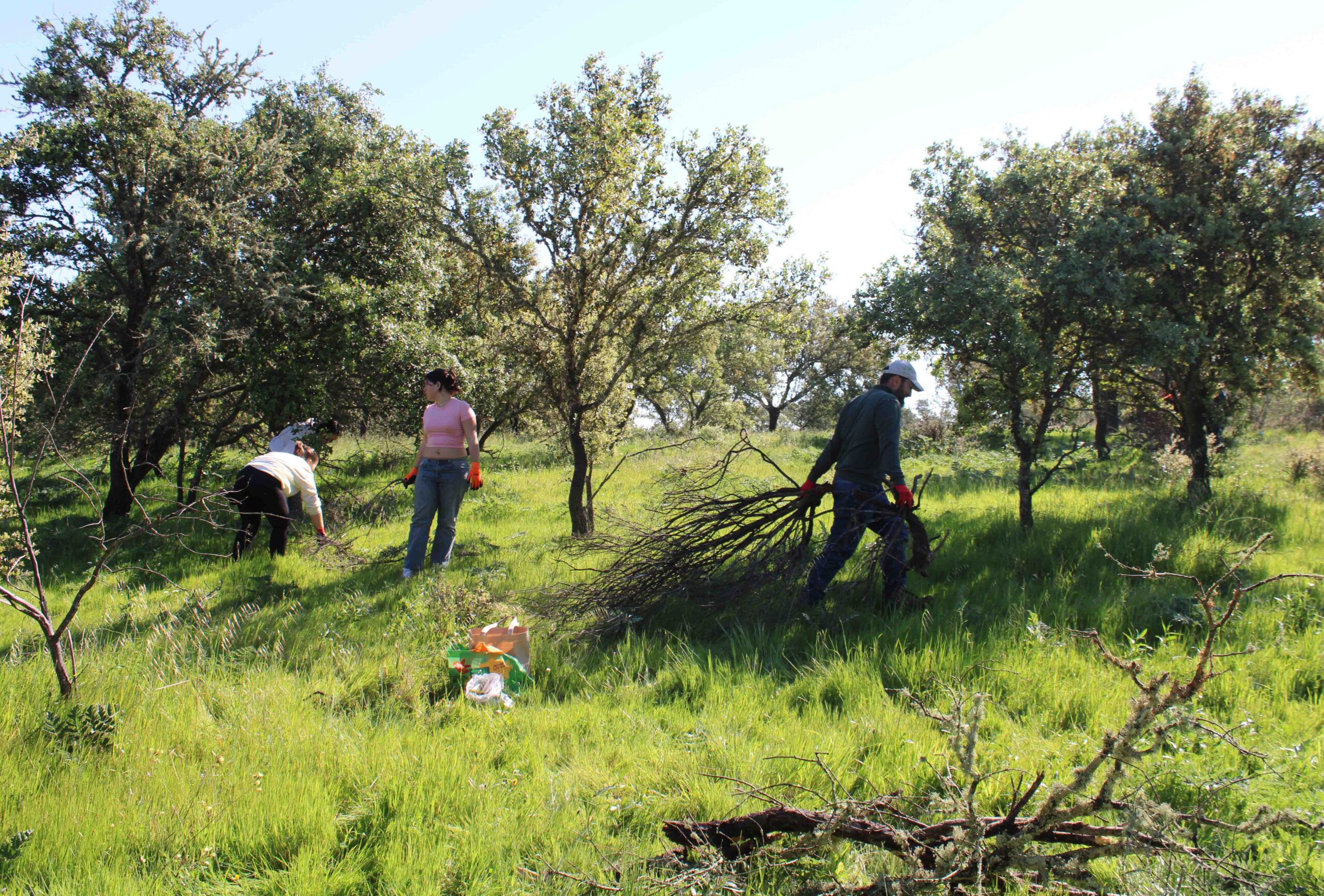
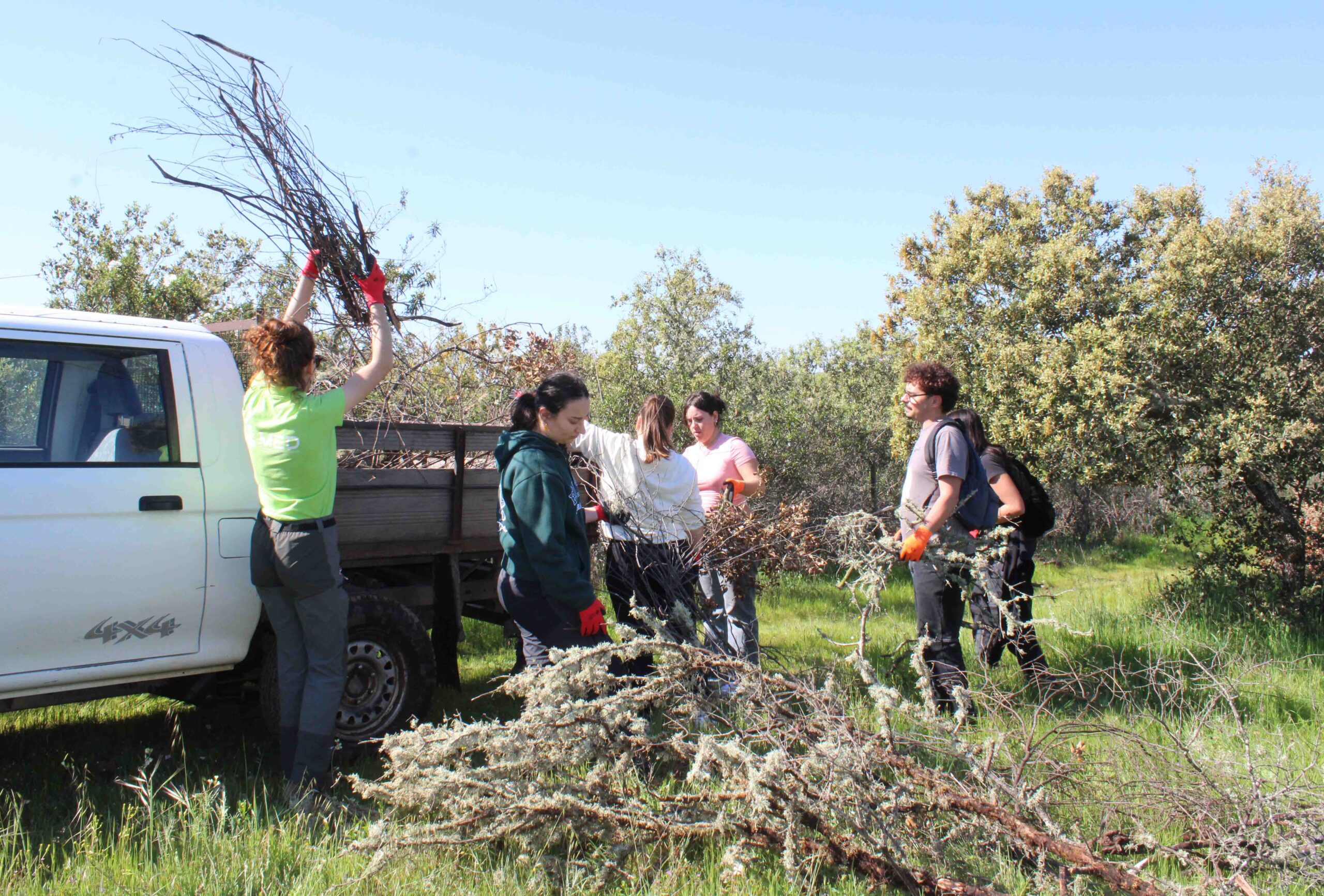
The construction of these refuges provides multiple ecological benefits, including protection from predators, extreme weather conditions and creating a support structure that promotes reproduction and social behavior. Additionally, increasing rabbit populations contributes to ecosystem functioning, such as seed dispersal and soil fertility improvement, ultimately enhancing biodiversity and ecosystem resilience.
Beyond its practical component, the activity also emphasized environmental awareness and the importance of Nature-based Solutions in addressing climate change and biodiversity loss. By engaging volunteers in simple, low-cost, and effective conservation techniques, the initiative highlighted how targeted actions, such as the creation of wildlife shelters, can generate meaningful ecological impacts, as well as the importance of involving local communities and volunteers in biodiversity conservation efforts.
This activity is part of the ongoing efforts to promote biodiversity, environmental education, and sustainable adaptation strategies in the Central Alentejo region. Within this framework in CARDIMED Project, CIMAC and the University of Évora are collaborating to restore riparian vegetation of riparian galleries in Central Alentejo, selected for their distinctive ecological characteristics and their relevance to the region’s environmental challenges.
This initiative reflects the ongoing commitment of the University of Évora to promote environmental education, civic engagement, and sustainable land management practices, while encouraging the adoption of practical solutions to current ecological challenges.