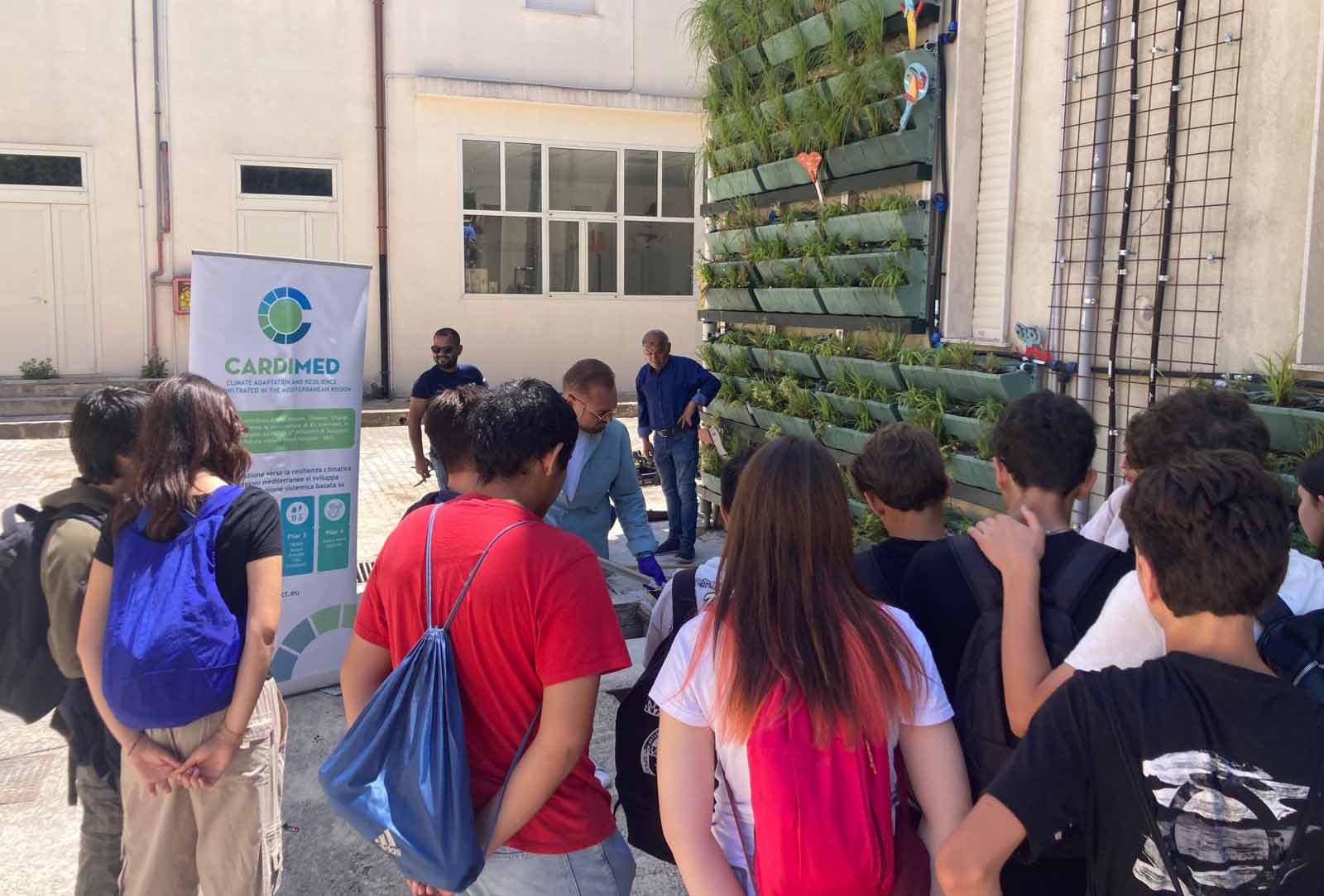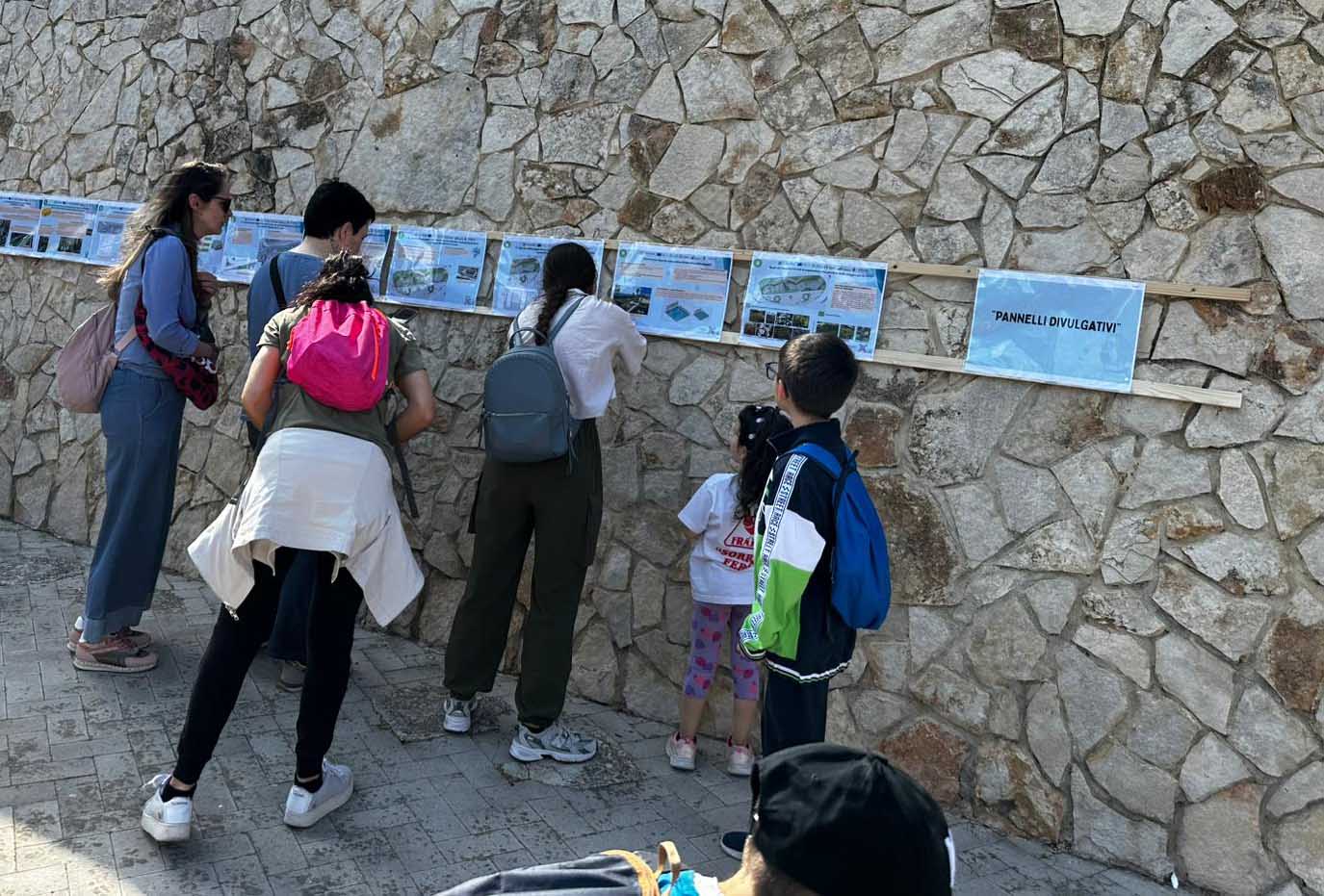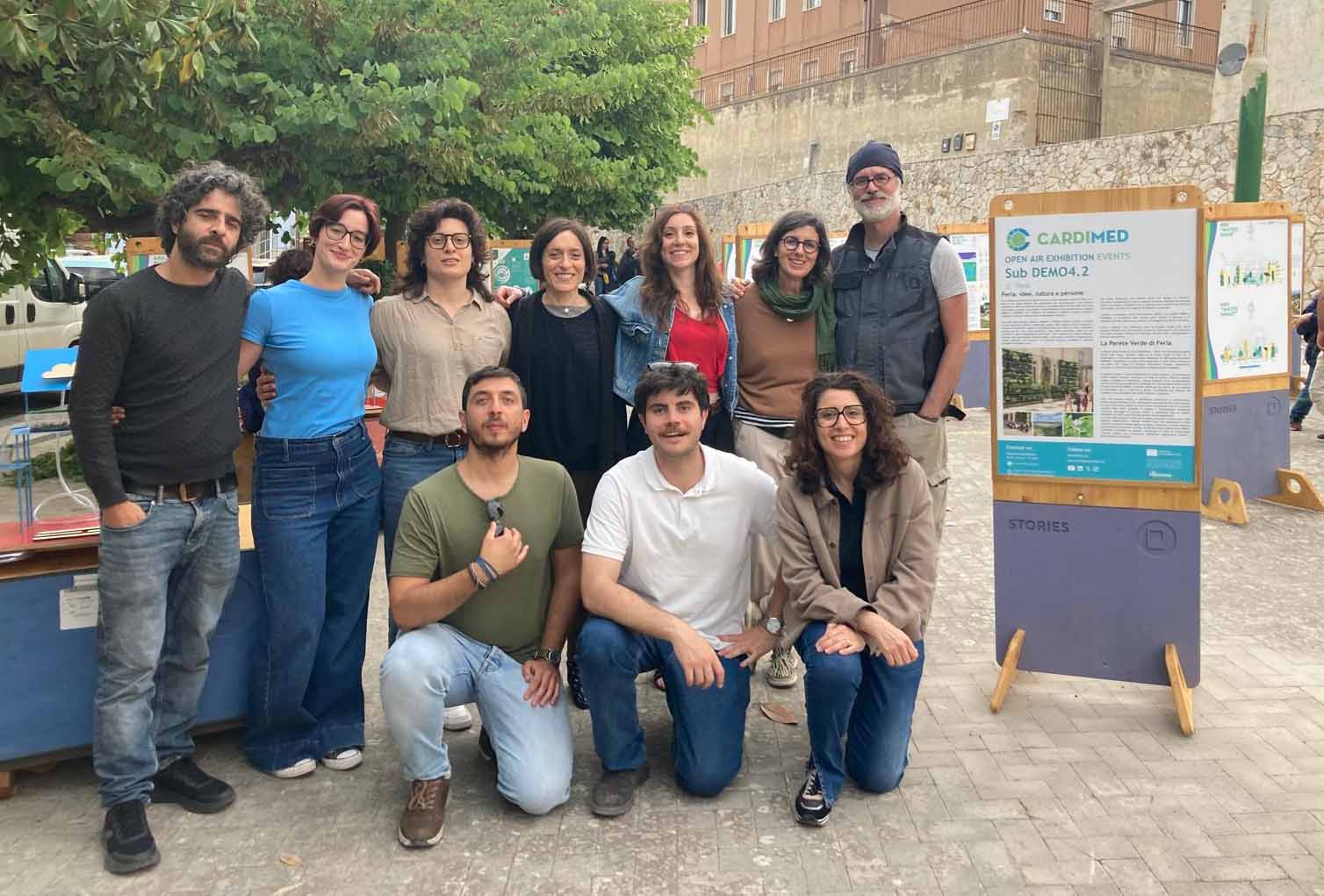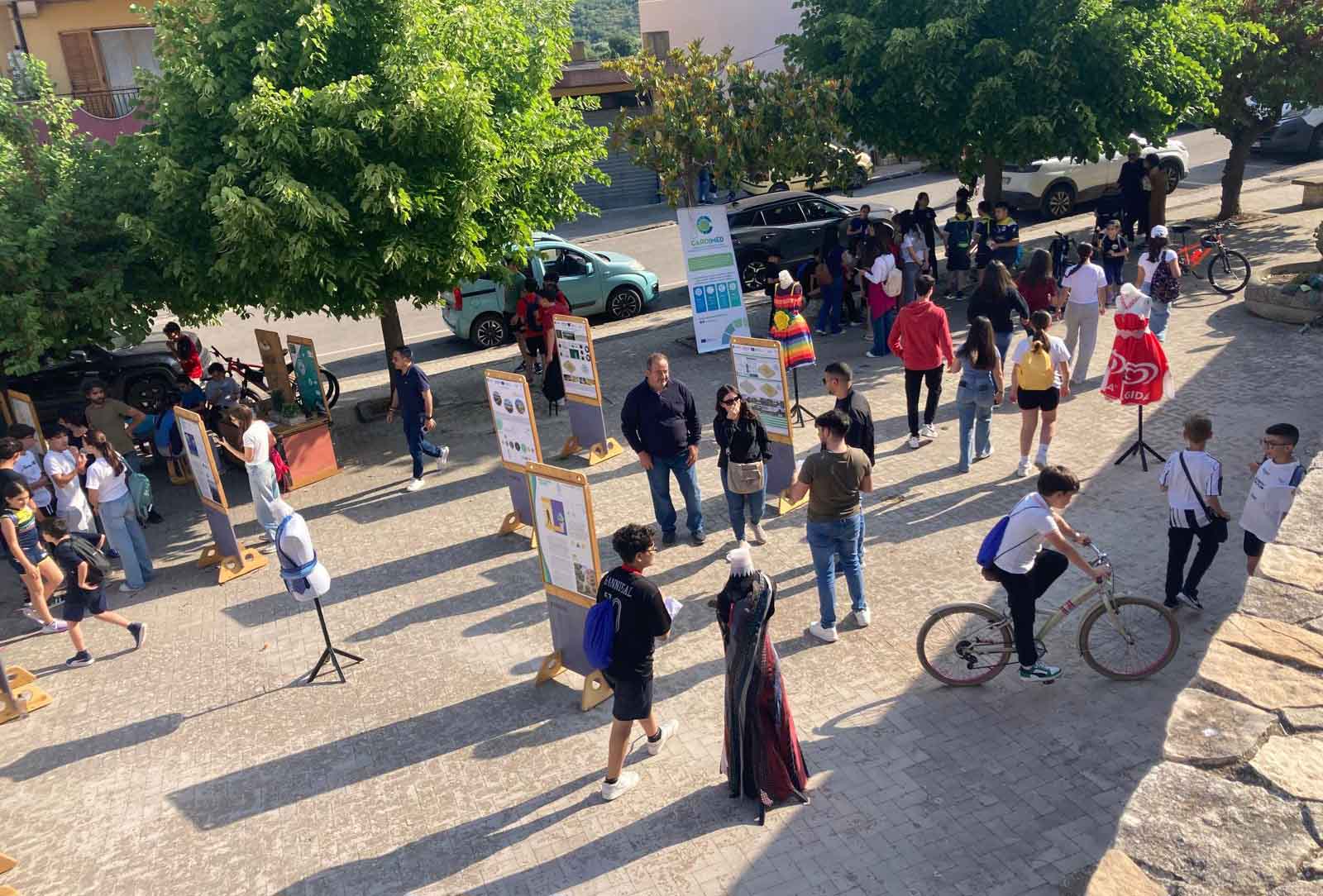
On 23 May 2026, in Piazza Aldo Moro in Ferla (SR), the community gathered for a day of learning, art and celebration dedicated to sustainability. At the heart of the event organised by SVI.MED. – Euromediterranean Center for the Sustainable Development, in synergy with the Municipality of Ferla and the support of ANCE Siracusa, an open-air exhibition on good practices in urban regeneration gave visibility to the results achieved across the territory, among them those of sub-DEMO4.2 of the CARDIMED project.
The day opened in the morning with an educational path dedicated to schools: a guided visit to the green wall, attended by students from the “Luigi Einaudi” Institute of Siracusa, joined throughout the day by other visitors curious to discover the demonstrator. That same morning, the University of Catania carried out the sampling of water from the wall for analysis — a concrete step in the monitoring process that allows the demonstrator’s performance to be measured over time, bringing the scientific dimension of CARDIMED directly into the day and making it visible to those present.
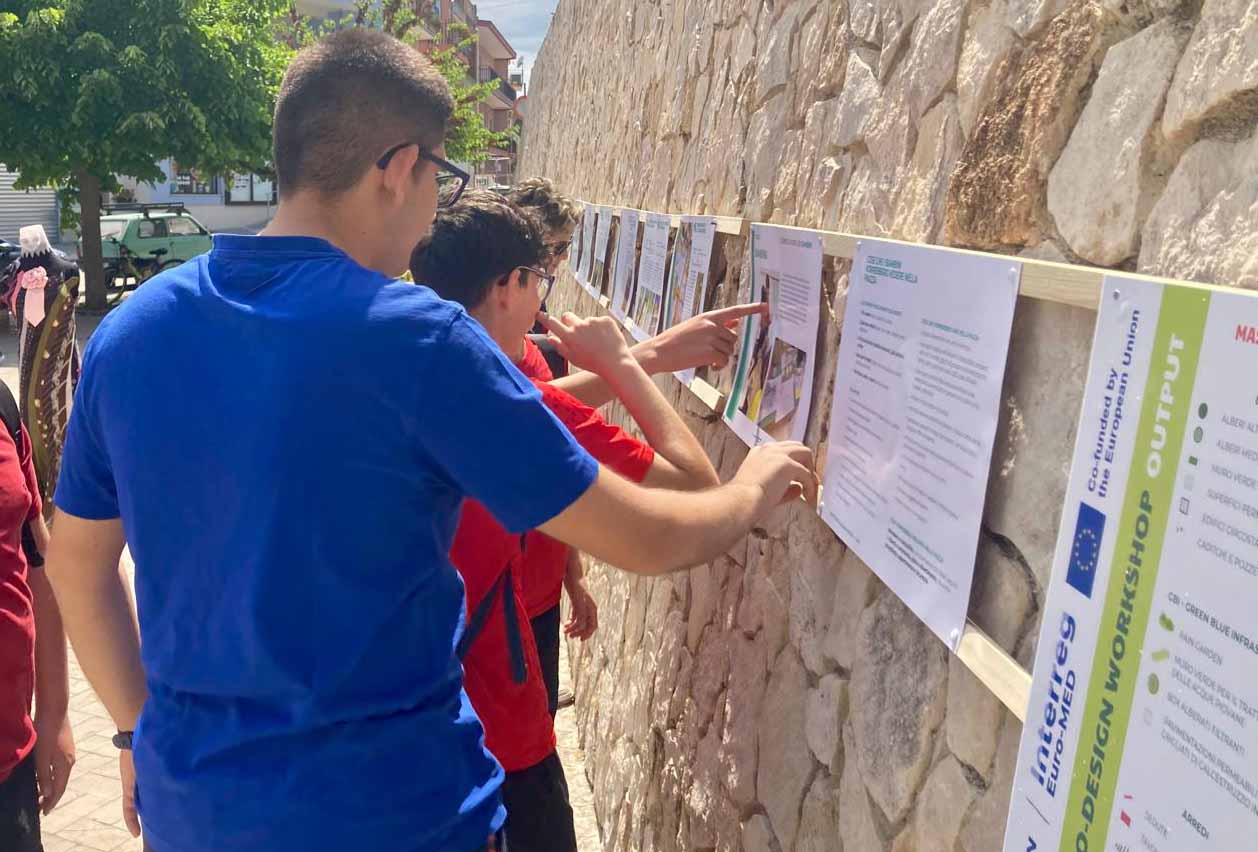
The heart of the day was the open-air exhibition on good practices in urban regeneration. The exhibition drew on the good practices gathered in the URWAN catalogue, presenting NbS through the distinction between “snob” and “smart” approaches, and showing how an alternative form of urban regeneration is not only possible, but concrete and practical — and Ferla is the proof. In the afternoon, the square came alive with itinerant activities and games designed to bring the exhibition to life. One of the most distinctive aspects of the event was the strong use of gamification and playful learning approaches to engage the local community. “The Treasure of Ferla“, a sustainability-themed treasure hunt co-designed together with local associations — particularly RiciCreo Ferla, the Civil Protection group and local sports associations — transformed the village into an open-air educational pathway focused on Nature-based Solutions, sustainability and community participation.
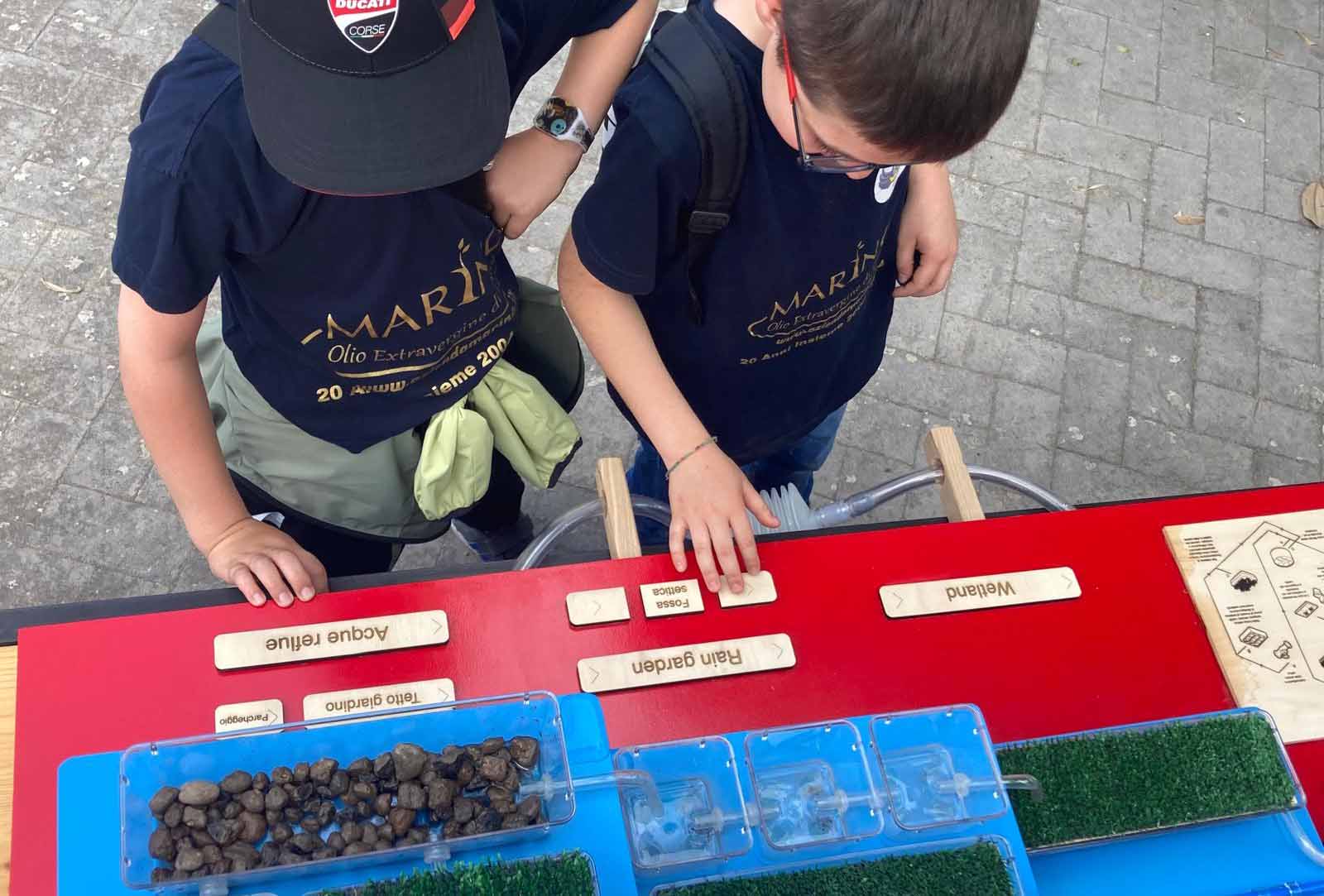
Organised into seven teams, children and teenagers became the real protagonists of the initiative. Moving through different stages of the treasure hunt, participants explored the exhibition, interacted with 3D scale models of Nature-based Solutions and solved riddles connected to the environmental and social benefits of the interventions presented. Each team was challenged to identify and understand a specific NbS and then explain it to members of the local community. In this way, younger participants unexpectedly became active ambassadors of sustainability, successfully engaging adults who would not normally take part in technical or institutional events.
The exhibition therefore functioned as an educational medium rather than a static display. Citizens learned through exploration and collective discovery, generating curiosity, enthusiasm and spontaneous participation. The final “treasure” of the hunt symbolically reflected the alliance between biodiversity, nature and community care, reinforcing the values underpinning the Green Living Wall and the broader CARDIMED vision.
The event also offered an opportunity to showcase the wider ecosystem of initiatives converging around the sub-DEMO4.2. Visitors were introduced to recent improvements implemented through the Horizon Europe NICE Fellowship activities, including a rain garden connected to the wall, environmental sensors monitoring key parameters, and new infrastructure for future greywater reuse. Together with CARDIMED monitoring activities and URWAN participatory processes, these interventions demonstrate how different European projects can contribute to climate adaptation and sustainable water management in small Mediterranean communities.
Special attention was also dedicated to the participatory work carried out through the URWAN project using the Start Park co-design methodology. Piazza Aldo Moro, which hosted the event, was presented as a tangible result of this process. Posters and publications illustrated the co-design activities developed with students and citizens and the proposals for the future regeneration of the square through Nature-based Solutions. Additional materials also showcased the Digital Twin developed for Ferla within URWAN, designed to support future planning and investment decisions.
What CARDIMED helps to leave in Ferla is not only a working green wall, but a method: a monitored, measurable and replicable natural infrastructure, and a community that has learned to recognise it as its own. In a small and isolated territory, grappling with water scarcity, this means demonstrating in concrete terms that global change can come from local action — and that NbS are a practicable answer, as well as a necessary one.