Water management in urban environments faces growing challenges due to climate change: heavy rainfall, flooding, and prolonged droughts are becoming increasingly frequent. In this context, Mediterranean cities must adopt innovative and sustainable measures to reduce the vulnerability of their infrastructures. Sustainable Urban Drainage Systems (SUDS) have emerged as one of the most effective solutions to naturally and decentralisedly manage stormwater in urban areas.
Since the 1950s, urban surface areas have continued to expand, reaching 78%, while the population has only increased by 33%. This imbalance reflects a model of extensive urban sprawl, meaning that more land is being occupied per inhabitant.
Such imbalance has led to negative consequences, including the intensification of the urban heat island effect, higher flood risks, restrictions on gas exchange between soil and atmosphere, increased pollution, and a general deterioration of urban environmental health.
Adding to this scenario, projections indicate that intense rainfall events could increase by up to 60% by 2100, further aggravating the effects of soil sealing. In this context, SUDS represent a viable solution to mitigate the impacts of climate change in urban environments, enabling infiltration, retention, and reuse of rainwater.
To address these challenges, our Spanish partner Construction Technology Centre of the Region of Murcia (CTCON) has participated in the ECOCEM project, which aims to mitigate the effects of surface impermeability in urban areas by facilitating stormwater runoff, enhancing flow retention and attenuation, delaying basin response times, reducing flow velocities, and increasing water accumulation capacity.
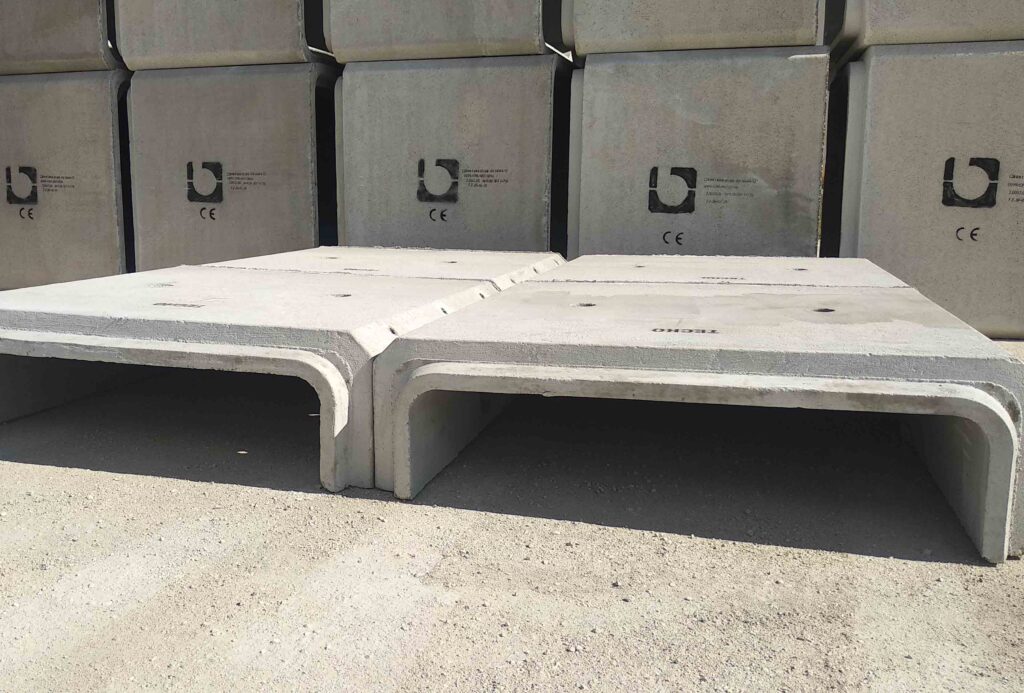
Within the framework of the ECOCEM project, a novel urban drainage system has been developed, consisting of prefabricated concrete modules with a portal-like shape, designed to be buried beneath impervious surfaces such as roads or car parks. Each module features a sloped upper slab supported by two lateral walls of different heights, facilitating the collection and conveyance of rainwater into the structure.
The system allows for the capture, storage, conveyance, infiltration, or controlled discharge of stormwater and can be configured as a tank or channel, depending on the arrangement of the modules. Moreover, it includes outlets for directing water toward sewer networks, reuse tanks, or directly into the ground for aquifer recharge.
The main innovation lies in its high structural capacity and large water storage potential, as the modules—made of high-strength concrete—can withstand vehicular traffic, making them suitable for installation in high-load urban areas. Additionally, the system represents a sustainable alternative by eliminating the need for plastics in its construction.
Altogether, this development provides an efficient, robust, and environmentally friendly solution for the sustainable management of stormwater in urban environments.

Figure 1. Casting process of the prefabricated concrete module.
The urban drainage system developed within the ECOCEM project has resulted in the patent application No. P202230747 – “Urban Drainage System”, which comprises at least one underground longitudinal stormwater collection structure with two opposite ends, inlet and outlet means for water, and at least one structure made up of hollow concrete modules. Each module includes at least one opening providing access to an internal cavity, forming a continuous communication channel between its front and rear faces. These modules are arranged consecutively, facing each other by their corresponding faces, and connected through infiltration joints—whose formation means are integrated into each module—ensuring continuity of the communication channel along the entire structure.
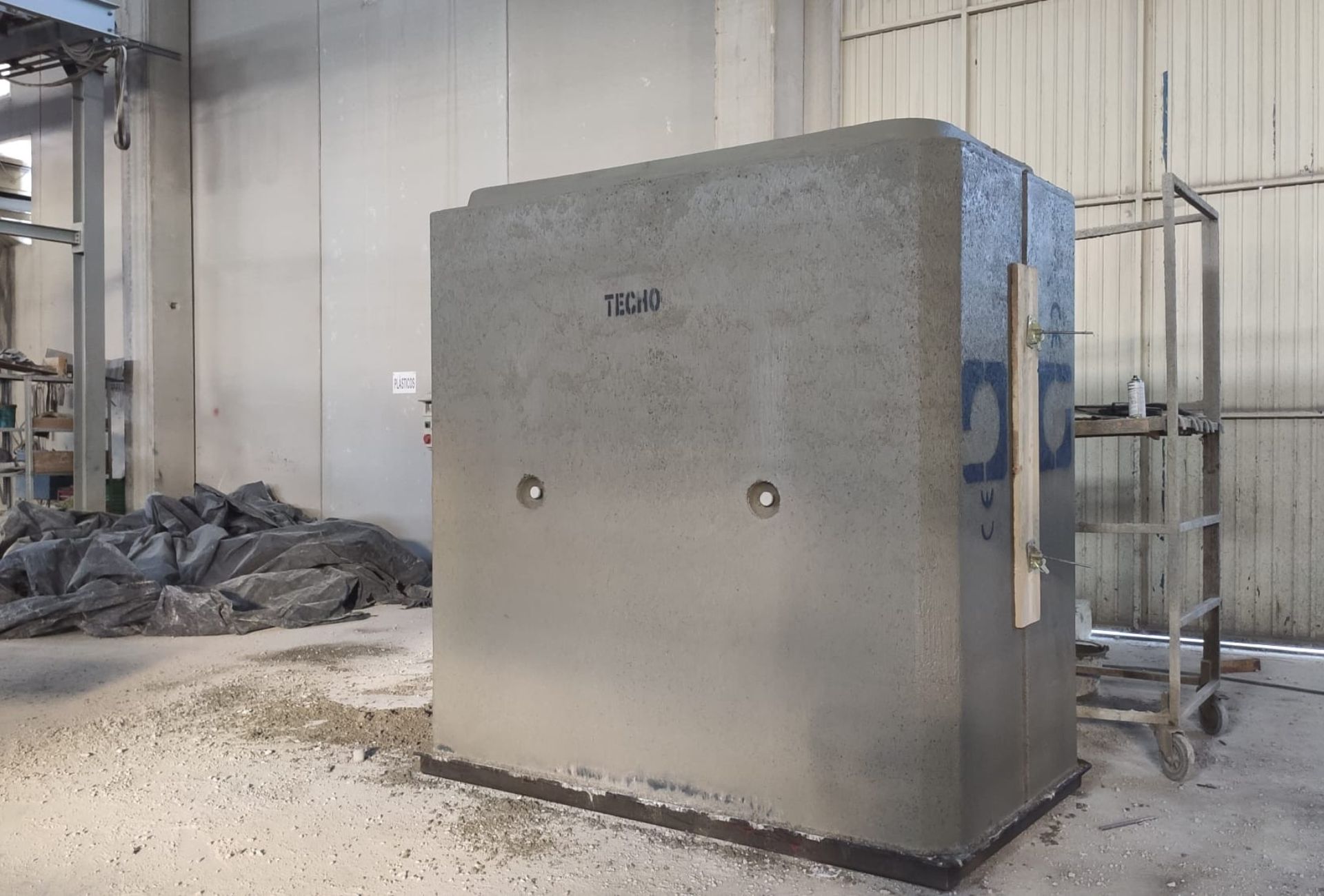
Figure 2. Demolding of a high-strength concrete drainage module.