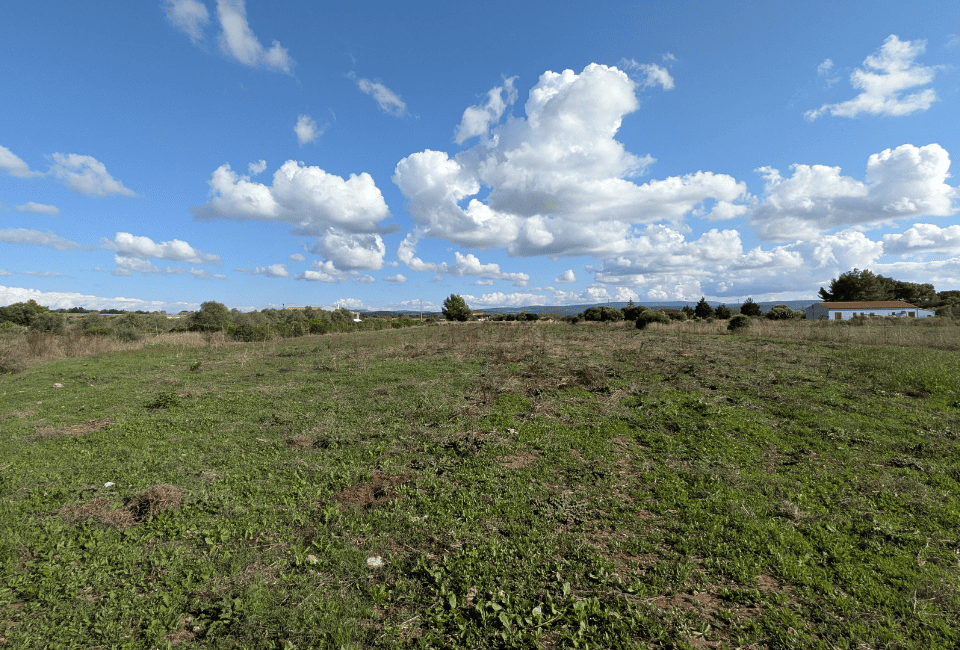
Soils play a paramount role in providing ecosystem services to people, including provisioning services such as food, feed, fibre and wood; regulating services such as regulating the cycle of many greenhouse gases (GHGs), regulating the terrestrial hydrological cycle and controlling pests and diseases; cultural services such as protection of archaeological heritage and physical support for construction; and supporting services such as soil formation and fertility, and habitat for biodiversity. To illustrate the complexity of the soil system, it is sufficient to note that the number of species inhabiting the soil, ranging from vertebrates to microbes, is estimated to be between 9.5 × 10⁶ and 1.04 × 10¹⁰ [1].
The importance of soil in the carbon cycle becomes clearer when we consider that, in addition to the 500 Pg C held in plant biomass, terrestrial ecosystems also hold 1,500–2,000 Pg of carbon in the form of soil organic matter. Furthermore, soil and surface litter store two to three times more organic carbon than the atmosphere and vegetation combined. This has significant consequences for climate regulation, particularly in temperate, cold and boreal biomes[2] if soil is affected in such a way that the carbon stock is liberated.
Many attempts have been made to assess the economic value of the contribution of soil to people, with results that are always astonishingly high, although very contrasting. Examples from the EU-25 in 2023 € are as follows: the cost of soil erosion ranges from €750 million to €18,281 million per annum; the cost of soil contamination ranges from €5,049 million to €250,585 million per annum; and the cost of salination ranges from €158 million to €321 million per annum[3].
It is important to stress that soil does not function autonomously, but is part of a complex organism comprising plants, the mineral soil, and organisms inhabiting the phyllosphere (the environment of plant leaves) and the rhizosphere (the environment of the roots). In reality, the soil biota supports most plant functions, and to maintain this essential cooperation, plants allocate 20–40% of the atmospheric carbon they capture through photosynthesis to feed the soil biota living in their rhizosphere.
In the face of the current global crisis, soil emerges as a vital tool in the fight against climate change, helping to reduce associated risks and develop adaptation strategies.
The vast majority of nature-based solutions use soil-plant organisms as tools or alter their structure and function in some way. Therefore, soil’s environmental services should be included in NbS monitoring plans from one or both of the following perspectives: either soil restoration is a key performance indicator of the action, or conserving and improving soil health is part of the environmental co-benefits required for an NbS to be recognised as such.
Soil carbon (C) stocks can be dramatically affected by NbS when programmed actions include changes in land use. For instance, reforesting croplands with native vegetation or planting trees on grasslands can boost soil organic carbon levels by 25–40% in the topsoil. Changes in soil management can significantly influence the balance of CO₂ sequestration and emission. For instance, maintaining continuous vegetation cover in woody crops can result in an annual positive change rate of 0.32 Mg ha⁻¹ yr⁻¹ in the upper soil cm, thereby contributing to offsetting greenhouse gas emissions.
Despite the overwhelming importance of maintaining and restoring soil health, this is rarely considered in NbS monitoring plans. A recent in-depth review of indicators proposed for NbS monitoring in EC-funded projects and reference reports on NbS revealed that only 49 of the 570 indicators addressed soil.
The first limitation when promoting the inclusion of soil in NbS monitoring plans is the lack of consensus on the meaning of ‘soil health’ and, more specifically, on the most appropriate indicators for assessing it. Soil multifunctionality suggests the construction of integrated indexes based on minimal sets of indicators covering physical, chemical and biological properties. However, this approach is often impeded by trade-offs between soil services and disservices. The close interdependence between soil properties, local climate, geological materials, topography, land use history and landscape structure makes it difficult to establish universal ‘optimal’ values for each indicator, or expected patterns of evolution over time.
In practice, additional problems arise due to the cryptic nature of soil. Despite increasing attempts to replace field sampling and subsequent laboratory analysis with satellite imagery and pedotransfer functions, few of these methods are reliable at a local spatial scale.
Besides scientific limitations, the lack of budget allocated to monitoring plans, and specifically to soil monitoring, in NbS projects is one of the major constraints to consistent monitoring. Furthermore, most soil indicators evolve very slowly after disturbance, requiring long-term monitoring plans. It is also necessary to determine who is legally responsible for this monitoring after the projects end.
If you are at charge of monitoring the impact of NbS on the soil ecosystem, these recommendations may be useful:
- Be sure that you include monitoring costs in the project budget and that there is a responsible of its long-term execution.
- Clearly identify the soil functions and services that will be affected by the action, and select sensitive indicators
- Agree on the indicators to be monitored with the NbS managers. Try to make their work as easy and cheap as possible. This is vital to make soil monitoring viable.
- Provide clear and practical technical and scientific orientation to the NbS managers to run their monitoring campaigns.
[1] Anthony et al. (2023). PNAS120(33), e2304663120
[2] Scharlemannet al (2014). Carbon Management, 5(1), 81-91
[3] Görlach et al (2004): Study commissioned by the European Commission, DG Environment, Study Contract ENV.B.1/ETU/2003/0024. Berlin: Ecologic