Integrating Nature-based Solutions (NbS) for comprehensive stormwater management to enhance water availability and mitigate urban flood risks: THESEUS Hub4Circularity. A First of a kind Hub for circularity demonstrator for Attica and peripheral
An innovative Nature-based Solutions system is being developed at KAPAPS Park in Athens to demonstrate how circular stormwater management can strengthen urban resilience to climate change. The intervention combines green infrastructure, hybrid hydrological systems and smart technologies to collect, treat, store and reuse rainwater, while improving the ecological functionality of the park and reducing flood risk.
The Attica region is facing increasing pressure on its water resources due to rapid urbanisation, extensive surface sealing and the impacts of climate change. More frequent urban heat island effects and less frequent but more intense rainfall events are placing additional strain on urban drainage systems and water availability. To address these challenges, the project introduces an integrated solution that transforms rainwater into a valuable resource, reducing dependence on potable water while promoting a more sustainable urban water cycle.
Restoring the urban water cycle through an integrated system
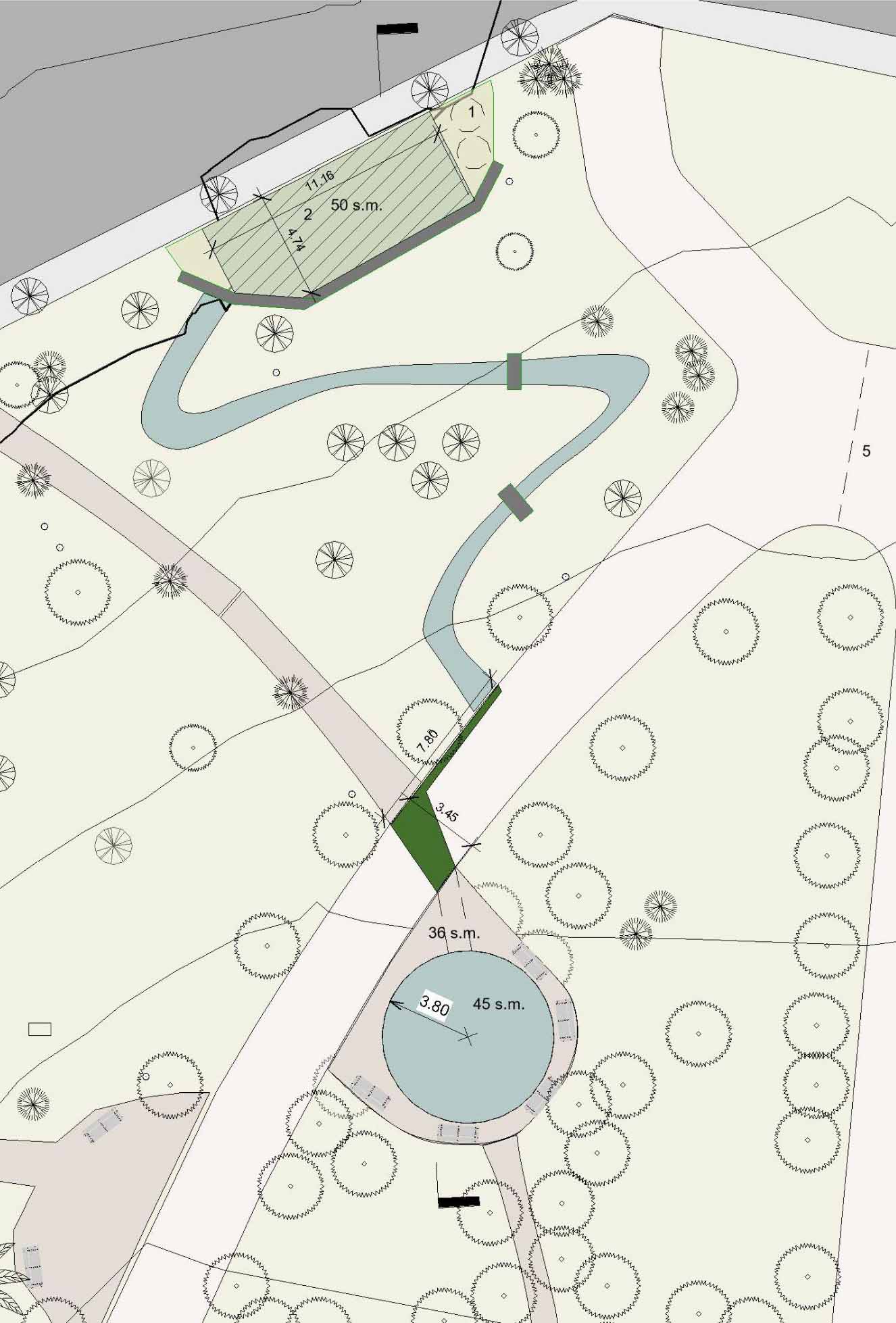
The intervention combines several complementary Nature-based Solutions that work together to manage stormwater from the moment it reaches the urban environment until it is safely reused within the park.
Part of the runoff generated from the surrounding streets is diverted into the system, where it undergoes different stages of natural treatment before being stored and reused for irrigating the park’s green areas. In this way, the intervention not only reduces pressure on the municipal drainage network but also restores the local water balance and promotes circular water management.
The first stage begins with a permeable curb integrated into the sidewalk, allowing runoff to enter the system while removing coarse debris. The water then passes through an oil and sand separator before reaching the first rain garden, which has been designed to temporarily retain stormwater, regulate water flows, provide subsurface storage and contribute to passive irrigation and natural urban cooling.
Natural treatment for cleaner and reusable water
Following the initial treatment, water flows by gravity through a vegetated bioswale that naturally improves water quality through biofiltration while promoting infiltration and groundwater recharge.
The treated water is then conveyed to an underground storage unit that also functions as a secondary flood attenuation basin. This subsystem incorporates an additional rain garden that provides overflow capacity during heavy rainfall events, ensuring the safe management of excess stormwater.
Once the required water quality has been achieved, the stored water is reused through an automated drip irrigation network to supply the park’s vegetation, particularly its trees. During extreme rainfall events, excess water is safely redirected back into the municipal drainage system.
Smart technologies supporting climate resilience
Alongside the Nature-based Solutions, the project integrates an advanced telemetry system equipped with soil moisture and water quality sensors, as well as a smart irrigation controller that can be remotely monitored and managed.
To ensure long-term sustainability, all monitoring and automation equipment will operate autonomously using photovoltaic panels, providing a reliable and energy-efficient solution for the park.
The intervention is complemented by a dedicated planting strategy based on carefully selected plant species, ground cover and specialised substrates. These measures improve soil moisture retention, reduce evaporation losses and support healthy vegetation with minimal maintenance requirements. At the same time, they contribute to increasing biodiversity and mitigating the urban heat island effect.
A demonstration project for Mediterranean cities
Beyond its technical components, the project also places strong emphasis on public awareness. An information board will be installed within the park to explain the circular water management concept, the environmental benefits of the intervention and the role of the implemented Nature-based Solutions in improving urban resilience.
By combining natural processes with smart technologies and circular water management principles, the KAPAPS Park intervention demonstrates how urban public spaces can become more resilient to climate change. As a demonstration project, it provides a replicable example of how Nature-based Solutions can help Mediterranean cities address flooding, improve water efficiency, enhance biodiversity and create healthier and more sustainable urban environments.