The Mediterranean is among the regions most affected by the impacts of climate change. Wildfires, extreme weather events, biodiversity loss, and the degradation of natural ecosystems are creating new challenges for local communities and the environment. In this context, strengthening resilience depends not only on infrastructure and technical solutions, but also on the knowledge, values, and behaviours of the citizens who will be called upon to face the challenges of the future.
Environmental education is one of the most powerful tools for fostering this new culture. Through hands-on experiences, direct contact with nature, and participation in collective activities, younger generations develop a deeper understanding of ecosystems and recognize the important role they can play in protecting them.
With this vision in mind, the Region of Central Greece organized the environmental awareness and educational initiative “Learning to Love the Forest”, held in Setta, Evia, under the auspices of the Hellenic Ministry of Environment and Energy. More than 350 primary school students from the Municipality of Eretria participated in this large-scale event dedicated to forests, biodiversity, and environmental awareness.
The choice of Setta was far from accidental. It is one of the most important mountainous forest areas in Central Greece, characterized by rich biodiversity, high ecological value, and a long-standing connection with local communities. Its natural environment offers ideal conditions for experiential learning and meaningful engagement with nature.
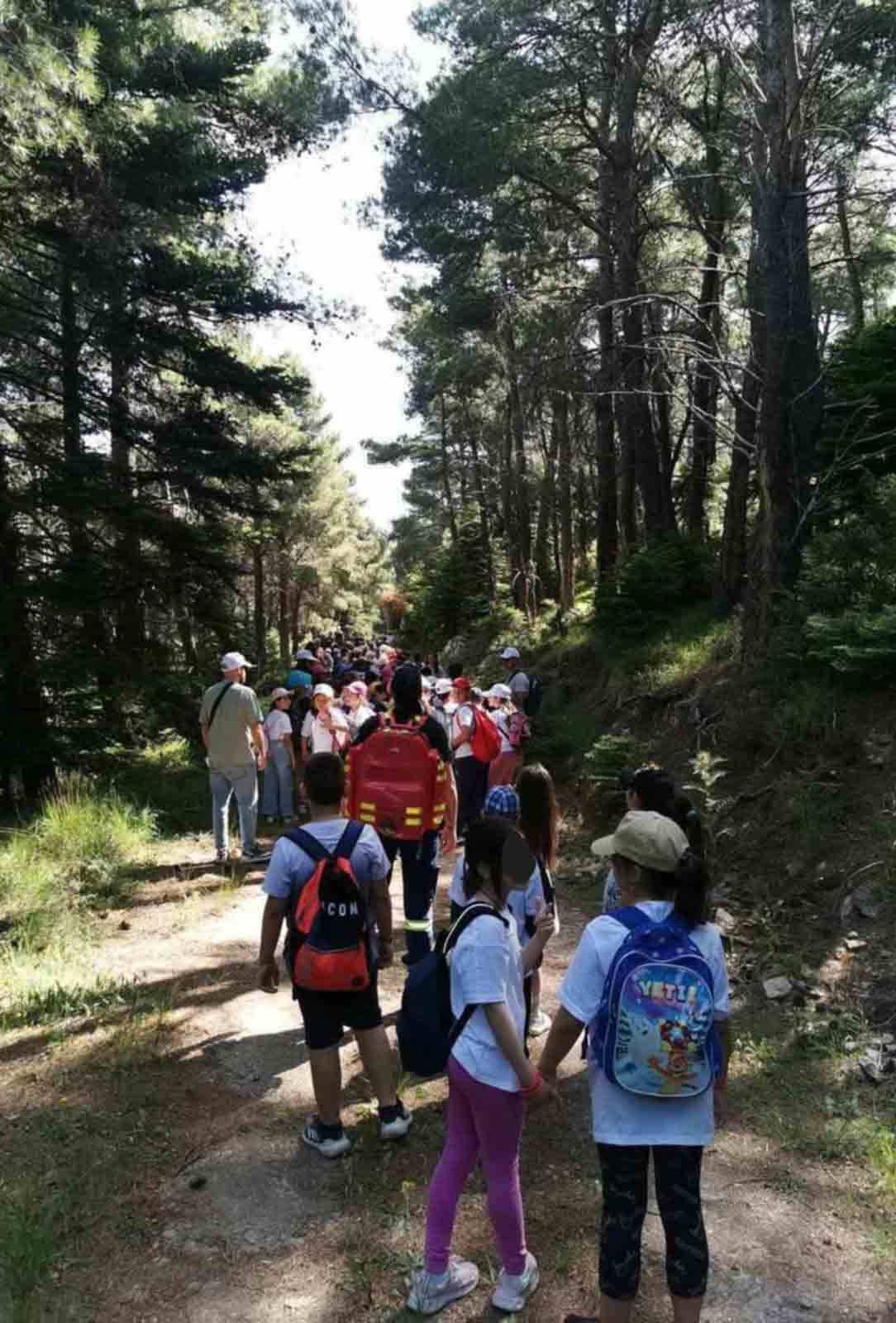
Rather than learning within the confines of a classroom, students were immersed in the very ecosystem they were invited to explore and understand. The event began with a guided walk through the forest along a route specifically designed for children. Through direct interaction with the natural environment, students had the opportunity to observe local flora and fauna, engage their senses, and appreciate the vital role that forest ecosystems play in maintaining environmental balance and supporting human well-being.
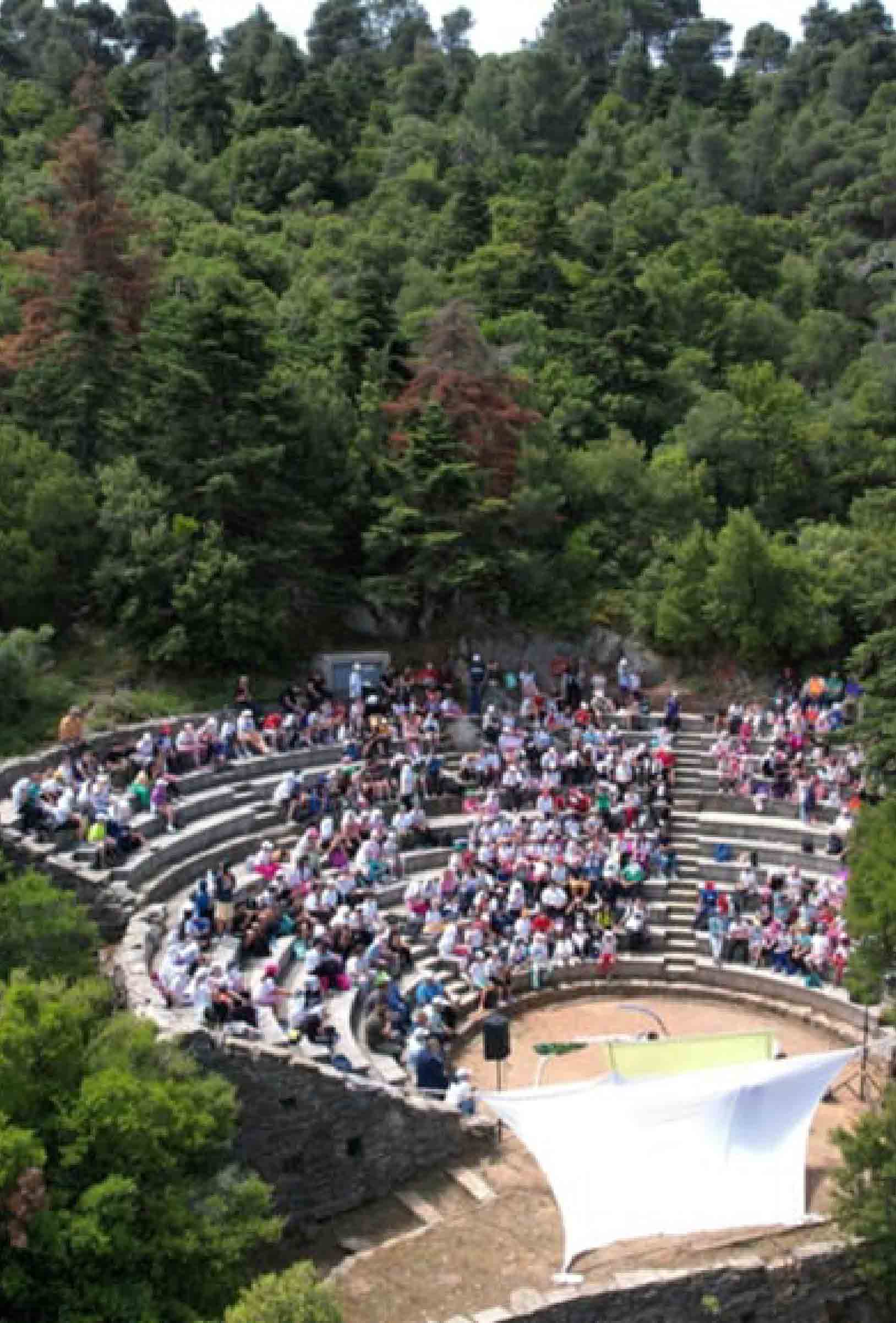
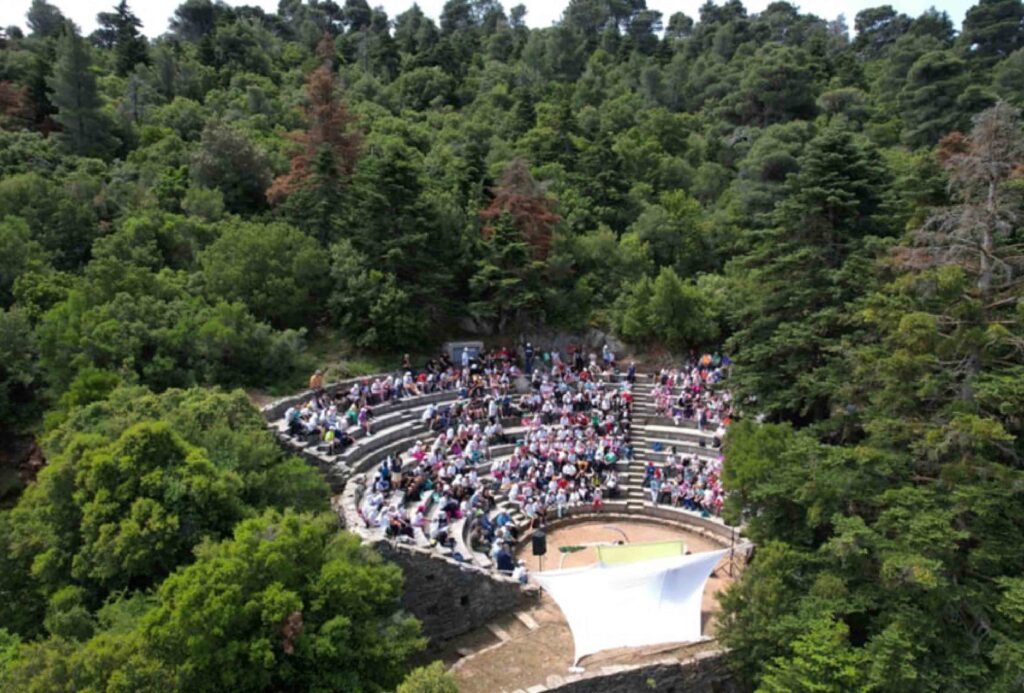
The educational programme continued at the open-air theatre “Nikos Pappakonstantinou”, where scientists, environmental experts, forest protection volunteers, and representatives of local organizations delivered presentations and interactive activities. Through real-life examples and field experiences, students learned about forest ecosystems, biodiversity, wildfire risks, and the environmental consequences of forest degradation.
Particular emphasis was placed on prevention and responsible behaviour. Children were encouraged to understand that environmental protection is not solely the responsibility of public authorities and institutions, but a shared responsibility that concerns all citizens. Developing environmental awareness from an early age may be one of the most effective forms of prevention against future environmental and climate-related challenges.
The success of the initiative was made possible through the collaboration of numerous stakeholders. Teachers, environmental organizations, forest protection volunteers, local associations, scientists, and regional authorities contributed to the creation of a comprehensive educational experience. This collaborative approach highlighted the importance of social participation as a key pillar of environmental governance and community resilience.
From Setta to Karystos: Environmental Education in Practice
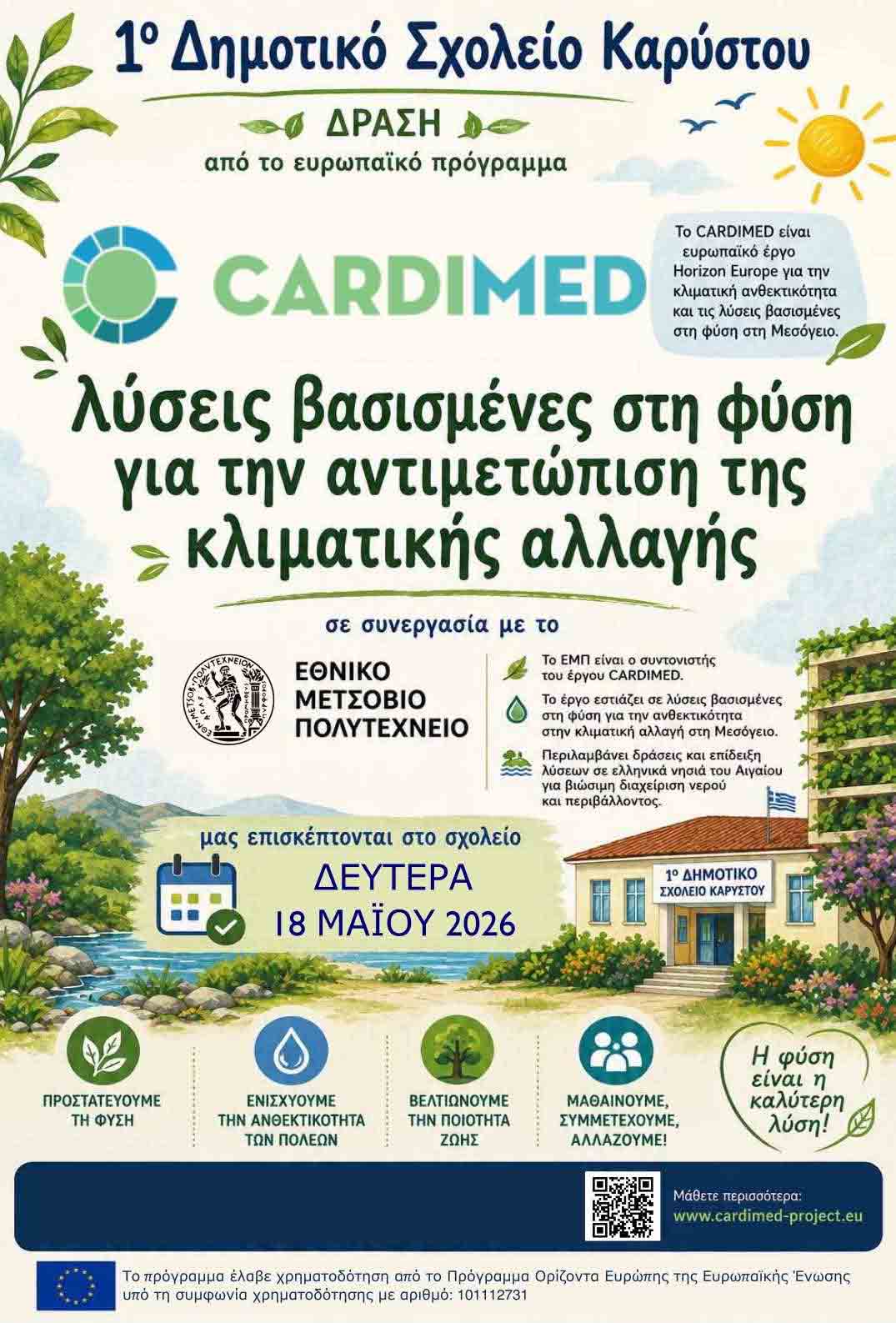
This approach did not end with the Setta initiative. As part of a broader effort to promote environmental awareness and disseminate knowledge generated through European projects, a second educational activity was organized at the 1st Primary School of Karystos in Southern Evia, in collaboration with the National Technical University of Athens (NTUA), the coordinator of the CARDIMED project.
During the event, students were introduced to the concept of Nature-based Solutions (NbS) and their role in addressing climate change. Through age-appropriate examples, they learned about the importance of protecting natural ecosystems, managing water resources sustainably, enhancing urban resilience, and improving quality of life through solutions that work with nature rather than against it.
The activity also presented the objectives and actions of the CARDIMED project, funded under the Horizon Europe programme and focused on developing innovative solutions for climate resilience across the Mediterranean. Students were given the opportunity to explore how scientific research, technology, and environmental protection can work together to address contemporary challenges such as water scarcity, flooding, rising temperatures, and ecosystem degradation.
The Karystos initiative represents an excellent example of knowledge transfer from scientific research and European-funded projects to the educational community. At the same time, it highlights the crucial role environmental education can play in shaping informed and active citizens capable of understanding environmental challenges and contributing to sustainable solutions for the future.
This approach is fully aligned with the objectives of CARDIMED, which promotes innovative strategies to strengthen the resilience of Mediterranean regions against the impacts of climate change. Environmental education and citizen engagement are essential components for the long-term success of any nature-based intervention.
A Lesson for the Future of the Mediterranean
The experiences of Setta and Karystos demonstrate that environmental education can be one of the most effective and enduring tools for strengthening climate resilience. Knowledge, experiential learning, and emotional connection with nature provide the foundation upon which responsible behaviours and active communities are built.
At a time when Mediterranean regions are on the frontline of climate change impacts, investing in younger generations is just as important as investing in infrastructure and environmental protection projects. Tomorrow’s citizens, scientists, professionals, and decision-makers are shaping their values and perceptions today.
The Region of Central Greece firmly believes that the transition towards a more resilient and sustainable future begins with knowledge, participation, and a deeper understanding of the value of ecosystems. Through initiatives such as “Learning to Love the Forest” and collaborations with scientific institutions such as the National Technical University of Athens, environmental education becomes a powerful tool for building communities that not only understand climate challenges but are also equipped to address them.
This is precisely the essence of CARDIMED: bringing together nature, science, innovation, and people to create Mediterranean regions that are more resilient, more sustainable, and better prepared for the future. Investing in the next generation may be the most meaningful and lasting investment we can make for the protection of our natural environment and the development of resilient societies.