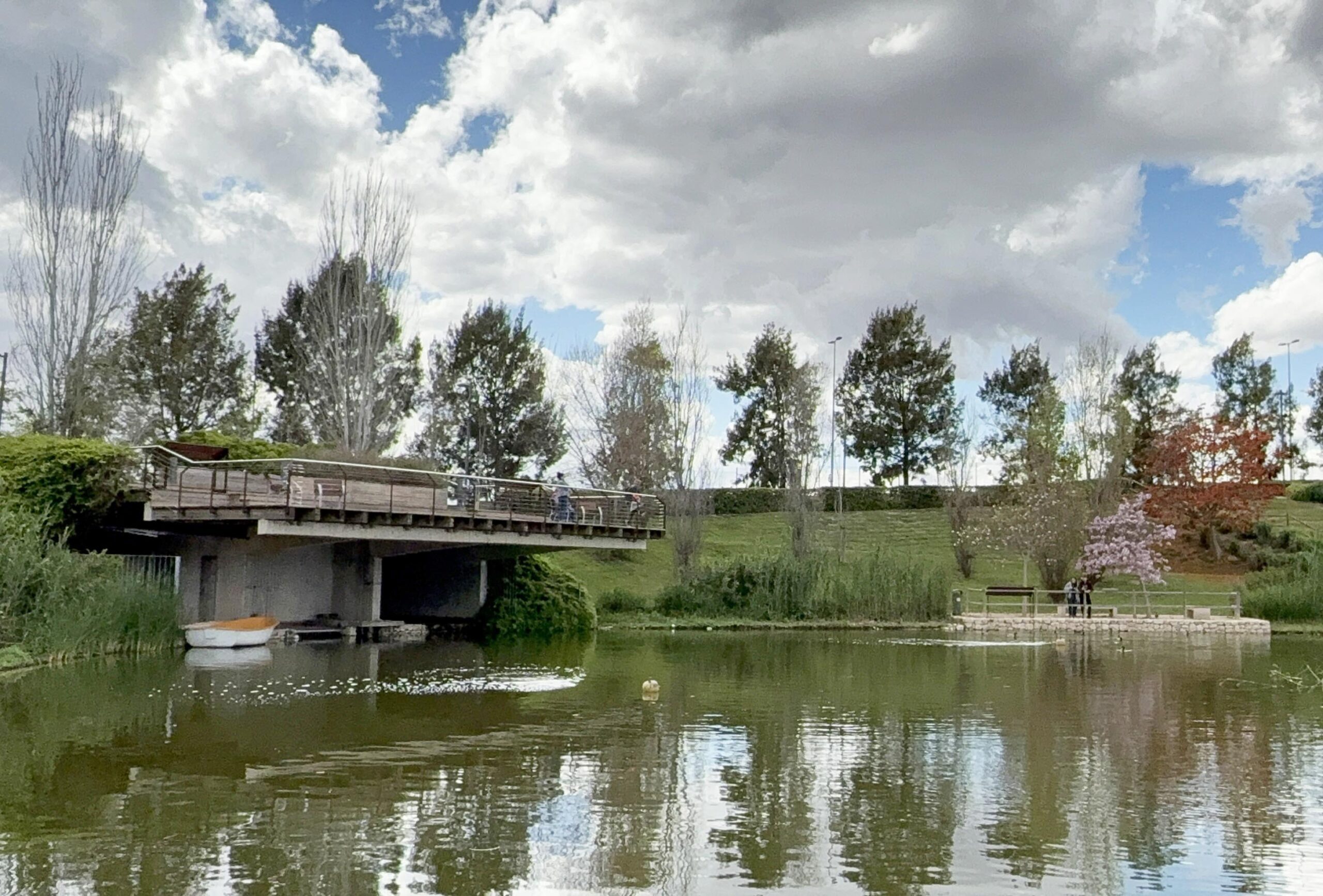
La Marjal Park is a floodable urban park, located in Alicante (Spain) and opened in 2015, that was created to temporarily store rainwater. It is located on a municipal plot of 36,700 m2 and includes two interconnected ponds, 338 and 6,674 m2, with a total storage capacity of 45,000 m3. After a rain period the Park is emptied by pumping the water to the wastewater treatment plant of Monte Orgegia to be treated and finally reused, mainly on the irrigation of the green urban areas of Alicante.
From 2015 to 2023, the infrastructure allowed storage of a total volume of 54,300 m3, effectively preventing flooding in the surrounding areas.
The design incorporates native vegetation, including reeds and aquatic plants, to purify water naturally. Technical features include permeable pavements, bioswales, and a smart water management system. The park also serves as habitat for local wildlife and provides recreational spaces for residents, combining environmental and social benefits.
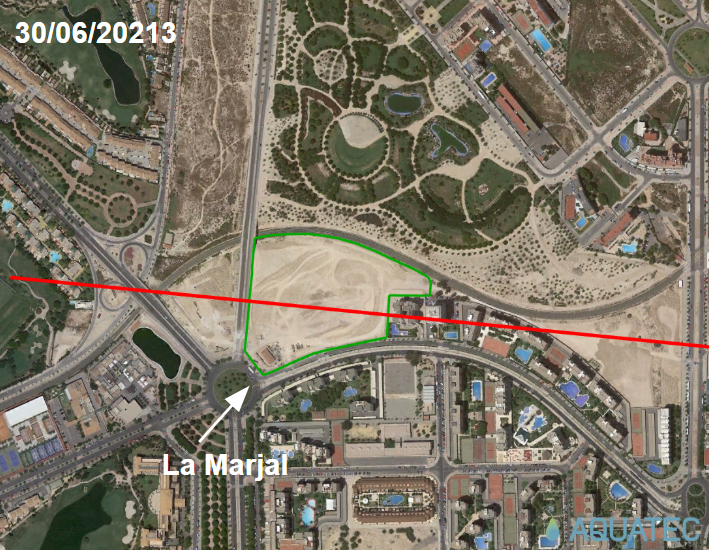
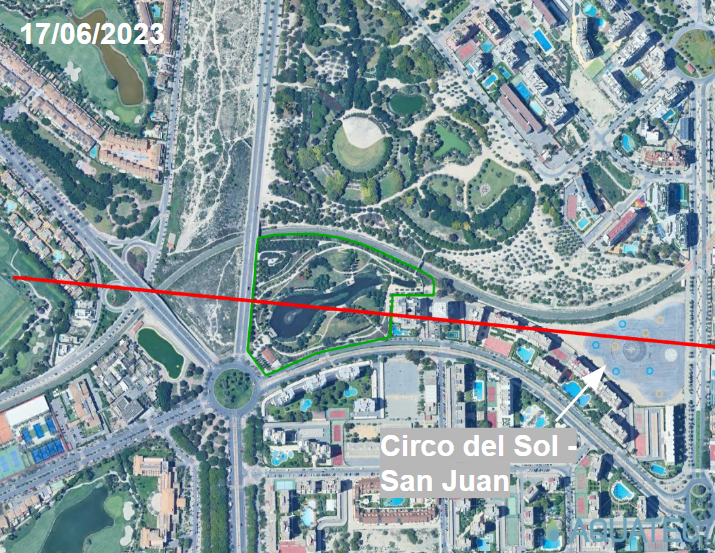
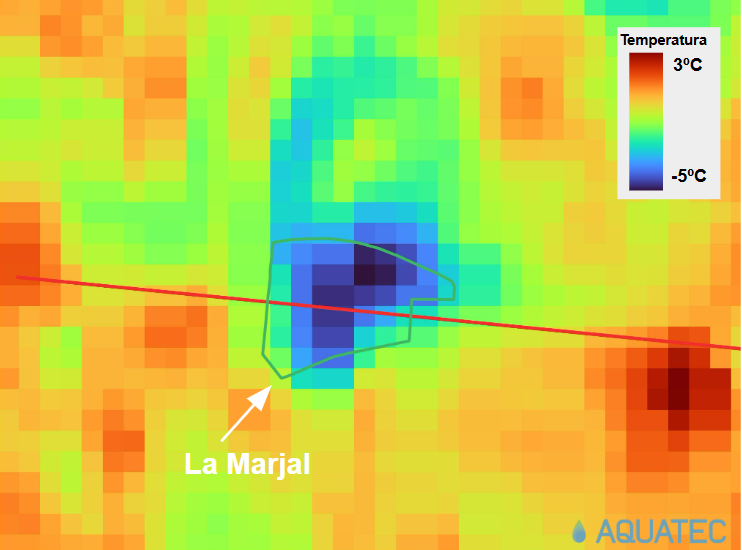
Our partner Aquatec has carried out studies demonstrating the climate refuge effect of La Marjal. The analysis of 2013 vs 2023 average radiant temperature, calculated using the thermal band of satellite images (LANDSAT 7), which contains thermal infrared information, demonstrates that, compared to the surrounding areas, the average radiant temperature in the park is 5°C lower. This reduction is achieved through evapotranspiration from the water bodies and vegetation, making it an excellent example of NbS for climate adaptation in Mediterranean cities.
Comparative LST analysis of La Marjal and its area of influence (2013 vs. 2023)
Main Benefits
Adaptation to climate change: climate refuge and reduction of flood impacts. Increased green urban areas and promotion of biodiversity. Sustainable rainwater management, preventing its direct discharge to the sea. The regenerated water is used for irrigation and filling ponds. It is a green space for the leisure and enjoyment of Alicante inhabitants, allowing citizens to connect with nature. Thanks to the creation of the park, floods have been prevented, as was the case in the March 2017 storm, where the volume of water collected was 15,500 m3.