Cities across the Mediterranean region are increasingly under pressure to improve climate resilience and resource efficiency by enhancing their waste management systems. One of the key challenges in this transition lies in the separation of household waste at source, which constitutes the starting point of the circular economy.
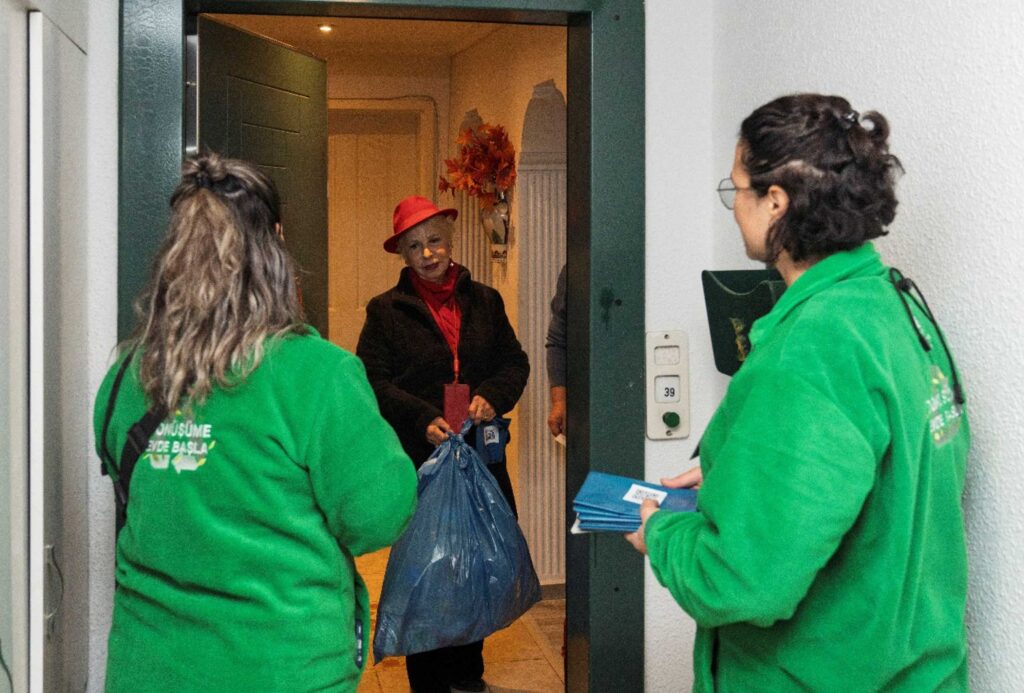
The “Start Recycling at Home” project is currently being implemented in İzmir, on Türkiye’s Aegean coast. This initiative is a joint effort between the İzmir Metropolitan Municipality and its subsidiary, İzdoğa A.Ş. The project is structured around two main components. First, recyclable packaging waste is collected directly from households through a door-to-door collection system; second, organic waste is gathered using Bokashi bins and converted into compost.
The “Start Recycling at Home” project is specifically designed to promote waste separation at the source. Through a neighborhood-based system, recyclable materials including plastic, paper, glass, and metal are collected regularly from households. To ensure precision, the process utilizes a specialized QR-coded bag system developed by İzmir Innovation and Technology. These bags are scanned upon collection, allowing all data to be digitally recorded and tracked via a dedicated mobile application. By integrating this technology, the project moves beyond traditional waste collection, offering a transparent, data-driven recycling management system.
This approach directly operationalizes one of the core principles of the circular economy, source separation at the household level. By doing so, İzmir aligns its local waste management strategy with successful global frameworks. International studies indicate that such source separation systems significantly increase recycling rates, with leading countries often exceeding 50%. The effectiveness of this model is further evidenced by door-to-door collection systems widely adopted in European cities, which play a critical role in reducing landfill waste and ensuring the recovery of high-quality recyclable materials. By preventing the contamination of recyclables by organic waste, these integrated models reduce the volume of non-recyclable waste while simultaneously enhancing both environmental and economic benefits.
The “Start Recycling at Home” project adopts a comparable approach by integrating waste separation into citizens’ daily routines through an accessible and sustainable framework. Its weekly collection scheme and neighborhood-based organizational structure facilitate citizen participation, ensuring long-term continuity. Beyond merely increasing recycling rates, the environmental impact of this model is multifaceted; it significantly contributes to reducing landfill waste, lowering greenhouse gas emissions, and decreasing the consumption of natural resources. In this respect, the project positions waste management not as a simple disposal process, but as a comprehensive system that enhances resource efficiency and supports climate change mitigation. While Türkiye has made significant progress through the national Zero Waste initiative, household-level separation practices remain an evolving frontier. The “Start Recycling at Home” project strategically addresses this gap, strengthening the national Zero Waste framework by empowering individual households.
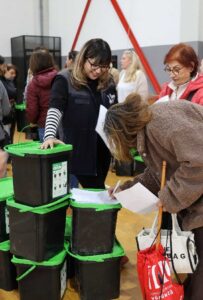
Scaling the Model: Bokashi Composting for Organic Waste
A significant portion of household waste consists of organic materials. In this context, the project has been expanded to include Bokashi composting as a method for managing organic waste.
Bokashi composting is an innovative and practical method that transforms organic waste into nutrient-rich soil input through anaerobic fermentation in a short period. Compared to traditional composting methods, it requires less space, minimizes odor, and is highly suitable for urban living conditions, making it particularly effective at the household level. Through this application, households not only separate their waste but also actively contribute to the recovery of organic materials as valuable resources. As a result, the system evolves into an integrated structure that simultaneously addresses both packaging and organic waste.
This integrated model contributes to multiple environmental objectives by reducing landfill waste, lowering greenhouse gas emissions, and increasing resource efficiency while supporting soil health. Beyond these environmental benefits, the project generates a significant social impact by engaging citizens as active participants in the circular economy. This involvement fosters a deeper sense of responsibility and encourages long-term behavioral change in daily life.
Key Insights for Mediterranean Cities
The İzmir experience demonstrates that circular economy solutions do not necessarily require large-scale or complex infrastructure. Effective outcomes can be achieved through local-scale implementation, citizen-centered design, integrated management of different waste streams, and continuous communication and participation mechanisms. This model offers an adaptable and scalable approach for Mediterranean cities facing similar environmental and urban challenges. The approach aligns closely with the objectives of the CARDIMED project, which aims to enhance climate resilience and promote sustainable resource management across the Mediterranean region. By combining circular economy practices with citizen engagement and nature-based solutions such as organic waste recycling, this model contributes to the development of holistic and practical solutions for Mediterranean cities.
The “Start Recycling at Home” project demonstrates that the circular economy can begin at the household level. By integrating the separation of packaging waste with Bokashi composting, the model presents an inclusive, practical, and scalable solution where waste is transformed into value.The “Start Recycling at Home” project demonstrates that the circular economy can begin at the household level. By integrating the separation of packaging waste with Bokashi composting, the model presents an inclusive, practical, and scalable solution where waste is transformed into value.