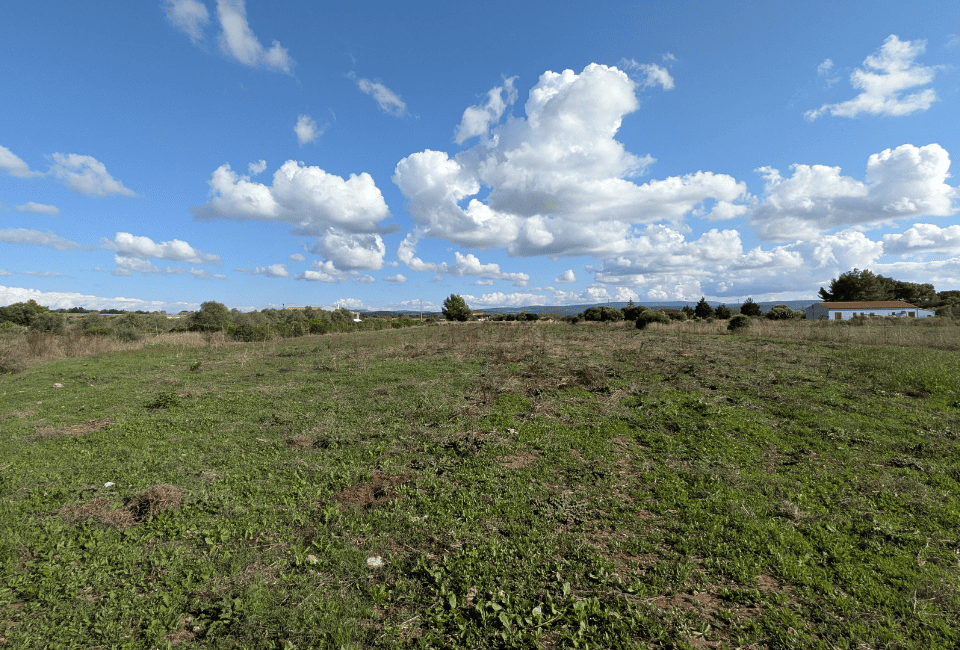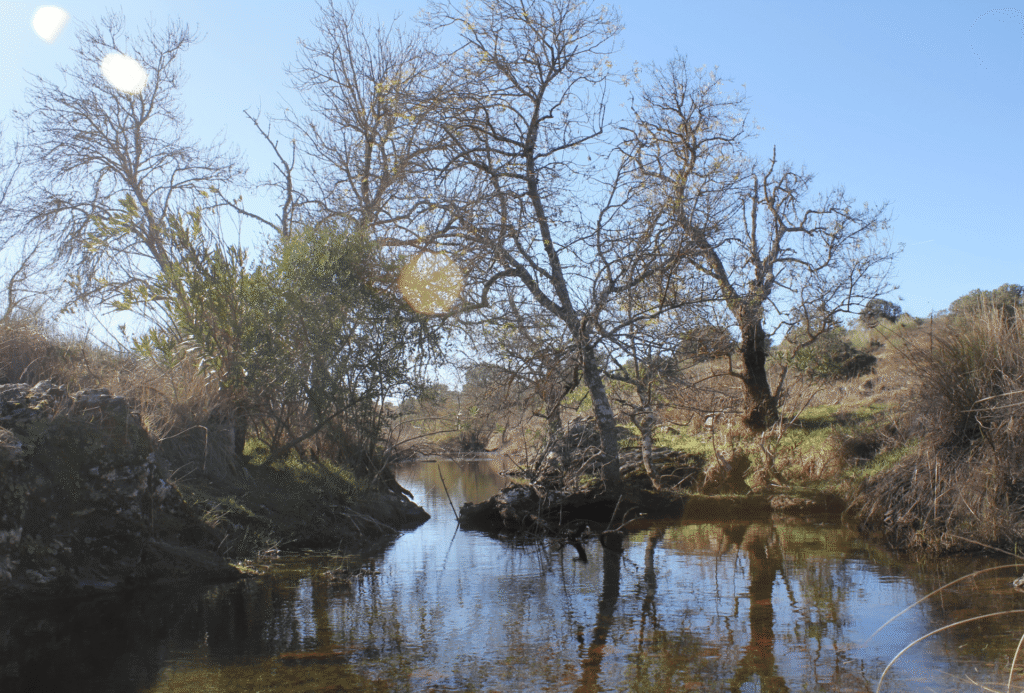
The Alentejo Central region is a territory characterized by traditional Mediterranean landscapes, where agroforestry systems such as cork and holm oak montados coexist within a mosaic of vineyards, olive groves and other traditional crops. These plain landscapes are crossed by an extensive network of mostly temporary water courses that play a fundamental role in shaping the territory. Along these watercourses develop green riparian corridors that play a crucial ecological role by establishing a continuous dynamic between aquatic and terrestrial environments, providing conditions that support species with higher water requirements than those typically sustained by Mediterranean ecosystems, thereby increasing local biodiversity. These intricate dynamics integrate essential physical, biological and hydrological processes, fundamental to the balance of river ecosystems.
Mediterranean riparian galleries support unique ecosystems that promote a network of matter flow, such as water, soil, energy, nutrients, biomass and biodiversity, while also shaping human activity across the territory. Often considered “linear oases”, these dense plant communities develop on the banks of rivers and streams in the Mediterranean climate, making it possible to create temperate refuges in a typically Mediterranean landscape. These unique riparian ecosystems are closely associated with traditional Mediterranean agroforestry systems, which are widespread in the Alentejo and often located in areas particularly vulnerable to desertification. However, these systems are increasingly under pressure, since Alentejo’s hot and dry climate is expected to worsen in the coming decades.
Current projections for the region indicate a rise in average annual temperatures of between 1.6 and 2.3 °C, an increase in the frequency and duration of heat waves and a reduction in annual rainfall of 6% to 10%. Together, these changes may exacerbate aridity, increase wildfire risk and lead to significant biodiversity loss, placing additional pressure on areas already sensitive to desertification, such as traditional agroforestry landscapes of montado or Dehesas. As a result of these pressures, a large part of mediterranean riverside forests currently face impoverished floristic composition and are often invaded by exotic species resulting in linear fragmentation. These areas are also impacted by recent changes to the hydrological regime, resulting from the construction of dams and other interventions that modify river morphology. Highly dependent on natural water dynamics, riparian ecosystems are particularly vulnerable to climate change, a vulnerability reflected in constraints on natural regeneration and the ecological succession of their plant communities.
At the European level, the ecological importance of rivers, lakes and riparian zones is recognized in the Habitats Directive 92/43/CEE, which acknowledges 32 river and lake habitat types, including several alluvial and riparian habitats. Despite this protection, the latest EU State of Nature assessment reveals a worrying trend that 76% of habitats are in an unfavorable conservation status, with 38% continuing to deteriorate (EEA, 2020). Recent European Environment Agency (EAA) assessments also indicate that less than 50% of Europe’s water bodies, currently achieve good ecological status (EEA, 2018). These figures highlight the urgent need to strengthen conservation and restoration efforts, particularly in regions already exposed to climate and hydrological stress.
In Portugal, the Alentejo Central region illustrates this challenge clearly. A large part of the Alentejo Central region lies within the Guadiana river basin, which includes extensive areas classified under the National Ecological Reserve (REN) due to their high environmental value and sensitivity. Caridade stream, a tributary within this basin, is a clear example of a high-value riparian ecosystem situated in areas sensitive to flood risk and high soil erosion. These riparian corridors support a high diversity of habitats protected under the EU Habitats Directive, reinforcing their ecological importance. However, their exposure to environmental pressures underlines their fragility and the need for targeted management and restoration actions.
In response to these challenges, the Central Alentejo Intermunicipal Climate Change Adaptation Plan (PIAACAC), developed by CIMAC (Intermunicipal Community of Central Alentejo), emphasizes the importance of the implementation of concrete mitigation and adaptation actions in response to these climate projections. In this context, the CARDIMED project, a partnership between the University of Évora and CIMAC, contributes directly to these objectives by promoting the recovery of potential natural vegetation, strengthening green infrastructures and tackling invasive species. Caridade stream was therefore selected as a representative pilot area for ecological recovery and restoration, serving as a model for future interventions across the region.
Since 2023, this NbS implementation project has been underway in the Central Alentejo region, aiming at the recovery and restoration of the ecological integrity of watercourses while reinforcing their capacity to provide essential services to biodiversity. The main intervention involves the restoration of riparian galleries through the planting of approximately 20,000 native plants typical of these systems, including ash trees (Fraxinus angustifolia Vahl), willows (Salix atrocinerea Brot.), tamarisk (Tamarix africana Poir.), hawthorn (Crataegus monogyna Jacq.), oleander (Nerium oleander L.) and myrtle (Myrtus communis L.). Invasive exotic species control was also undertaken, with particular emphasis on the common reed (Arundo donax), a problematic species across the mediterranean. Complementing these interventions, the project also includes the restoration of one hectare of cork oak forest, improving connectivity between riparian zones and surrounding habitats.
Protecting and restoring riparian galleries require continuous monitoring to guide restoration priorities. Therefore, monitoring these systems is essential to prioritize restoration efforts and to support informed management decisions. To guide and evaluate restoration efforts, a comprehensive monitoring program was established. Soil and biodiversity indicators were defined to assess ecological recovery over time, allowing a systematic collection of soil and floristic data. In addition, sensors were installed across different river typologies to record soil and air temperature and humidity, providing valuable information on microclimatic changes associated with the restoration interventions. Beyond the ecological dimension, this project places strong emphasis on training and environmental educational activities aimed at different age groups.
Taken together, these actions demonstrate that ecological restoration of riparian galleries in Central Alentejo goes beyond a local priority, contributing directly to wider European objectives under the EU Biodiversity Strategy for 2030 and the Water Framework Directive. Thus, investing in the recovery of these ecosystems is crucial to fulfilling these objectives and ensure that river systems continue to benefit both nature and society in the long term.