When Rain Becomes a Resource: Modelling Stormwater Reuse at the HALCOR Industrial Site
Central Greece is one of the most water-stressed regions in the Mediterranean. Industry cannot treat water as an inexhaustible resource, and in fact, it doesn’t need to. At HALCOR’s copper and aluminium production facilities in Oinofyta, a new approach is taking shape: instead of letting rainwater go to waste, it is collected, treated, and returned to the production process.
The Challenge: Net-Zero Water in a Water-Stressed Region
HALCOR, the copper and alloys extrusion division of ElvalHalcor S.A. and one of Europe’s leading industrial producers of copper and aluminium products, has set an ambitious sustainability target: net-zero water consumption. Achieving this means finding ways to source, treat, and reuse water within the plant’s own boundaries, thereby reducing dependence on external water supplies in a region where water availability is already under pressure due to climate change.
This is the core ambition of DEMO 2 within the CARDIMED. At HALCOR, a carefully designed interface of NbS, engineered infrastructure, and digital tools is being developed to recover rainwater, stormwater, and wastewater and redistribute them where they are needed most.
What the REHY Team Does: Tracking Every Drop
The REHY team is responsible for the hydrological and hydraulic modelling that underpins DEMO 2’s water management system. Our work focuses on two models: a Runoff Model and a Pressurized Network Model.
The Runoff Model is built on EPA’s Storm Water Management Model (SWMM), a globally recognized simulation tool for rainfall-runoff analysis. We began by conducting a detailed on-site survey at HALCOR’s facility: mapping drainage networks, measuring impervious surfaces, and recording inlet and outlet structures throughout the entire industrial complex. This baseline dataset feeds a continuous simulation model that reproduces how the site responds to rainfall events of different intensity and duration.
The key output is a quantification of how much stormwater can realistically be harvested and stored on-site and under which conditions. This information is then used to determine how much of that collected water can be diverted to one of the most water-intensive steps in copper and aluminium production: the washing and rinsing of finished products. By substituting a portion of freshwater with harvested rainwater in this process, HALCOR directly reduces its potable water consumption turning a formerly wasted resource into an operational asset.
Our methodology for quantifying harvestable rainwater relies on a precise surface analysis of the facility. By categorizing both the site’s rooftops (by surface material) and the surrounding ground infrastructure, such as asphalt and sidewalks, we apply tailored runoff coefficients to each distinct catchment area. Rainwater from these diverse surfaces is first collected into catch basins (manholes) and then routed directly into our storage tanks. This granular approach allows us to accurately calculate the expected rainwater volume generated during precipitation events, ensuring that the water diverted to our storage system is modeled with high fidelity and accounts for the unique hydraulic characteristics of the entire industrial infrastructure.
As illustrated in the following table, these calculations are based on representative surface types and characteristics found across the site.
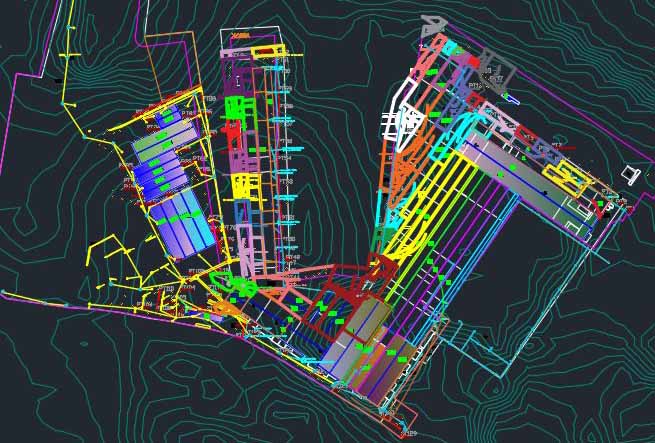
Figure 1 Facility area and rainwater collection surfaces
Table 1 Representative Rainwater Collection Surface Analysis
| Flow Transition to Catch Basins | Area (m2) | Runoff Coefficient |
| From Synthetic to Asphalt | 165.00 | 0.016 |
| From Sheet Metal to Asphalt | 3,241.70 | 0.016 |
| From Synthetic to Gutter | 545.00 | 0.005 |
| From Sheet Metal to Gutter | 8,609.96 | 0.005 |
| From Asphalt | 10,674.22 | 0.016 |
| From Sidewalk | 1,109.50 | 0.012 |
| From Insulated Concrete Slab | 1,090.00 | 0.005 |
From Simulation to Operations: The Reon SWMM Platform
A model that exists only at the research level has limited value. To make the simulation operational, the REHY team developed Reon SWMM — an integrated digital platform that links real-time field measurements with SWMM hydraulic simulations and presents the results through a web-based interface with mapping capabilities, accessible to facility operators, engineers, and environmental management personnel.
Reon SWMM collects live hydrological data from field stations, runs simulations, and provides key performance indicators (KPIs) and flood risk indicators in real time. It features role-based access control, WebSocket notifications, full audit logging, and multilingual support (English and Greek). Seven development milestones have been completed, covering everything from basic water management functions to infrastructure observability and user management.
Plugging Into the Bigger Picture: Digital Twins and Industrial Symbiosis
The model’s results can be directly linked to the Digital Twin (DT) being developed. This hybrid DT combines models based on physical parameters—including SWMM runoff simulations and the EPANET pressurized network model—with data-driven machine learning components, creating a high-fidelity digital twin of HALCOR’s water distribution network, which is continuously updated by the plant’s SCADA, MES, and ERP systems.
The system is also designed to be scalable. The water management model is intended as a blueprint for other industrial units in the region, contributing to the wider adoption of Circular Economy principles across Central Greece. When upscaled, the combined NbS and digital infrastructure is projected to cover over 70% of HALCOR’s water demand from recovered sources.
Understanding Water Distribution Through Hydraulic Modelling
Building the Digital Representation of the Network
While stormwater harvesting focuses on capturing alternative water resources, understanding how water moves throughout the industrial facility is equally important. To support this objective, the REHY team is developing a detailed hydraulic model of HALCOR’s pressurized water distribution network. The model represents pipelines, pumping stations, storage facilities, valves and major consumption points, creating a digital representation of the site’s water infrastructure.
Simulating Water Distribution
The model is developed using EPANET and incorporates engineering drawings, operational information and infrastructure data provided by HALCOR. Through hydraulic simulations, the model reproduces water flows, pressures and operational conditions across the network under different demand and production scenarios. This enables engineers to evaluate system performance, identify operational constraints and assess alternative water management strategies.
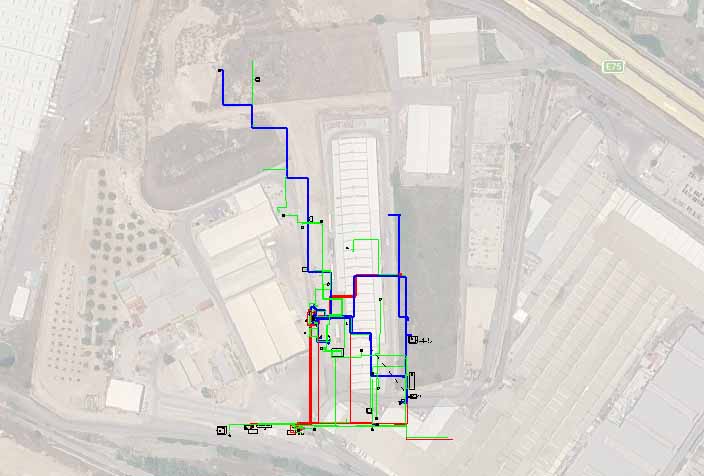
Figure 2 Hydraulic model of HALCOR’s pressurized water distribution network
Supporting Water Reuse and Operational Optimisation
One of the main objectives of the model is to evaluate how recovered water sources can be integrated into the existing water infrastructure. By simulating different operating conditions, the model helps determine how harvested stormwater and reused water can be distributed efficiently throughout the facility. This contributes to reducing freshwater consumption while ensuring reliable operation of the industrial processes that depend on a continuous water supply.
Connecting the Model to the Digital Twin
The hydraulic model forms an essential component of the Digital Twin being developed within DEMO 2. By linking hydraulic simulations with real-time information obtained from SCADA systems and operational databases, the Digital Twin can provide an accurate representation of the current state of the network. This integration supports monitoring, scenario analysis and decision-making, enabling operators to better understand system behaviour and respond more effectively to changing operational conditions.
Towards Climate-Resilient Water Management
The challenges of water scarcity and climate change require a new approach to water management—one that combines innovation, sustainability and informed decision-making. The work developed within CARDIMED DEMO 2 illustrates how nature-based solutions, hydraulic modelling and digital technologies can work together to improve water efficiency and strengthen resilience in industrial environments.
By integrating stormwater recovery, pressurised network modelling and digital twin technologies, the project showcases a holistic approach to water management that can be replicated across other industrial facilities and Mediterranean regions facing similar challenges. As water becomes an increasingly valuable resource, projects such as CARDIMED help demonstrate how every drop can be monitored, managed and reused more effectively for a sustainable future.