SVI.MED. advocates holistic approach to renovation and new construction, including non-conventional water use, during KARMA project stakeholder meeting in Calabria (Italy)
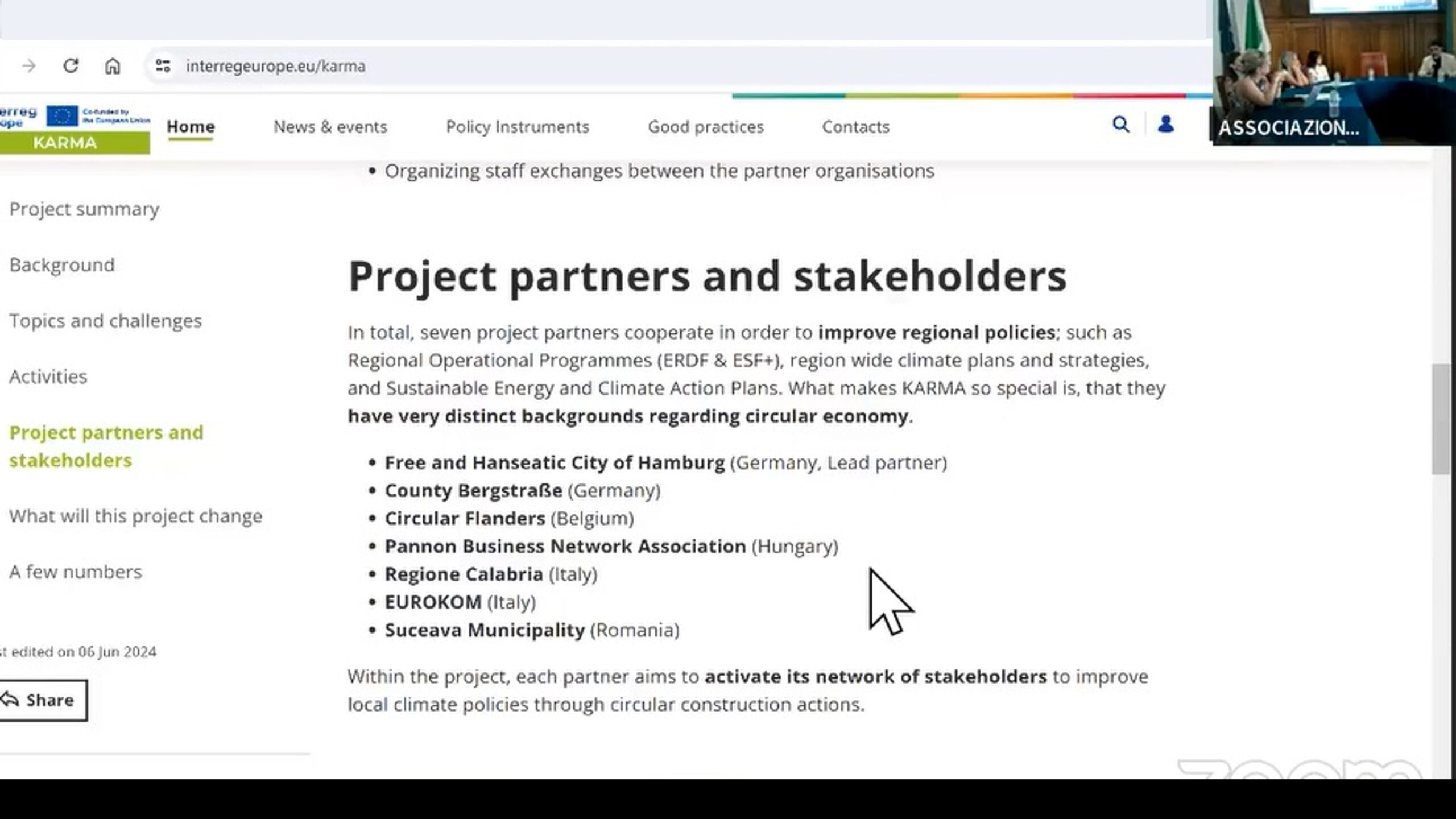
SVI.MED‘s Barbara Sarnari took part in an interesting stakeholder meeting organised as part of the KARMA project (Interreg Europe). The event, which took place on 9 July 2024 at the Palazzo Municipale in Gerace, Calabria, was entitled “Building the Future: Circular Economy and Construction. Municipal Sustainability Plans and Experiences – PAESC”. The meeting, organised by Eurokom and streamed on Facebook, featured prominent speakers such as Giovanna Petrungano from Regione Calabria (Department of Land and Environmental Protection), Rudi Lizzi, Mayor of Gerace and Michelangelo Giansiracusa, Mayor of Ferla
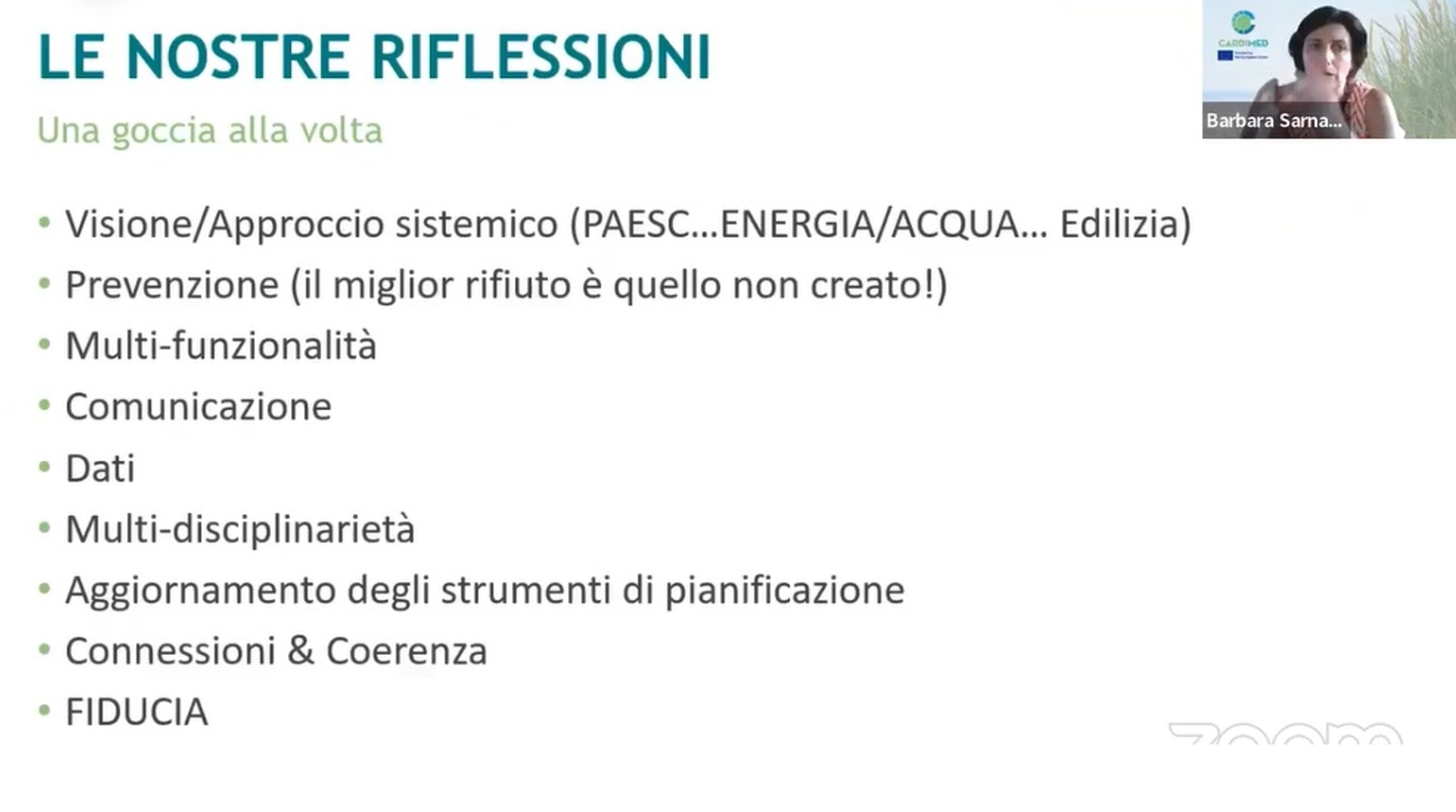
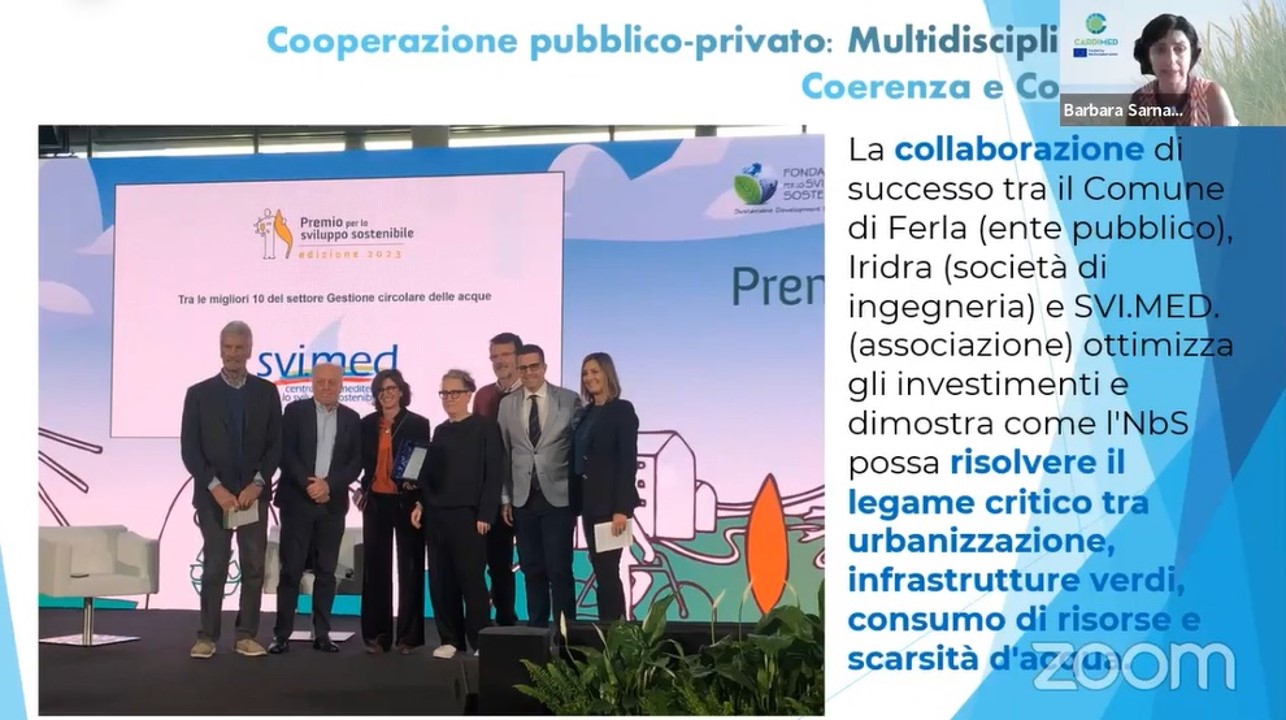
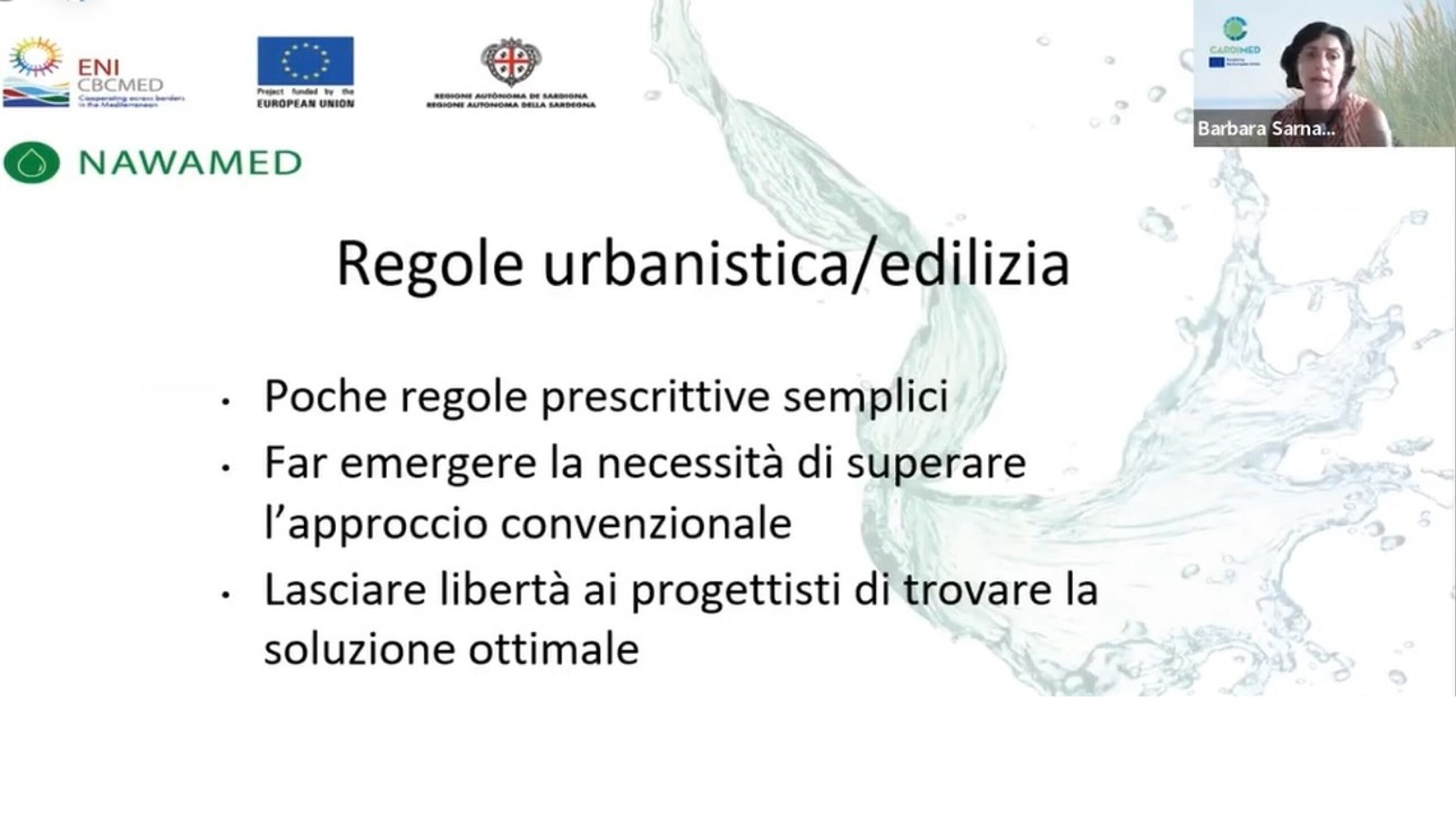
Barbara Sarnari presented CARDIMED, highlighting the project’s systemic approach to proposing integrated and multifunctional solutions to address the impact of climate change on water scarcity in Italy, particularly in the south (i.e. Calabria, Sicily). She stressed the importance of considering water management together with energy efficiency in the building sector, advocating the use of grey water and dual networks. Sarnari presented the FERLA pilot experience (Wall2Water), which is being monitored thanks to CARDIMED, and the strategic document (produced during the NAWAMED project with Iridra), which will be disseminated more widely in order to integrate simple and effective proposals into municipal planning documents (e.g. building regulations) to promote the use of non-conventional water resources (NCWR). She urged decision makers to take a holistic approach to building efficiency, summarising that “the best waste is that which is not produced”, so energy and water solutions need to be applied in a timely manner, emphasising that efficient/integrated water use means energy saving, which is often a conclusion of PAESC.
Finally, Sarnari cited the Sicilian region’s innovative strategic document, “Decreto Riuso Sicilia 2024″ (February 2024), which outlines the main guidelines for grey water reuse at the domestic level in Sicily. It specifies that grey water, which includes water from baths, showers, sinks and washing machines, can be treated and reused for non-potable purposes such as toilet flushing, garden irrigation and outdoor cleaning, and provides guidance to competent authorities on water reuse. She pointed to the need for concrete action and the potential for cooperation with other regions, such as Calabria, which hosted the event. The discussion opened the door for new partnerships and initiatives on circular economy practices in the construction sector, including water-related issues.