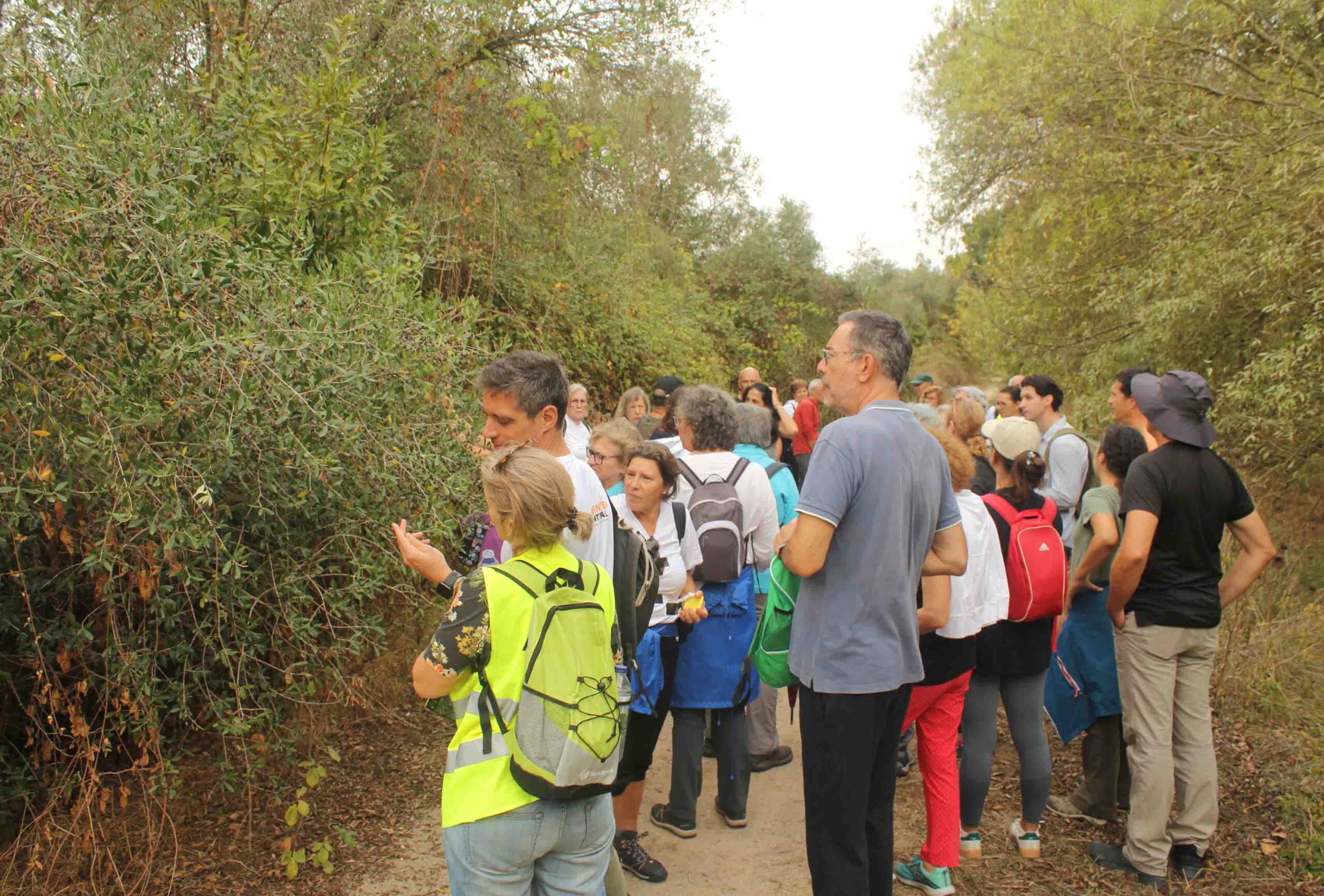
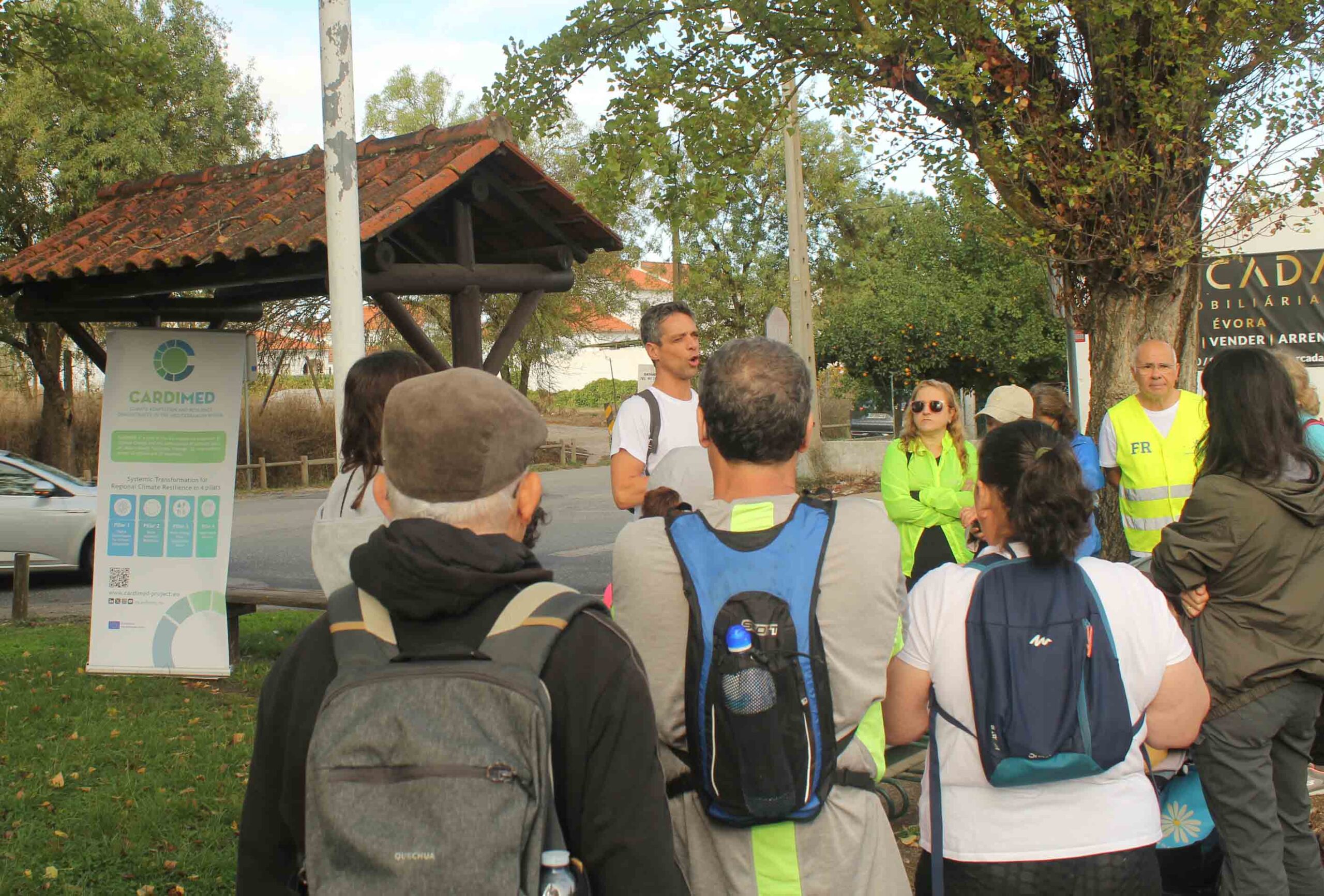
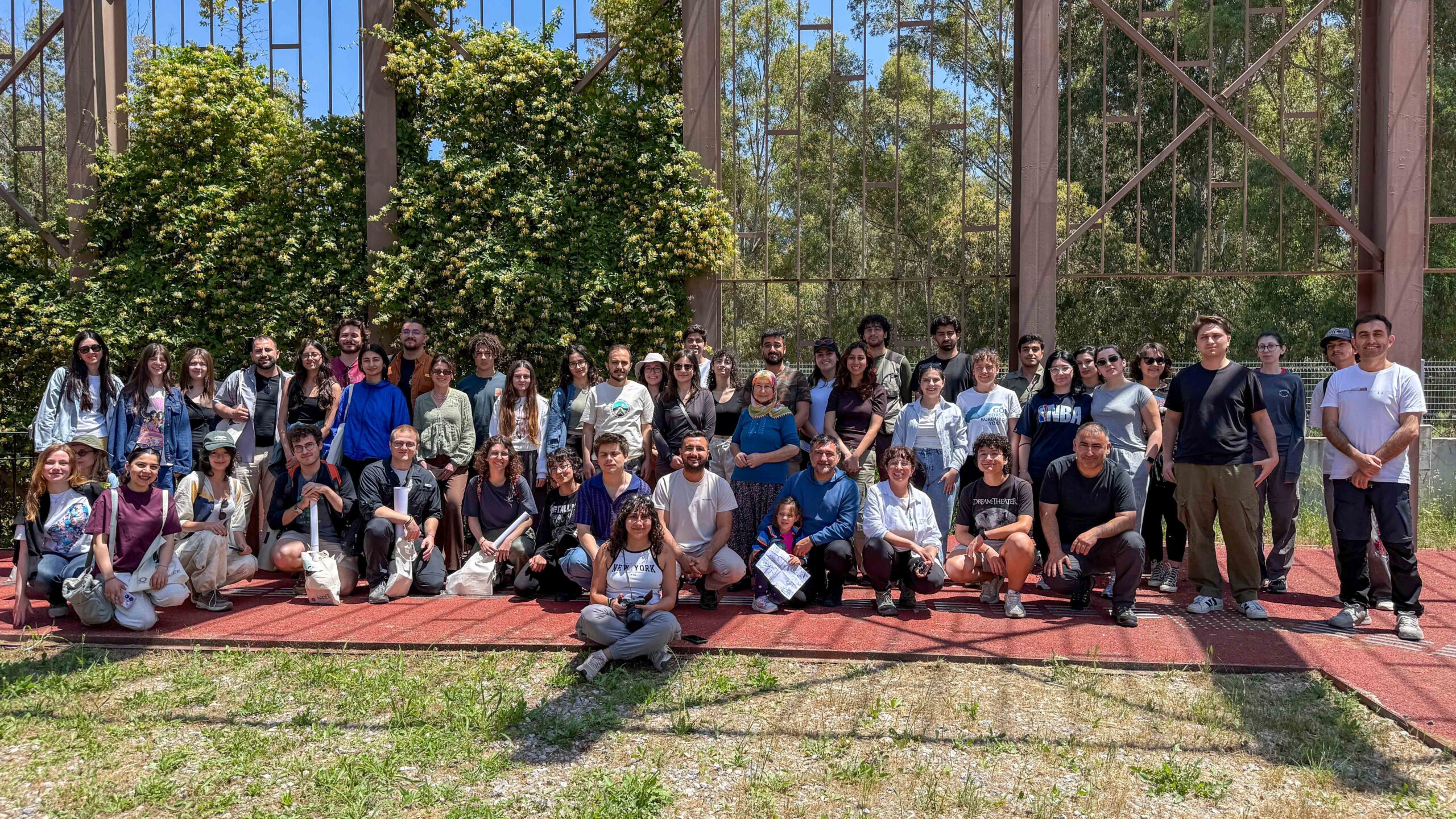
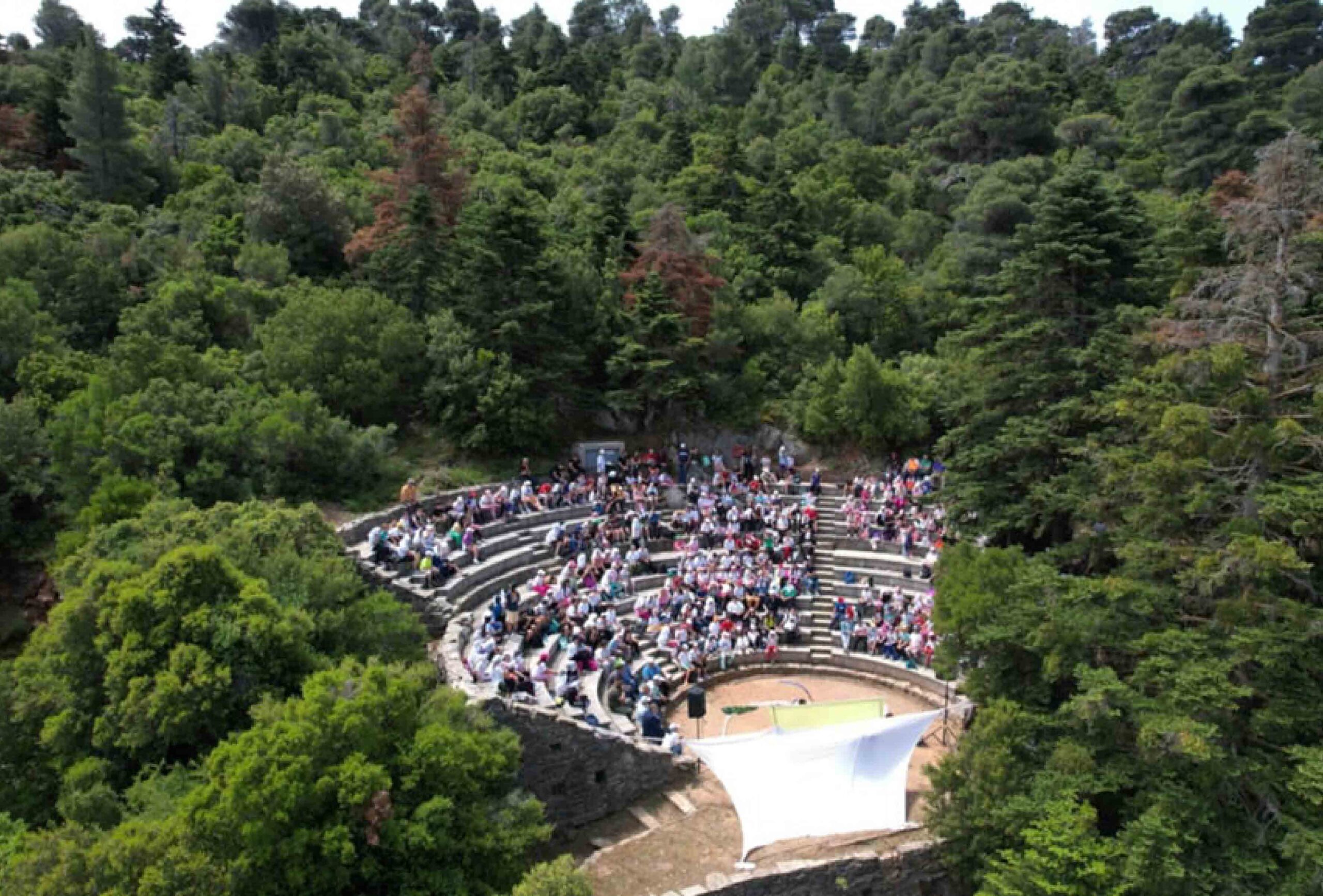
On October 25, the Intermunicipal Community of Central Alentejo, in partnership with the University of Évora, promoted an “Interpretive Walk on Biodiversity and Riparian Galleries” along the Mora Eco trail in Évora, Portugal. This initiative brought together more than 50 participants for an eight-kilometer “Citizen Science” activity designed to promote awareness on local native biodiversity, riparian galleries and regional climate change adaptation.
Through the walk, participants stopped at three riparian galleries representing different states of conservation, where partners from CIMAC and UÉVORA contextualized the ecological importance of riparian areas, their habitats, and the role these areas play in maintaining biodiversity and supporting the resilience of the surrounding ecosystems.
Beyond an interpretative walk, it also involved both scientists and citizens in the collection and interpretation of data on the biodiversity associated with local watercourses through the use of citizen science platforms to record observations of local flora and fauna, contributing to shared biodiversity databases. This approach not only enriched the educational experience but also contributed with valuable data to international biodiversity monitoring networks.


Supported by the European Union Mission for Adaptation to Climate Change – MIP4Adapt Open call for citizen events, this initiative sought to engage local communities in understanding the impacts of climate change, the importance of ongoing actions and projects in the region and encourage active participation in preserving regional ecosystems, especially singular river ecosystems.
This interpretive walk is part of the ongoing efforts to promote biodiversity, environmental education and sustainable adaptation strategies in the Central Alentejo region. Within this framework in CARDIMED Project, CIMAC and the University of Évora are collaborating to restore riparian vegetation across ten kilometers of riparian galleries in Central Alentejo, selected for their distinctive ecological characteristics and their relevance to the region’s environmental challenges.
The success of this initiative has prompted the realization of more environmental awareness initiatives of this kind, as well as the promotion of citizen science activities that involve the contribution of citizens in the collection and monitoring of regional biodiversity .