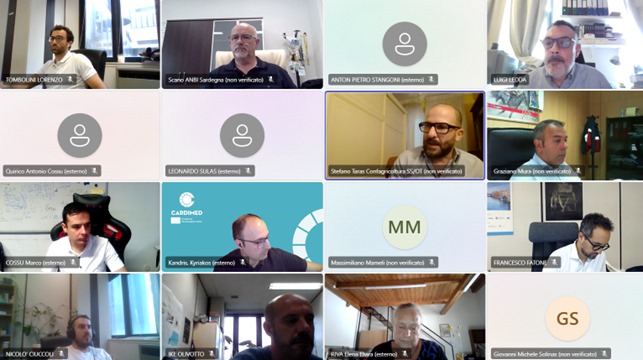
On October 16, 2024, the workshop and focus working group on “Decarbonization of Agricultural Practices in Sardinia, Italy – DEMO 3” was held online via the MIRO board platform by the Università politecnica delle Marche (UNIVPM) and the Università di Bologna (UNIBO). This event was organized as part of the CARDIMED project activities. The focus group meeting began with a round table where all stakeholders introduced themselves. Participants included a wide range of professionist, such as researchers, regional agencies, NGOs, and other experts in the field.
The meeting was structured into two sections:
- First section: dedicated to the introduction and description of the CARDIMED project, with a specific focus on DEMO3.
- Second section: with the collaboration of colleagues from Imperial College London, technical priorities were assigned to the four digital solutions planned under the CARDIMED project.
The first section was led by Professor Francesco Fatone, the main responsible of the Polytechnic University of Marche (UNIVPM) and head of the water refinement sector. Professor Fatone presented the European and national regulatory framework related to Nature-Based Solutions (NBS) and the themes of sustainability and water scarcity, emphasizing how critical these aspects are in Sardinia, the site of DEMO3. He, then, illustrated the main pillars of the CARDIMED project and provided an overview of Sardinia’s current situation, highlighting the challenges the project aims to address.
Further, Professor Luigi Ledda, another key representative of UNIVPM and head of the agricultural sector, highlighted the importance of agricultural sustainability in Sardinia, his homeland. He emphasized the relevance of the project’s research activities and objectives for the development of the private sector, generating significant interest among the participants.
The first section concluded with a presentation by Engineer Lorenzo Tombolini, a PhD student under the supervision of Professor Fatone. He detailed the treatment chain planned for DEMO3, describing the specific units to be implemented in the experimental area.
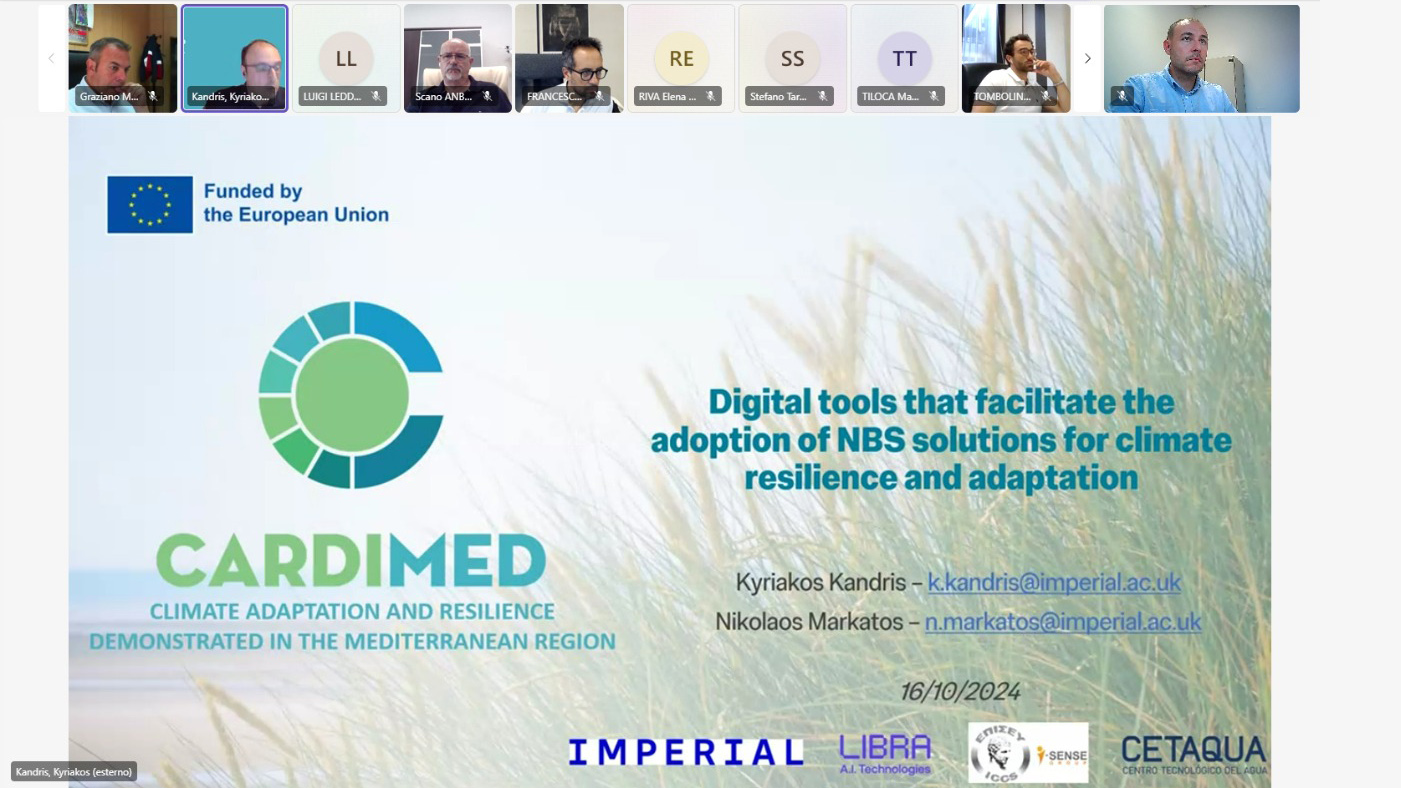
The second section began with contributions from Dr. Kandris and Dr. Markatos, who are responsible for the first digital solution developed within the CARDIMED project and who moderated this part of the session with Eng. Tombolini.
Dr. Kandris and Dr. Markatos presented the digital solutions, emphasizing their strengths and the benefits of integrating these solutions with existing technologies. Key aspects such as monitoring, future scenario forecasting, citizen engagement, and knowledge dissemination on NBS were identified, generating significant interest among the stakeholders involved.
The meeting concluded with a special thanks to all stakeholders and colleagues from Imperial College London, whose contributions made the focus working group really interesting and of international relevance.