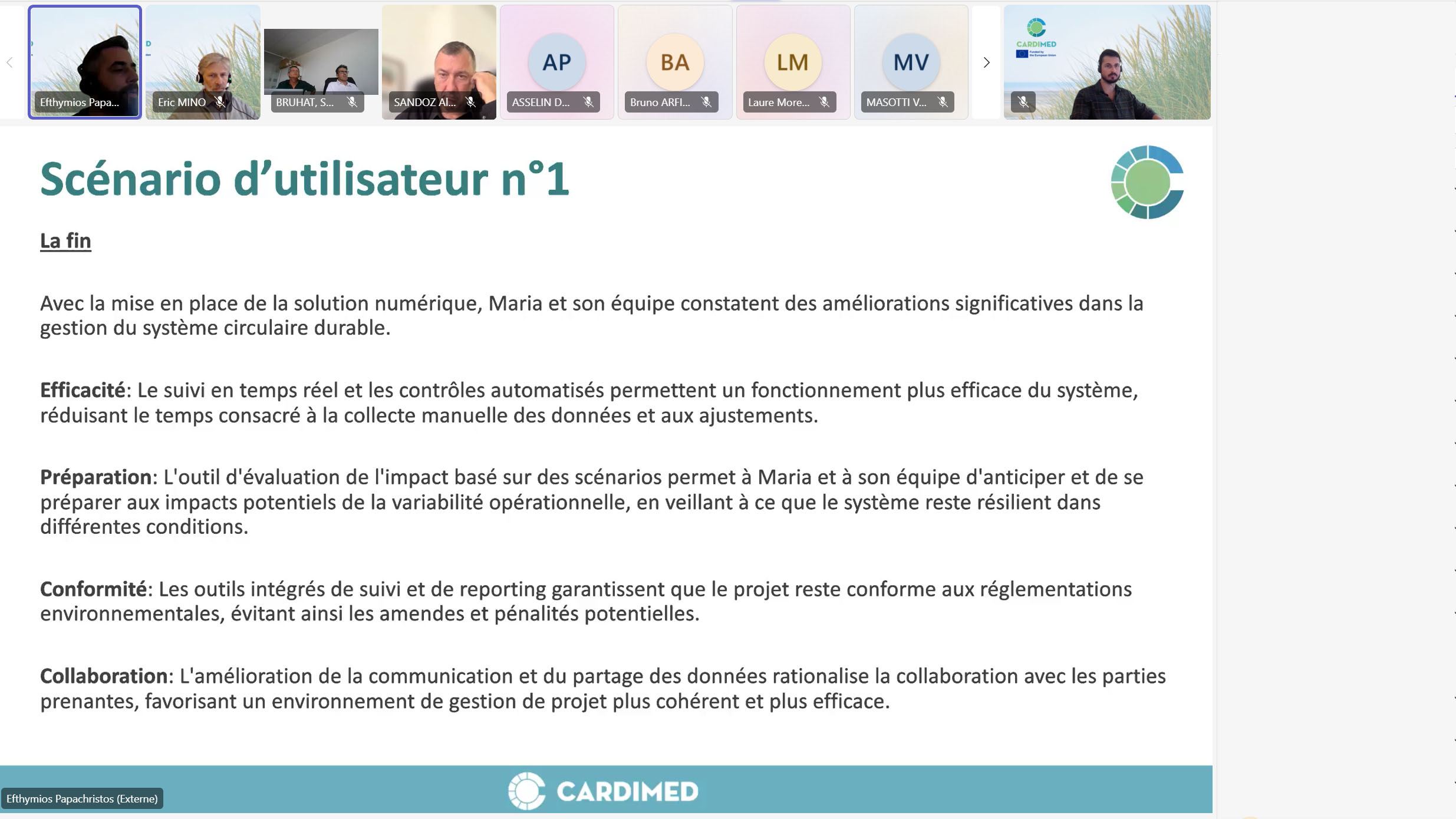
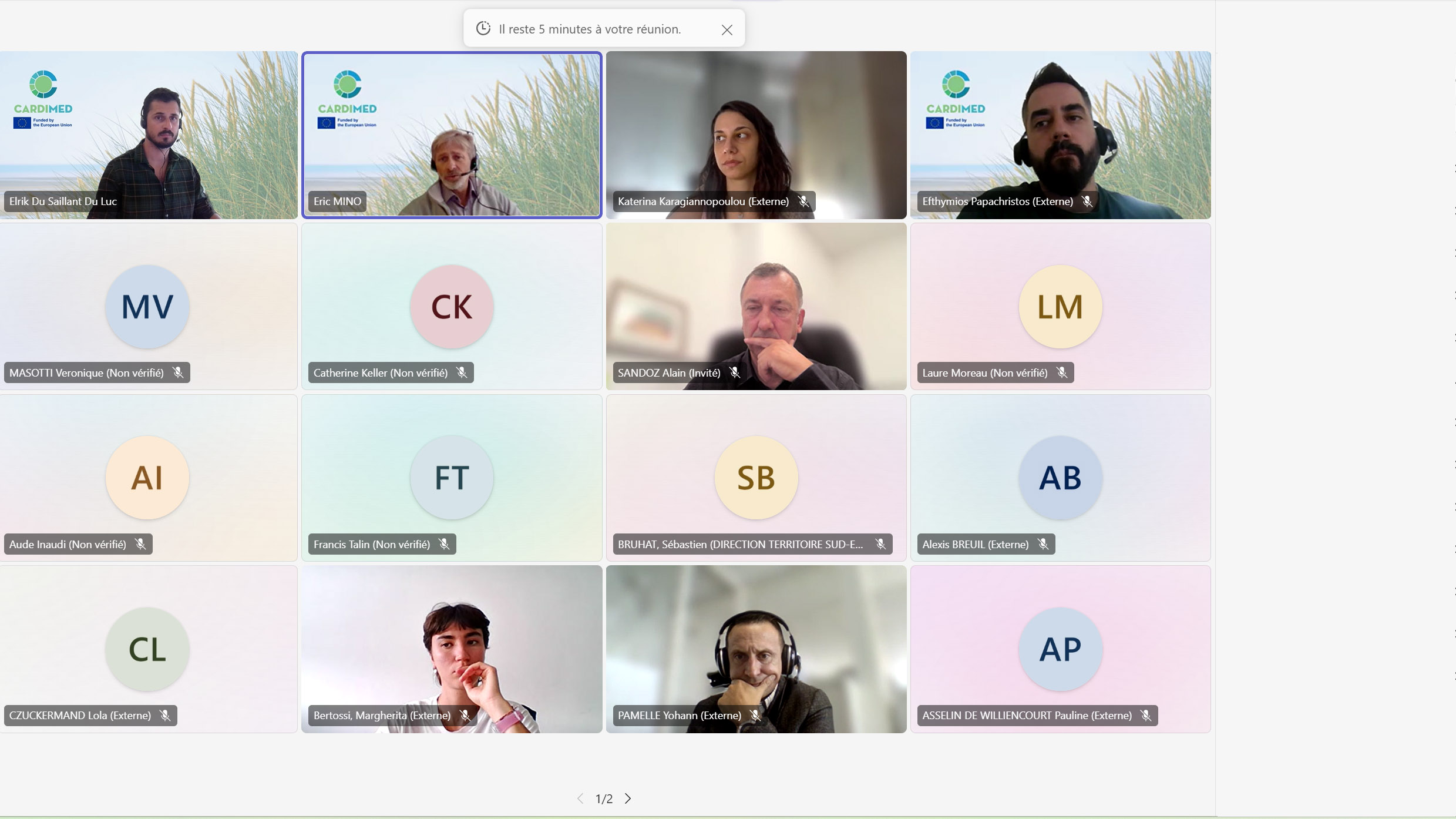
On October 17th the SEMIDE hosted a co-design online focus working group for Demo 5 with the other French partners Aix-Marseille University, EMPAN and Region Sud. This workshop took 3h and allowed 25 people coming from different entities to debate about the development of the digital solution from the CARDIMED project.
The participants were mostly professional and experts from the environment field as researchers, NBS designers, regional and local authorities, study offices, engineers and urban planners. The different levels of stakeholders were represented with local people from the city of Marseille, people from the region but also users of the Demo site like students and workers. A total of 22 different entities were represented during this event.
The main goal of this workshop was to let people express their point of view, needs and doubts about the 4 different digital applications. How would the application be used on site? How would the data be collected ? How to deal with the information ?
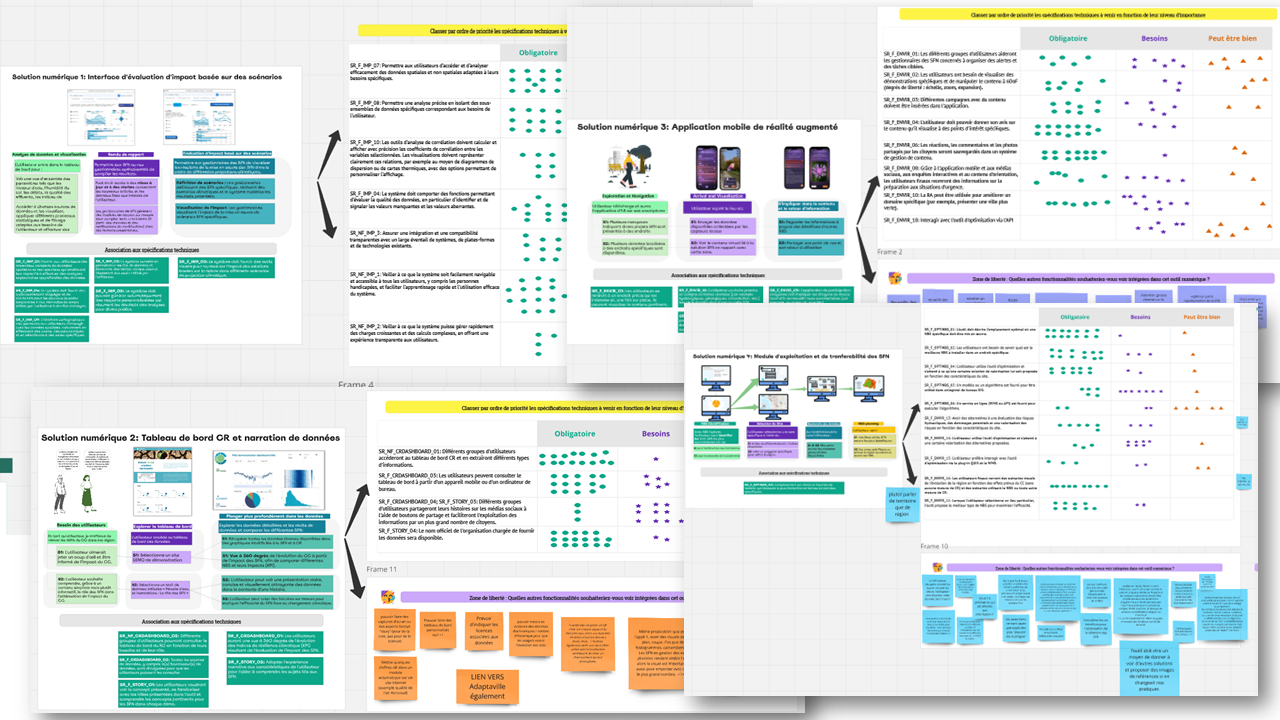
All these questions have been formulated and the participants had to rate different characteristics of the digital solution between what they think needs to be incorporated and what would be nice to be incorporated but not necessary.
Eric Mino from SEMIDE started with an introduction on the CARDIMED project and its goals at the local, regional and international scale. He also presented the different sister projects, with some attention to the project NATALIE, being coordinated by the OIEAU in France.
Then, the event was split into four parts, each one focused on one of the digital solution developed within the CARDIMED project. Two members of ICCS, Efthymios Papachristos and Katerina Karagiannopoilou, were also participating. Efthymios did the presentations of the digital solutions while Katerina was there as support to answer all the questions.
Elrik Du Saillant Du Luc from SEMIDE led the workshop, giving explanations and guidance to the participants through the various stages of discussion and engagement and explained the work tool operation as everything was done on the online software Miro.
The workshop went very well, with many relevant exchanges taking place between ICCS and the local experts, and numerous opinion pieces being written on the dashboard. Over 20 participants evaluated the various criteria proposed for each of the digital applications.