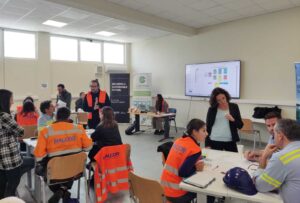
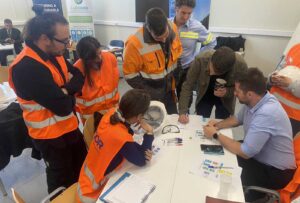
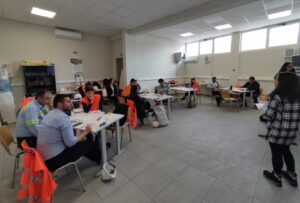
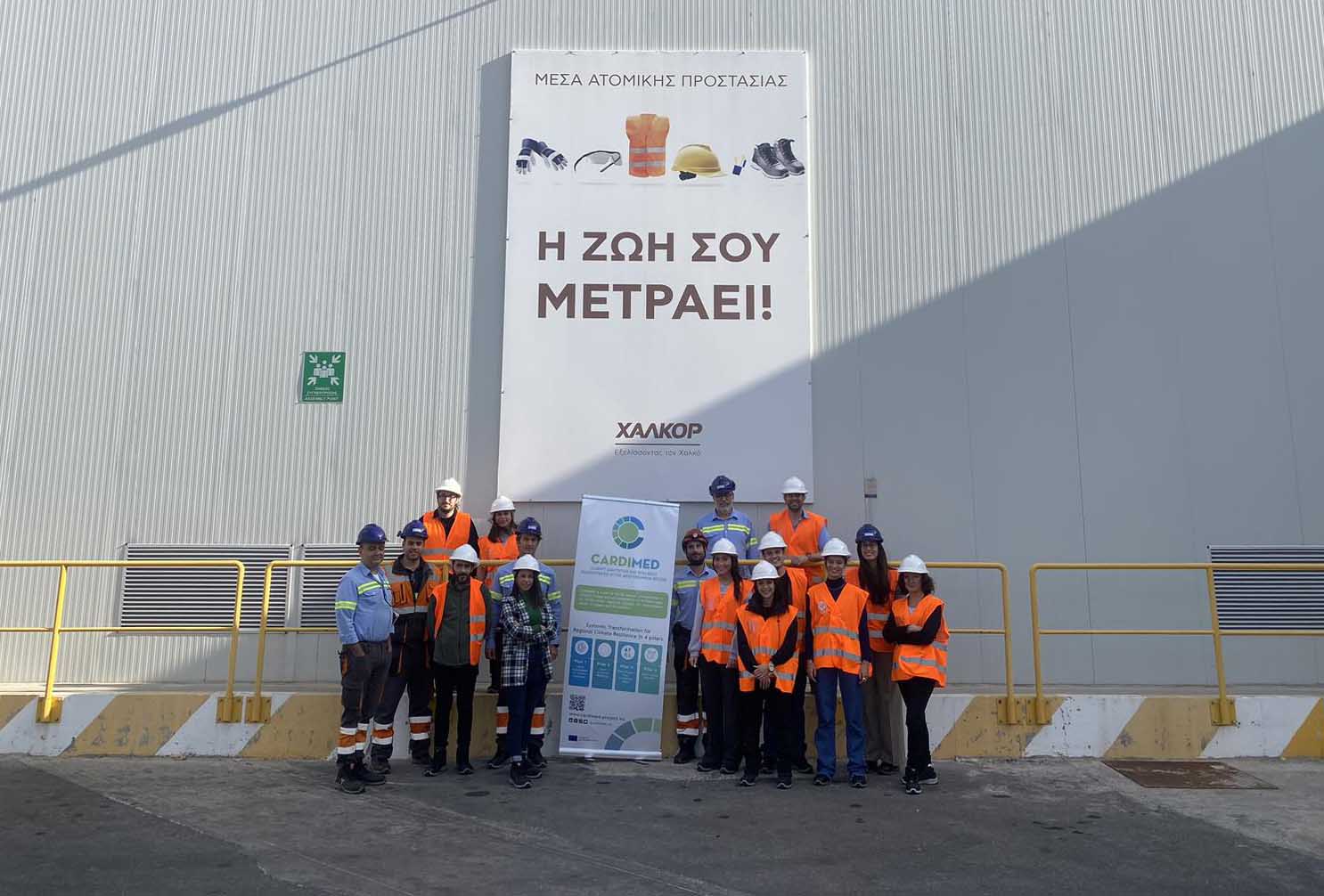
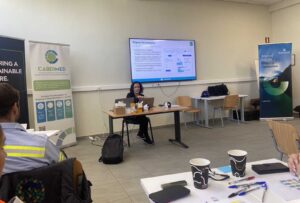
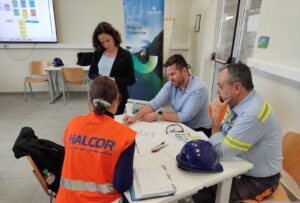
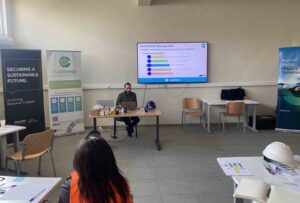
A successful Focus Group Workshop on CARDIMED Demo 2 was held on 31st of October 2024 at the HALCOR facilities in Boeotia, Greece. Participants in the workshop included representatives from HALCOR, CORE Group, ICCS, NTUA, employees and managers, as well as regional stakeholders, enabling collaboration and knowledge exchange.
As the demo leader, HALCOR took the lead in organizing the workshop, showcasing its commitment to innovation and sustainability. For its part, the CORE team is developing cloud-based orchestration middleware for the efficient management of data from diverse sources, while also focusing its efforts on promoting industrial symbiosis through smart water management solutions at the HALCOR demo site, leveraging digital twin technologies.
The workshop aimed at promoting innovative solutions in industrial manufacturing, conducted in the context of Digital Solutions creation that offer tailored views for visualising information to non-experts, citizens etc., with emphasis on the Demonstration case of Industrial symbiosis through smart water management.
Main goals and objectives
The main objective of the workshop was to engage end users to gather feedback and prioritise the requirements, and consequently translate the business requirements of end user, HALCOR, to technical requirements leading to implementation of digital solutions and bringing innovation to the industry.
The workshop was opened by M.Sc. Efstathia Ziata (HALCOR), who presented the CARDIMED project and its objectives. Following her presentation, Dr. Ioannis Meintanis (CORE IC) gave insights on the digital twin solution, which is a replica of a physical asset that simulates its behaviour in a virtual environment, highlighting its role in supporting Water-Industrial Symbiosis within HALCOR’s factories. Dr. Maria Tassi (CORE IC) presented other Digital Solutions implemented as part of the HALCOR demo, such as the Nature-Based Solutions (NBS) definition and scenario-based impact assessment interface, the climate resilience dashboards and data storytelling, the citizen engagement app and intervention content management and the NBS exploitation and transferability support module, highlighting their potential to enhance efficiency and sustainability in operations.
Notable contributors to the round table discussions included M.Sc. Katerina Karagiannopoulou (ICCS) and M.Sc. Nikolaos Gevrekis (CORE IC), who provided valuable perspectives on the digital solutions.
Impact on industry
The success of the workshop lies in end users’ discussions on the various digital solutions, who provided valuable feedback and prioritised user requirements to be integrated in the Digital Twin solution. Their insights will be critical in shaping a final product that effectively addresses the evolving demands of the industry. These innovations are set to significantly impact the manufacturing industry, by enhancing resource efficiency and sustainability. These innovations will optimise water usage and promote resource reuse across interconnected processes, leading to cost savings and reduced environmental footprints.