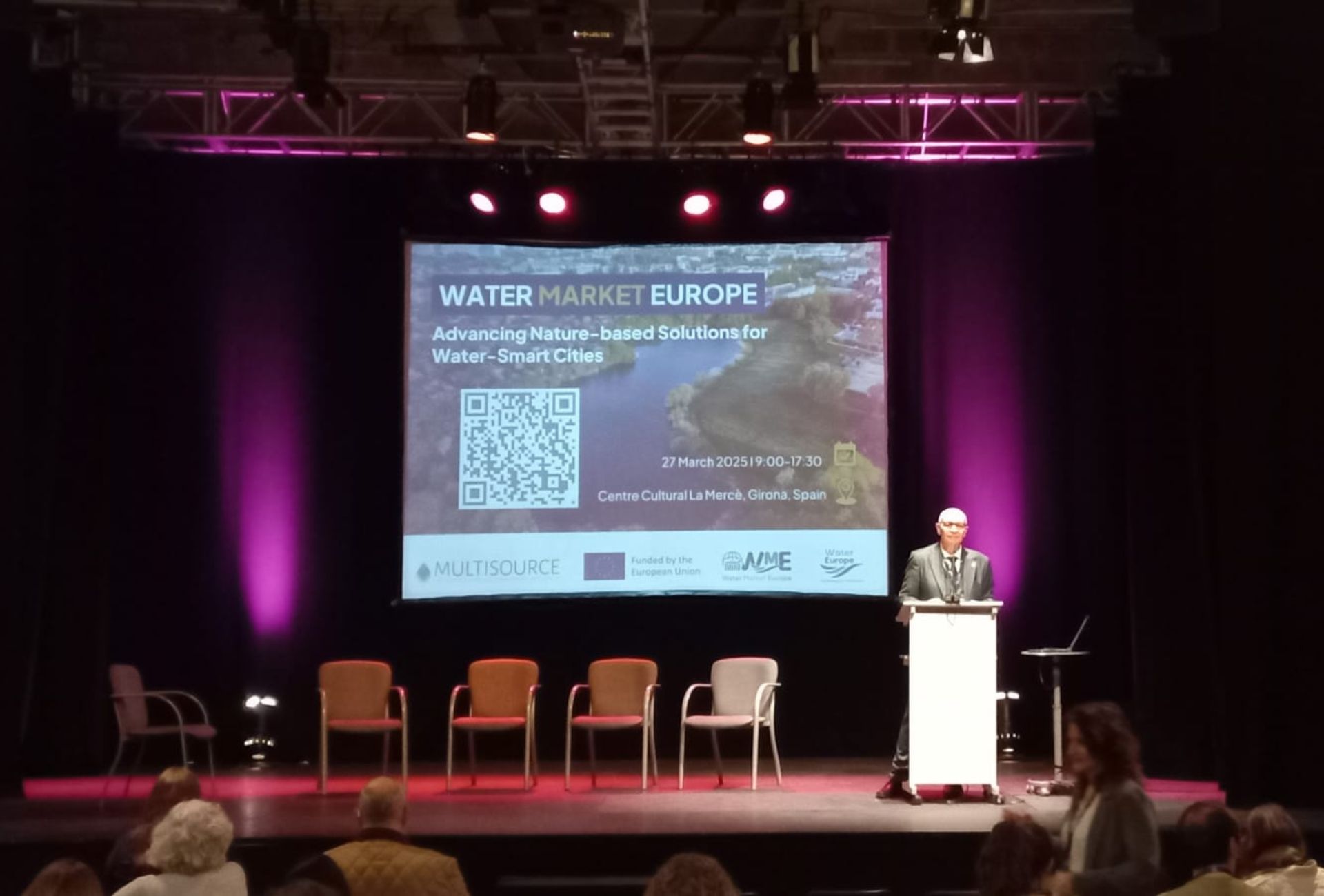
On March 27th, CARDIMED took part in Water Market Europe 2025, a key event held in Girona and organized by Water Europe in collaboration with the MULTISOURCE project. The forum brought together experts, businesses, and public entities to discuss innovative approaches to sustainable water management, with a special focus on Nature-Based Solutions (NBS). MULTISOURCE is at the forefront of developing innovative models for urban wastewater treatment through NBS, aligning with core EU policy goals.
Overcoming Barriers to NBS Implementation
Throughout the event, participants addressed major challenges facing the implementation of NBS, including space limitations, public acceptance, and the need for adequate funding. Strategies such as Milan’s “sponge city” initiative—featuring 90 SUDS interventions in progress—and Valencia’s green infrastructure investments to manage extreme weather events were shared as examples of urban resilience. The discussion also highlighted the importance of international cooperation and data sharing to advance effective, scalable solutions.
CARDIMED’s Role in NBS Planning
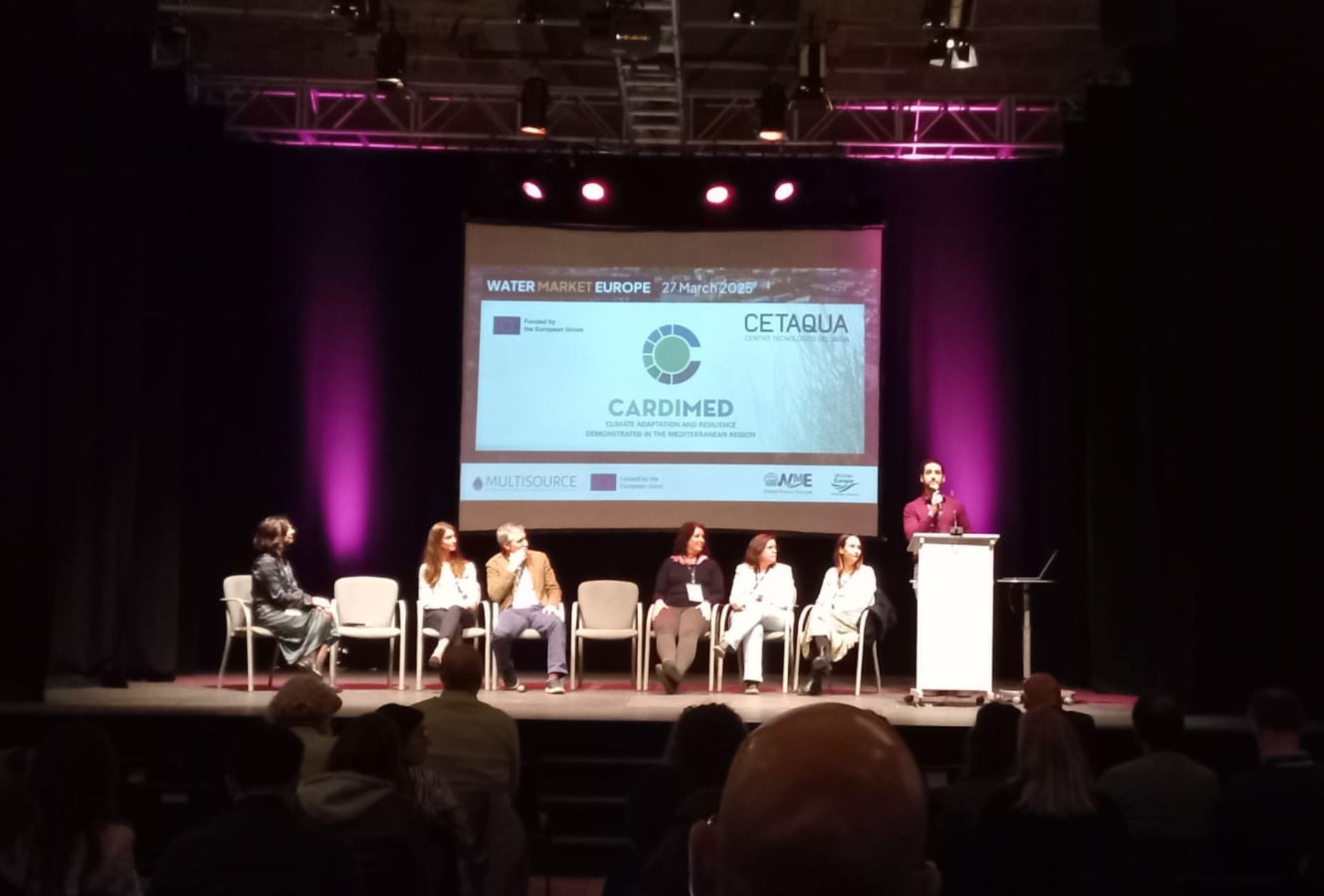
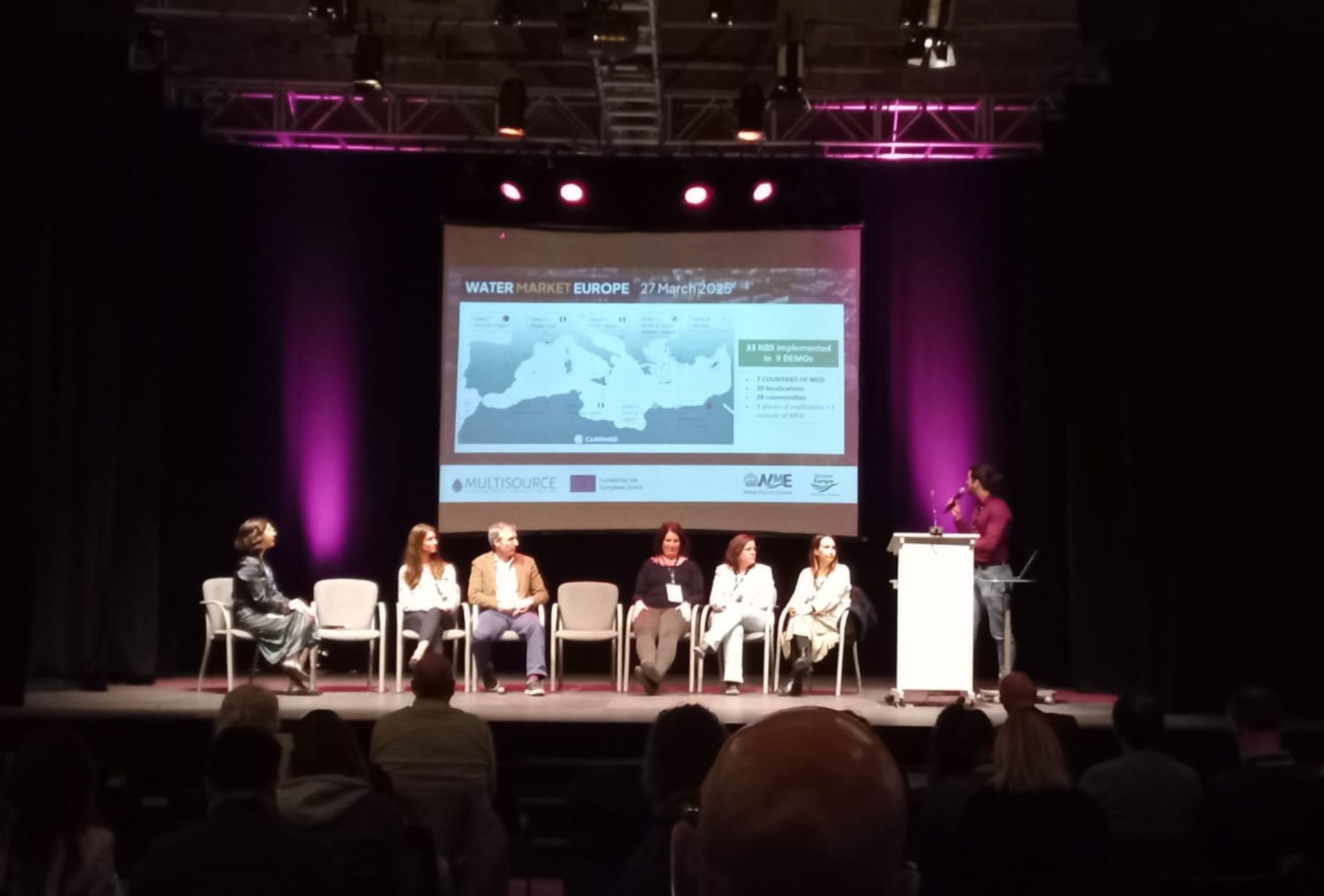
A key moment of the day was the presentation by Sergi Baena-Miret from Cetaqua during Session 5: Splashdown – Transferring knowledge and building synergies with other NbS-related projects, moderated by Elena Pestani from ICLEI, another of CARDIMED’s project partners.
His presentation focused on CARDIMED’s innovative digital tool designed to support the selection and implementation of NBS in the Mediterranean region. The platform evaluates the climate challenges of a given area and recommends the most suitable NBS to address them. Using a traffic-light system, the tool helps decision-makers quickly identify the most effective solutions based on topographic, rainfall, and temperature data. It also offers planning and exploratory features, providing guidance on optimal NBS locations and implementation strategies. Built on GIS technology, the platform will be available online and will allow the integration of new data, continuously improving its accuracy and value.
CARDIMED was also represented at the event by other project partners, including BIOAZUL and IRIDRA, highlighting the collaborative and multi-stakeholder nature of the initiative.
Pilot Projects and Digital Tools
Several pilot initiatives were also presented at the event, including a greywater treatment and reuse system using green walls in Girona, developed by ICRA at the Ágora school and a residential building in Sant Quirze del Vallès. Looking ahead, plans are underway to establish a Living Lab in Girona to further explore and expand these innovative solutions.
Final Reflections
The event concluded with a strong message: the implementation of NBS is not just a possibility—it is an urgent necessity. Collaboration between science and public policy, along with digitalization and tools like CARDIMED, is essential for advancing water resilience. At CARDIMED, we remain committed to driving innovation in water management and promoting sustainable solutions to tackle global water challenges.