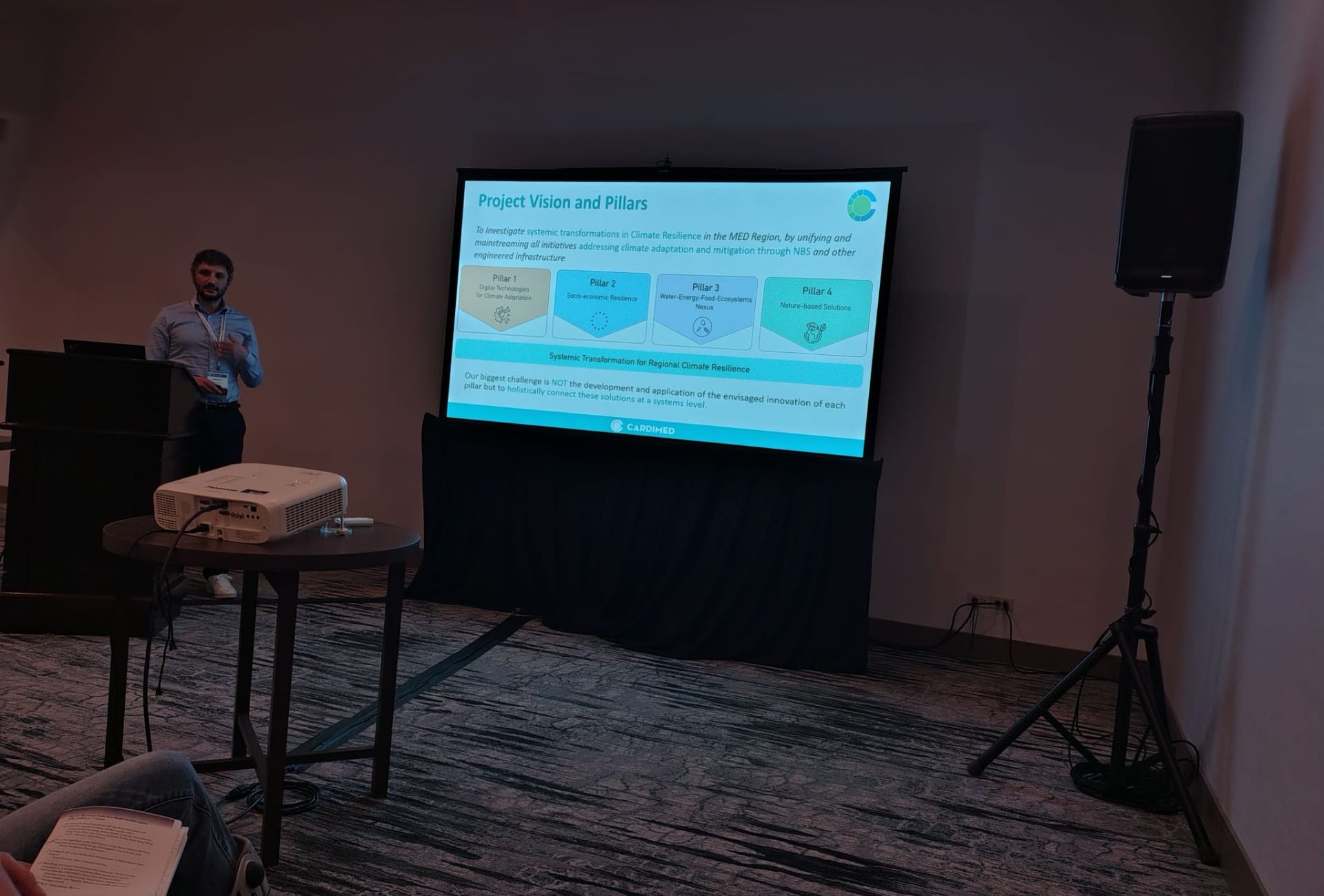
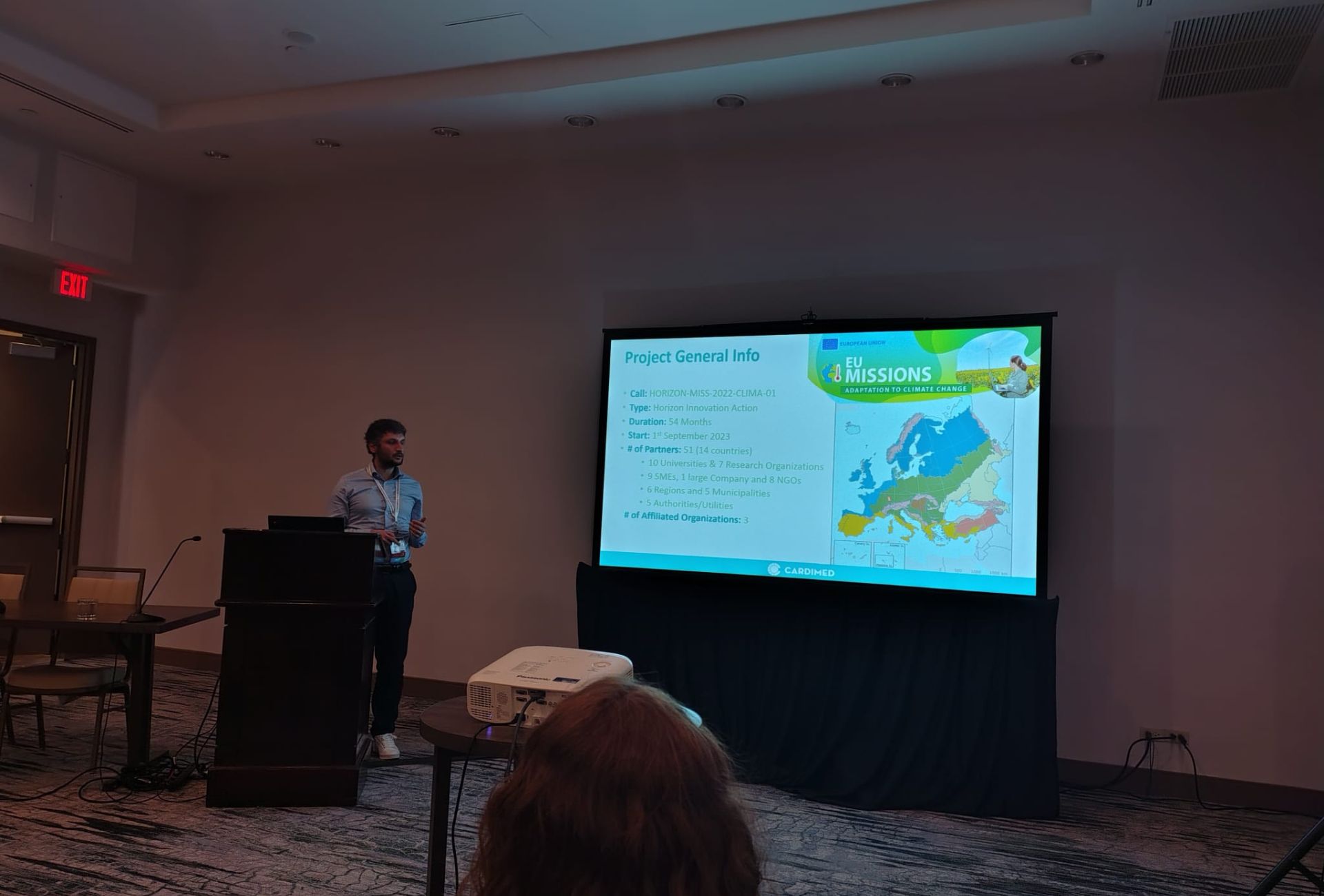
Our partner IRIDRA, represented by Anacleto Rizzo, participated in the International Low Impact Development Conference (LID2026), held from 1–4 March 2026 in Jacksonville, Florida (USA), a leading international event focused on sustainable stormwater management, urban resilience and Nature-based Solutions (NbS).
The conference brought together researchers, practitioners, engineers and policymakers from around the world to exchange knowledge on Low Impact Development (LID) approaches, green infrastructure and innovative strategies to address climate change challenges such as flooding, water scarcity and urban heat.
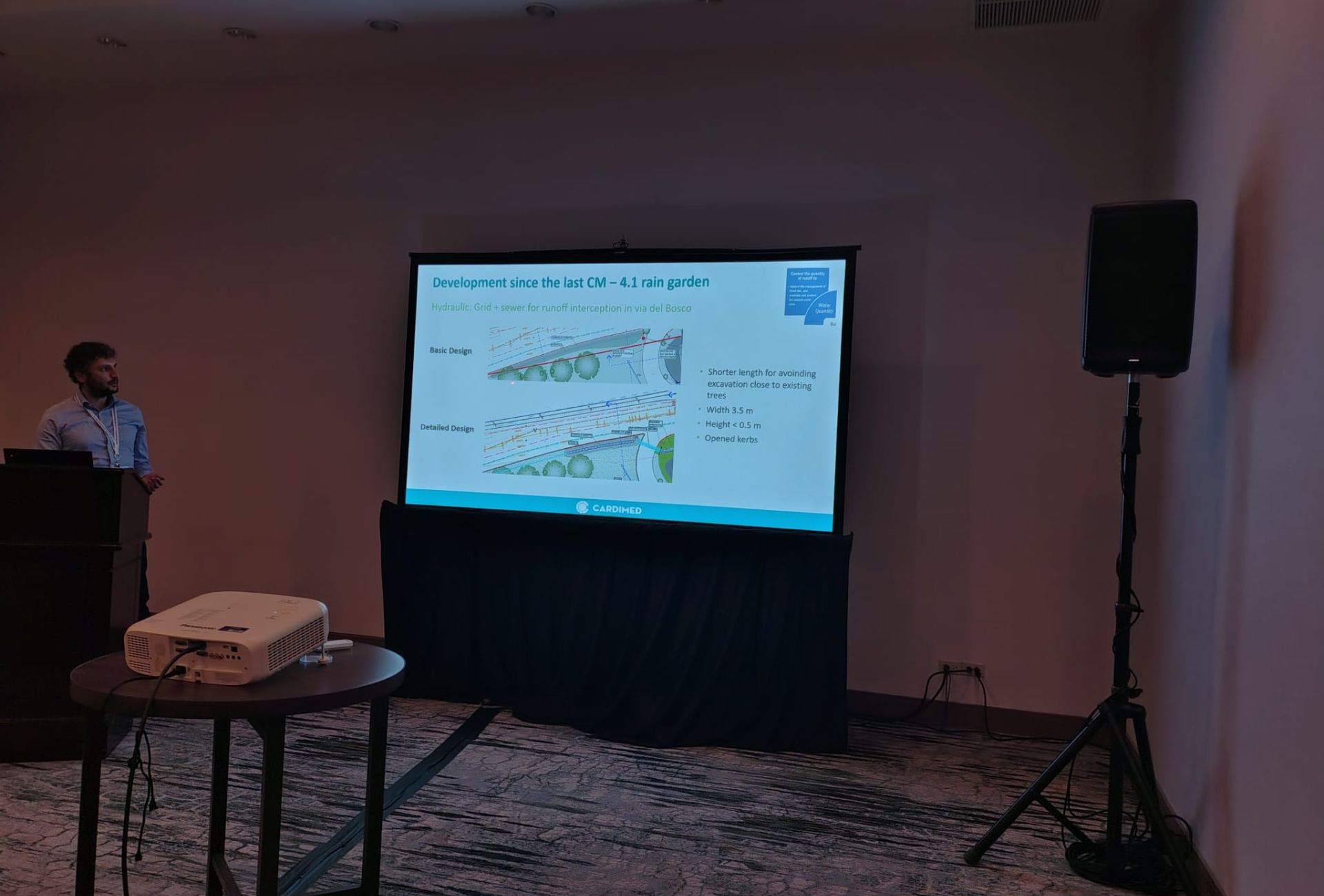
Within this global context, IRIDRA presented insights from CARDIMED sub-DEMO 4.1 in Catania, showcasing the transformation of the Tondo Gioeni area into a multifunctional rain garden system for stormwater control.
The sub-DEMO integrates a combination of Sustainable Drainage Systems (SuDS), including swales, rain gardens and infiltration shafts. These solutions are designed to delay peak flows, enhance water quality through natural processes such as filtration, adsorption, biodegradation and phytoremediation, while contributing to more resilient urban environments.
Beyond its technical performance, the intervention also incorporates a strong landscape and cultural dimension. The design features lava stone patterns and native Mediterranean vegetation, such as Pistacia lentiscus and Agapanthus, reflecting the local identity of Catania as the “City of Fire and Water”, a dedicated landscape concept developed within the design.
Participation in LID2026 provided a valuable opportunity to engage with U.S. and international experts, fostering exchange on best practices and shared challenges in implementing NbS in urban contexts.
Discussions highlighted common issues across regions, including:
- Technical constraints such as unexpected subsurface conditions (e.g. rock excavations)
- Procurement and construction challenges, including delays in contracting specialised companies
- Social aspects, such as public acceptance and traffic management during implementation works
These exchanges reinforced key lessons from the CARDIMED sub-DEMO, including the importance of:
- Flexible and adaptive design, informed by tools such as georadar to detect underground utilities
- Minimising disruption during construction through optimised excavation strategies
- Robust monitoring systems, including water level and soil humidity sensors, to support both scientific assessment and stakeholder trust
Overall, IRIDRA’s participation in LID2026 strengthened the international visibility of CARDIMED and contributed to the global dialogue on scaling up Nature-based Solutions for climate adaptation.