What happens when Nature-based Solutions move from plans and designs into the complexity of the real world?
CARDIMED explored this question at the 19th IWA International Conference on Wetland Systems for Water Pollution Control (ICWS2026), held from 13 to 17 September 2026 in Chania, Crete, where researchers and practitioners came together to exchange knowledge on wetland systems, sustainable water management and Nature-based Solutions (NbS).
CARDIMED contributed to the conference through the session “What a Mess! The Reality of NbS Implementation in Horizon Europe Projects”, while project partner University of Catania (UNICT) also presented research linked to Nature-based Solutions being implemented and studied in Sicily.
What a Mess! Learning from the reality of NbS implementation
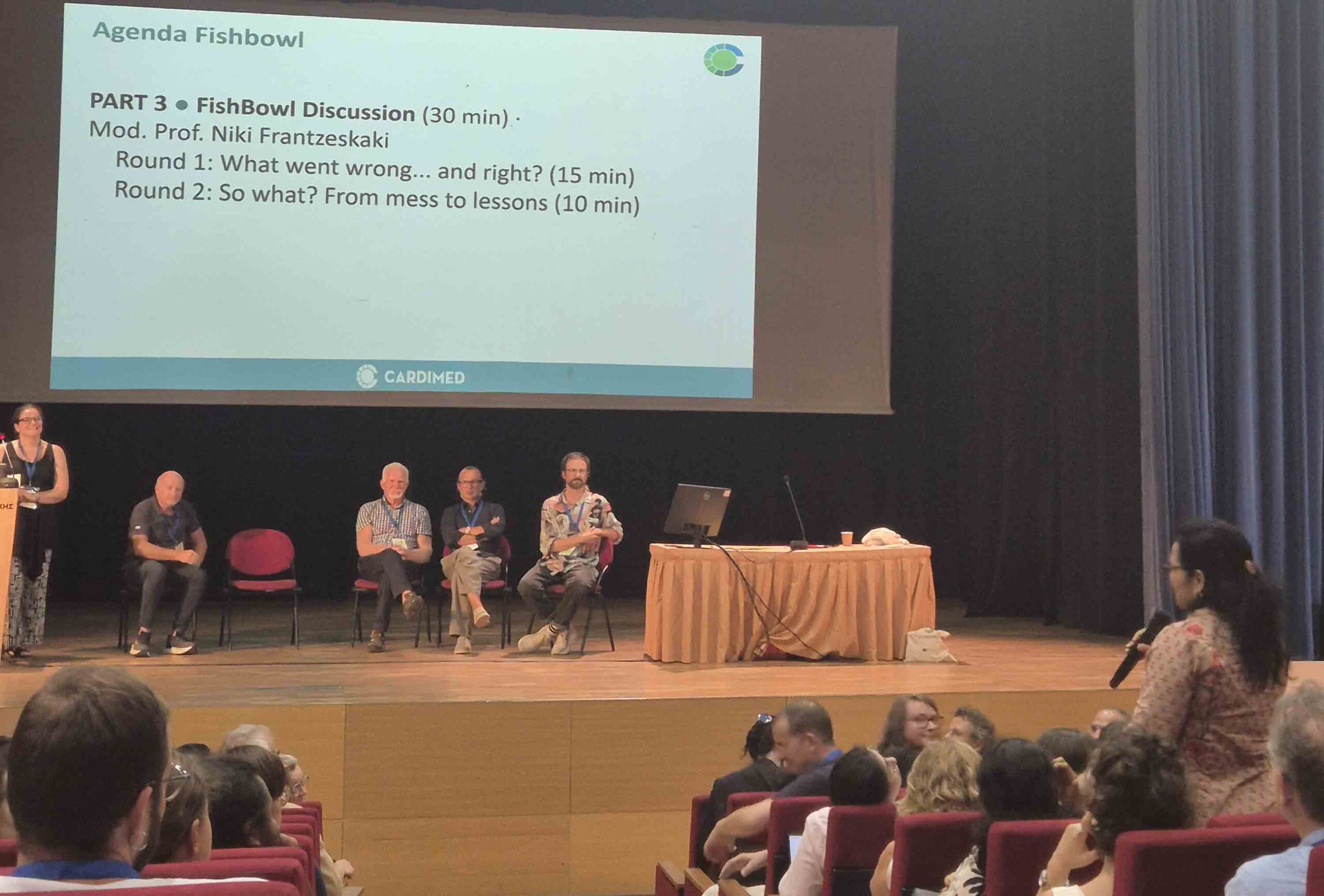
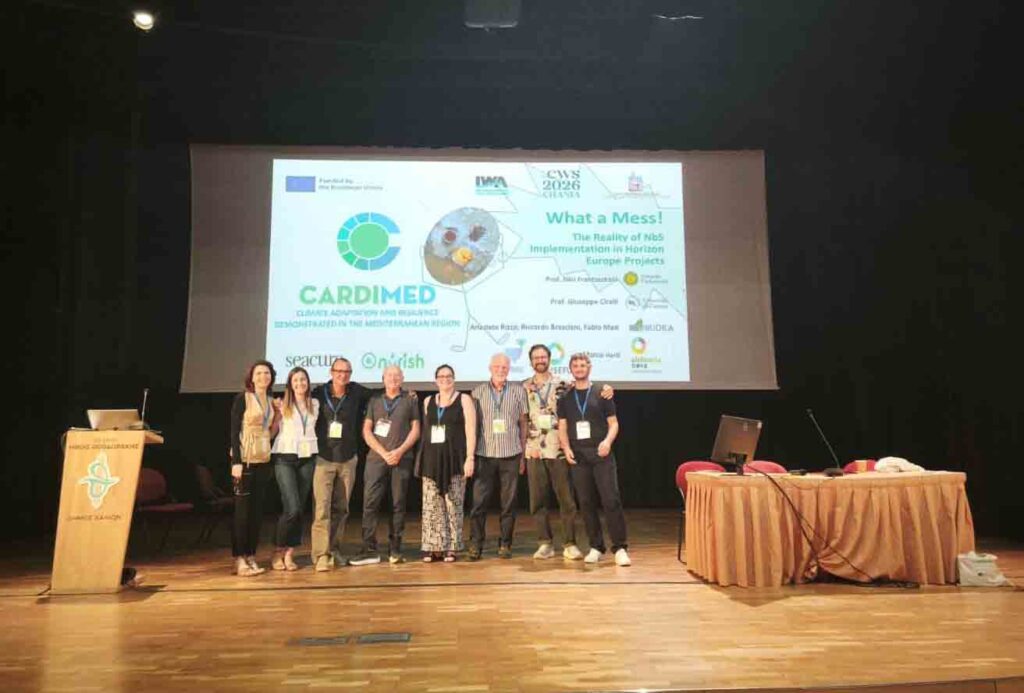
CARDIMED joined fellow Horizon Europe Innovation Action projects NURISH, SEACURE, VERNE and HOUSEFUL for an unconventional workshop focused not on success stories, but on the challenges, unexpected situations and lessons that emerge when implementing NbS.
Representatives from the five projects delivered short, picture-based presentations drawing on experiences from their demonstration sites. Rather than showcasing polished results, they explored what went wrong, what surprised project teams and what they would do differently, highlighting the practical barriers and human factors that influence the implementation of NbS.
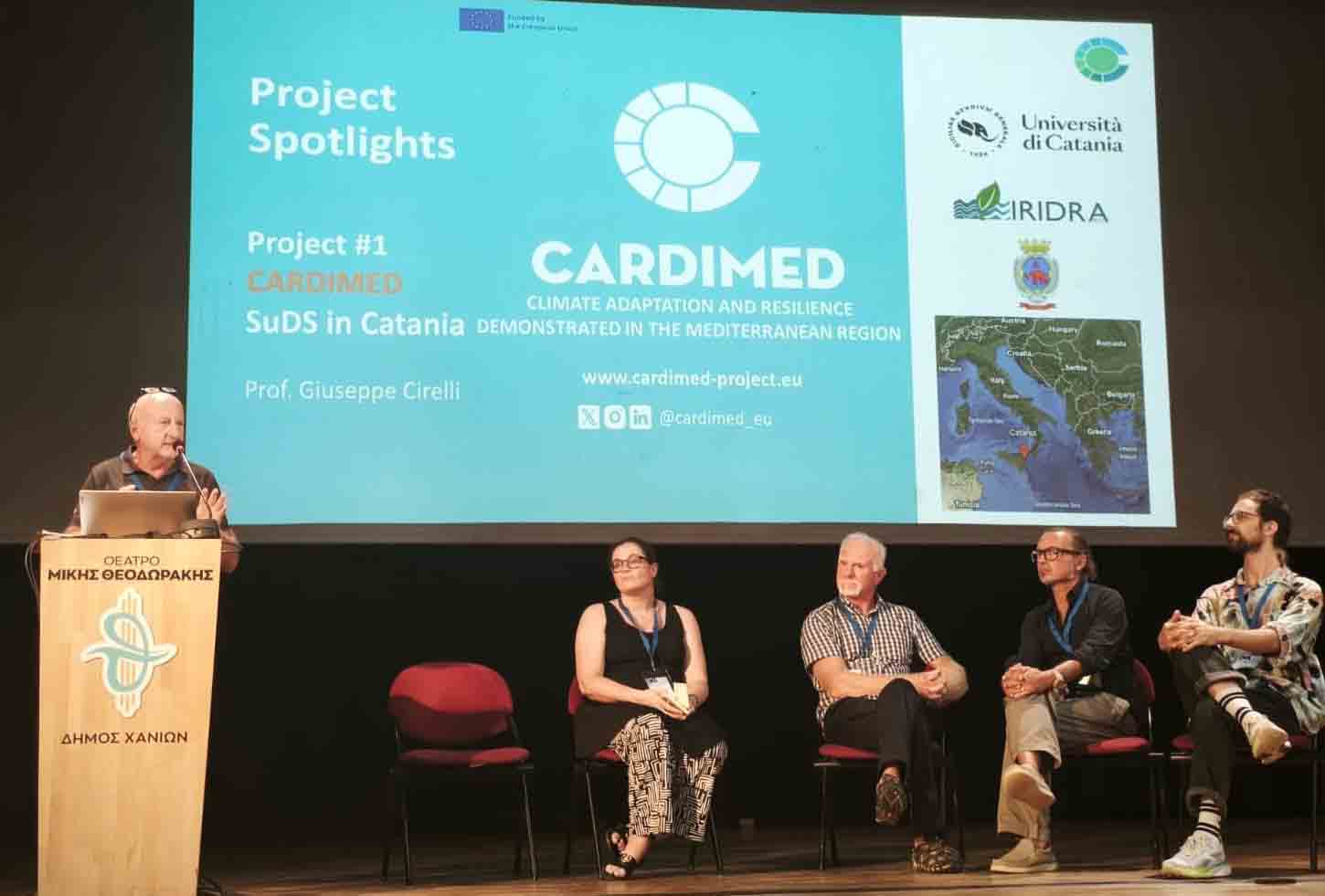
Prof. Giuseppe Cirelli from the University of Catania presented the CARDIMED experience, while Fabio Masi and Riccardo Bresciani from IRIDRA shared lessons from NURISH and SEACURE, and Marco Hartl from alchemia-nova presented experiences from VERNE and HOUSEFUL.
The first part of the session was moderated by Marco Hartl and Anacleto Rizzo (IRIDRA). Afterwards, Prof. Niki Frantzeskaki from Utrecht University applied her governance traps framework to the experiences presented, helping participants identify common patterns across different projects, countries and implementation contexts.
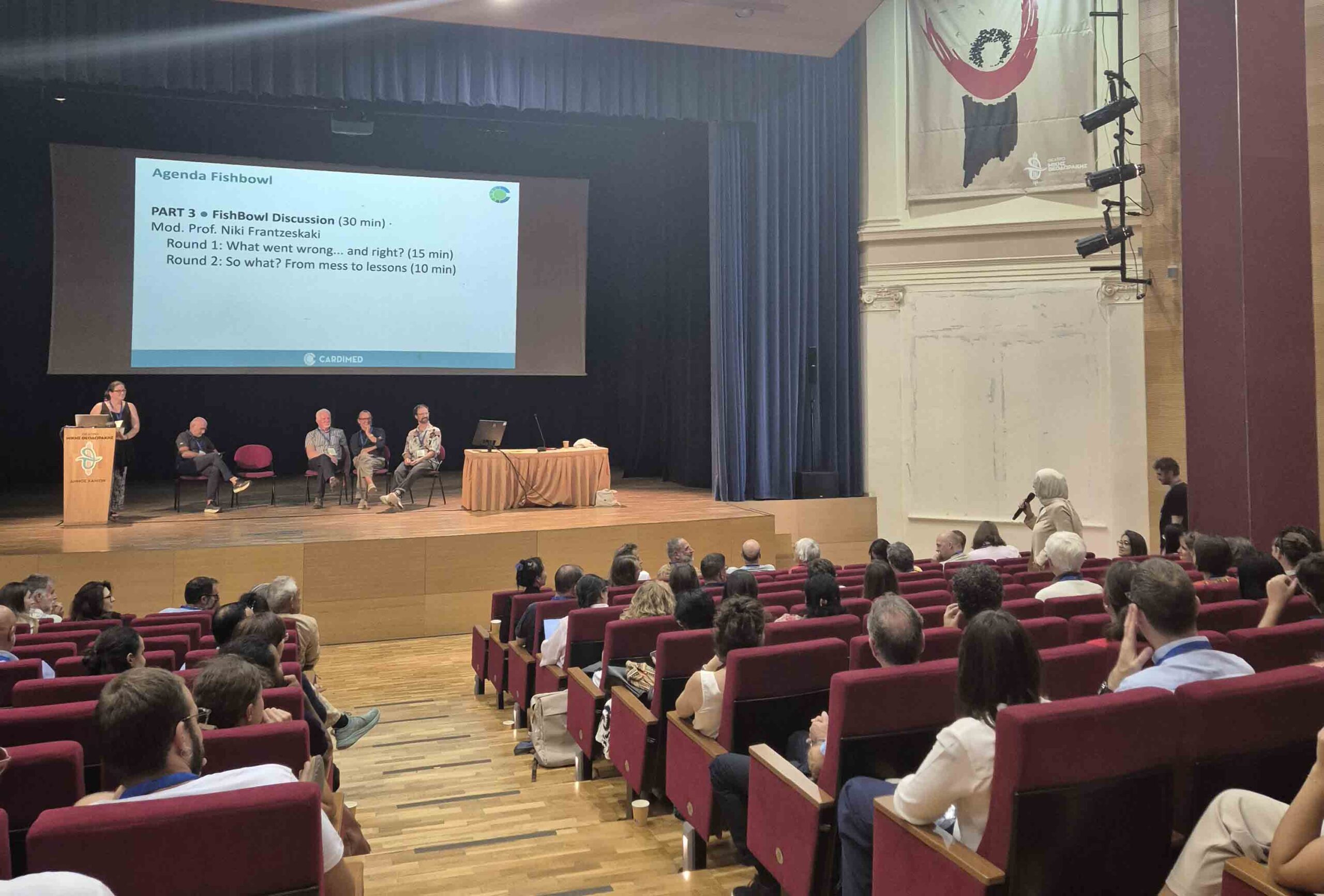
A FishBowl discussion then encouraged researchers and practitioners to openly compare experiences and recurring difficulties. Despite working in different contexts, participants recognised similar challenges in their interactions with clients, contractors, communities, funders and other actors involved in bringing NbS to life.
The session highlighted a fundamental aspect of innovation: implementing new solutions rarely follows a straightforward path. Trial and error, unexpected barriers and adaptation are part of the process and can provide valuable knowledge for improving the future implementation and replication of NbS.
The openness of the discussion was particularly valuable. While the specific experiences shared will remain within the room, allowing participants to speak freely, the response from the ICWS2026 community was highly positive, with a recurring “What a Mess!” format proposed for future editions of the conference.
Showcasing Nature-based Solutions from Sicily
Beyond the workshop, the Hydraulics and Territory team of the Department of Agriculture, Food and Environment (Di3A) at the University of Catania, together with IRIDRA and SVI.MED., contributed to the scientific programme with research on Nature-based Solutions implemented in Sicily.
Among the contributions directly connected to CARDIMED was the oral presentation “Nature-Based Solutions for Urban Water Management: Greywater Treatment via Vertical Green Walls in Mediterranean area”. The research presented a decentralised system for greywater treatment and circular water reuse through vertical green walls in Ferla, one of the solutions being demonstrated within CARDIMED.
The team also presented research on the Tondo Gioeni rain garden in Catania, another CARDIMED intervention, through two scientific posters. “Integrating HYDRUS-2D and HEC-RAS for rain garden stormwater infiltration assessment: a methodological approach” focused on modelling and quantifying the rain garden’s capacity to manage urban runoff. Meanwhile, “From Stormwater Management to Cultural Value: Ecosystem Services Assessment of the Tondo Gioeni Rain Garden in Catania, Italy” explored both the regulating ecological functions and the cultural benefits associated with this Sustainable Drainage System (SuDS).
In addition, the University of Catania team presented “Assessment of Ecosystem Services Provided by a Semi-Intensive Green Roof in a Mediterranean Urban Context”, examining how green roofs can contribute to socio-environmental well-being through temperature regulation, runoff management and enhanced biodiversity.
Together, these contributions showed different ways in which green infrastructure and NbS can support climate adaptation, sustainable urban water management, biodiversity and more resilient Mediterranean cities.