CARDIMED participated in ECOMONDO 2026, held in Rimini, Italy, through contributions from project partners Università Politecnica delle Marche (UNIVPM) and SEMIDE. Their participation highlighted how innovative water management, resource recovery and Nature-based Solutions (NbS) can contribute to greater climate resilience and circularity across the Mediterranean region.
Sustainable agriculture and water reuse: CARDIMED DEMO3 in Sardinia
On 3 November,during the session “Water Resilience In and Beyond Europe: Euro-Mediterranean Cooperation, Innovation and Global Leadership”, Prof. Francesco Fatone (UNIVPM) acted as moderator, facilitating discussions on water resilience, circular economy and sustainable water management.
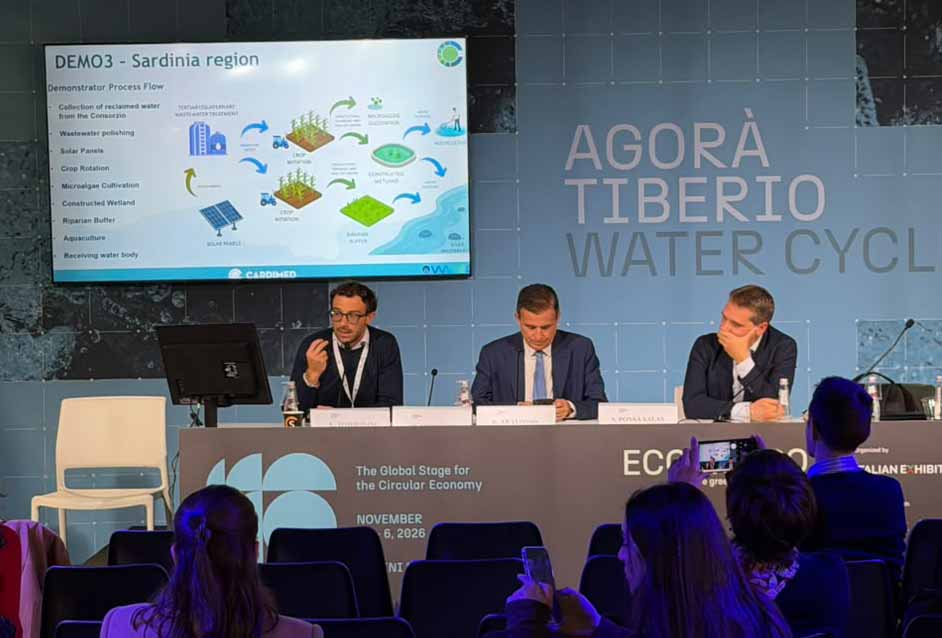
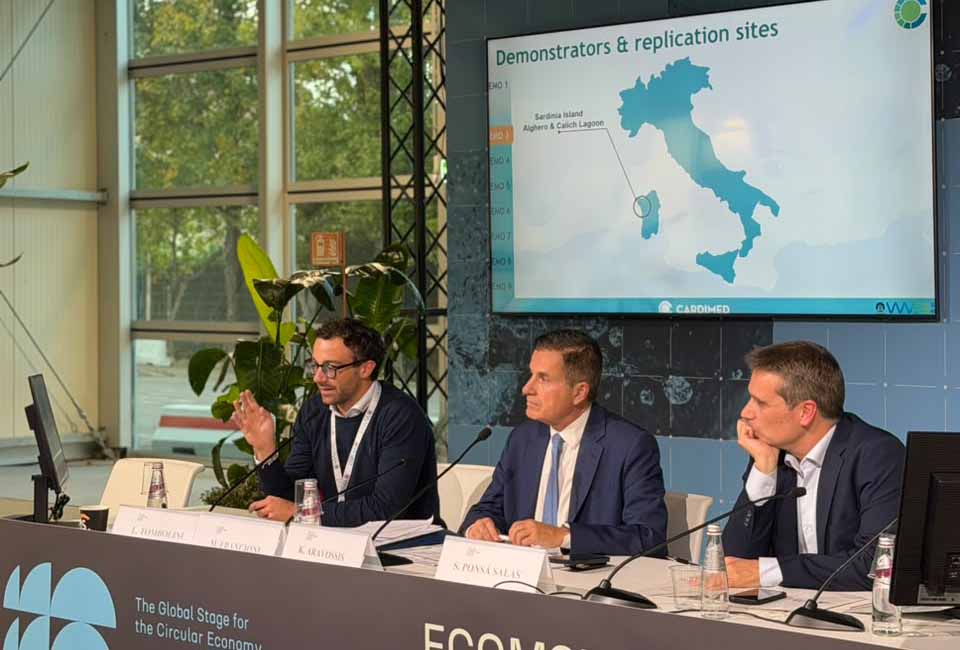
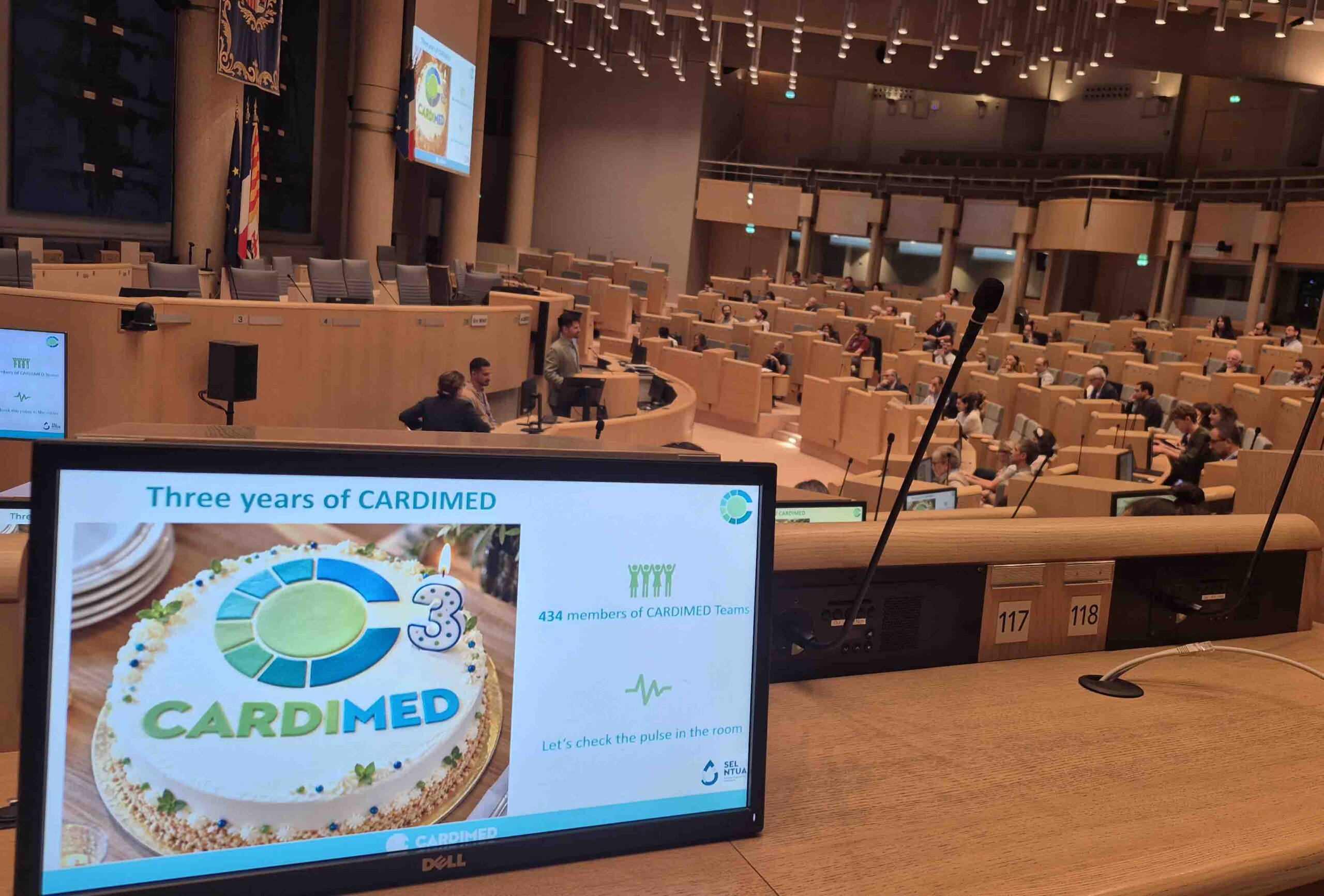
As part of the session, “CARDIMED, CSS Boost and SYSTEMICO: Advancing Circular Cities, Regional Water Resilience and Water Reuse in the Mediterranean”, Lorenzo Tombolini and Matteo Francioni (UNIVPM) presented CARDIMED DEMO3 – Decarbonization of Agricultural Practices in Sardinia, Italy.
The presentation showcased the innovative approach being developed in Sardinia to improve agricultural water management while reducing the sector’s environmental footprint. The demonstrator combines advanced wastewater treatment technologies, renewable energy, precision irrigation and Nature-based Solutions within an integrated and decentralised water management system.
By promoting water reuse, improving resource efficiency and reducing dependence on conventional energy sources, DEMO3 aims to support more sustainable and climate-resilient agricultural practices in the Mediterranean.
Connecting circular water management with marine protection
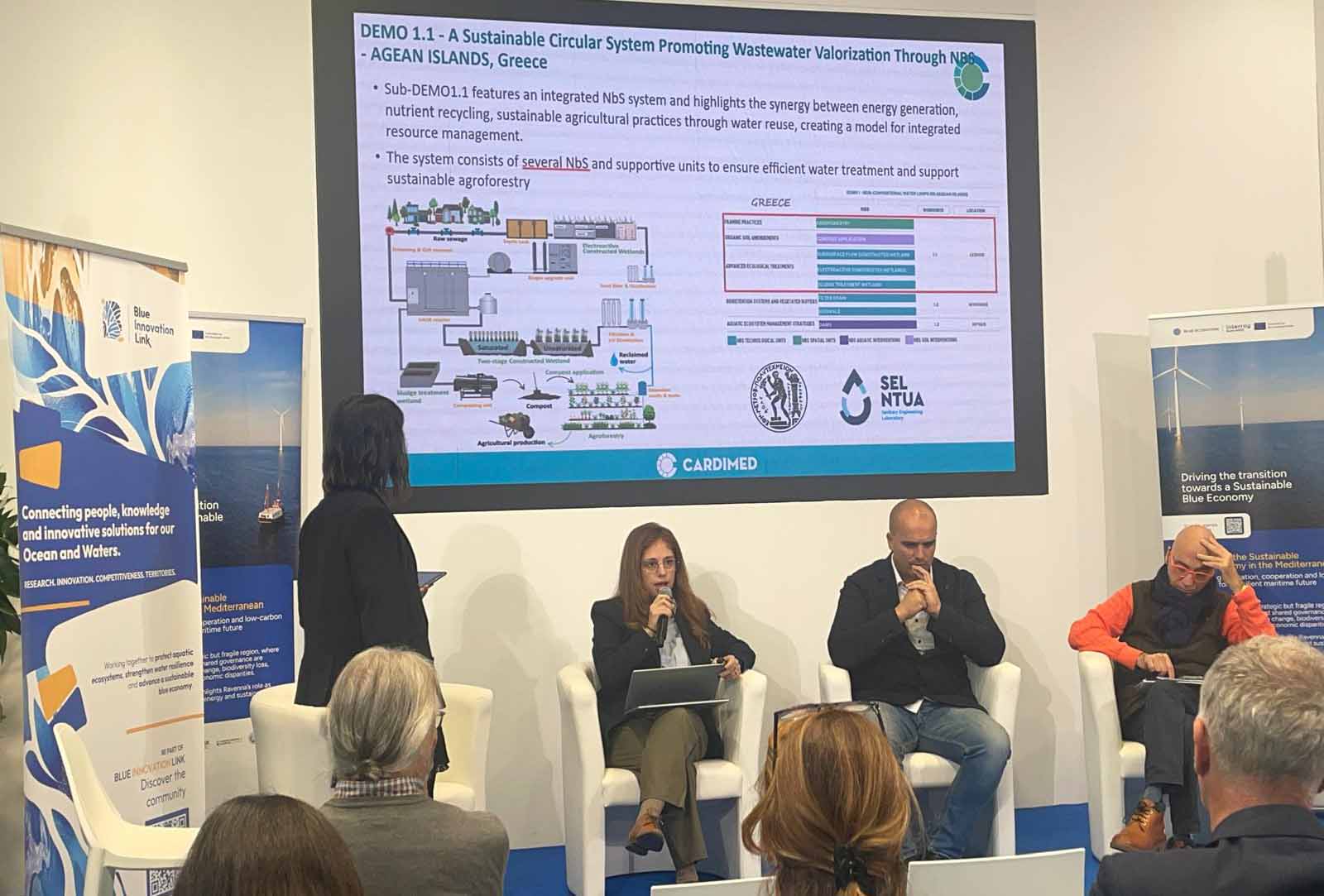
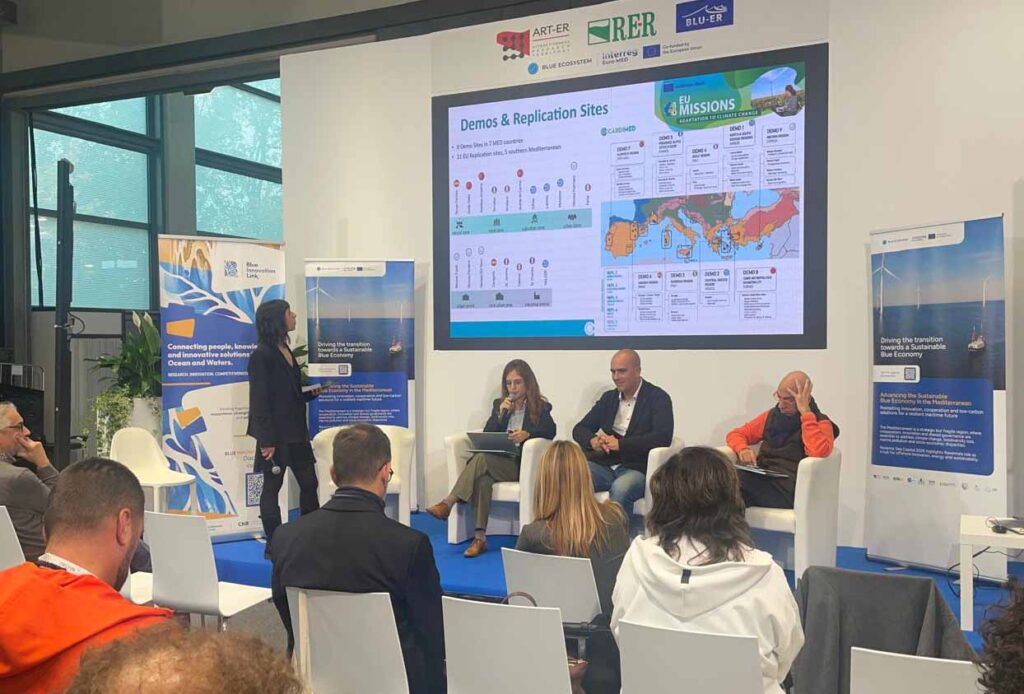
On 5 November, Maroua Oueslati, Project and Information Manager at SEMIDE, represented CARDIMED in the roundtable discussion organised during the “Blue Ecosystem Final Event: Marine Pollution, Water & Waste Management – Showcase of Innovative Solutions”, held at the BLU-ER stand.
The discussion explored innovative approaches to addressing marine pollution, water scarcity and waste management. Maroua highlighted how improved wastewater treatment, water reuse and resource recovery can help reduce environmental pressures on rivers, coastal ecosystems and the Mediterranean Sea.
To illustrate these approaches, she presented three CARDIMED demonstration cases:
- DEMO1.1 – Wastewater Valorization Through Nature-based Solutions, Aegean Islands, Greece: promoting wastewater treatment, reuse and resource recovery through nature-based approaches.
- DEMO2 – Industrial Symbiosis & Smart Water Management, Oinofita, Central Greece: improving water circularity in industrial processes through innovative treatment and smart management systems.
- DEMO3 – Decarbonization of Agricultural Practices in Sardinia, Italy: integrating water reuse, renewable energy and sustainable agricultural practices.
Maroua also emphasised CARDIMED’s replication strategy, which seeks to facilitate the transfer and adoption of these solutions across different sectors, regions and territorial contexts, extending their impact beyond the demonstration sites.
Sharing Mediterranean solutions for wider climate resilience
CARDIMED’s participation in ECOMONDO 2026 provided an opportunity to share practical approaches to some of the Mediterranean’s most pressing environmental challenges, from agricultural water scarcity and industrial water management to marine pollution.
Through the contributions of UNIVPM and SEMIDE, the project reinforced the importance of combining Nature-based Solutions, circular economy principles and technological innovation to advance sustainable water management and support the replication of climate resilience solutions across the Mediterranean and beyond.